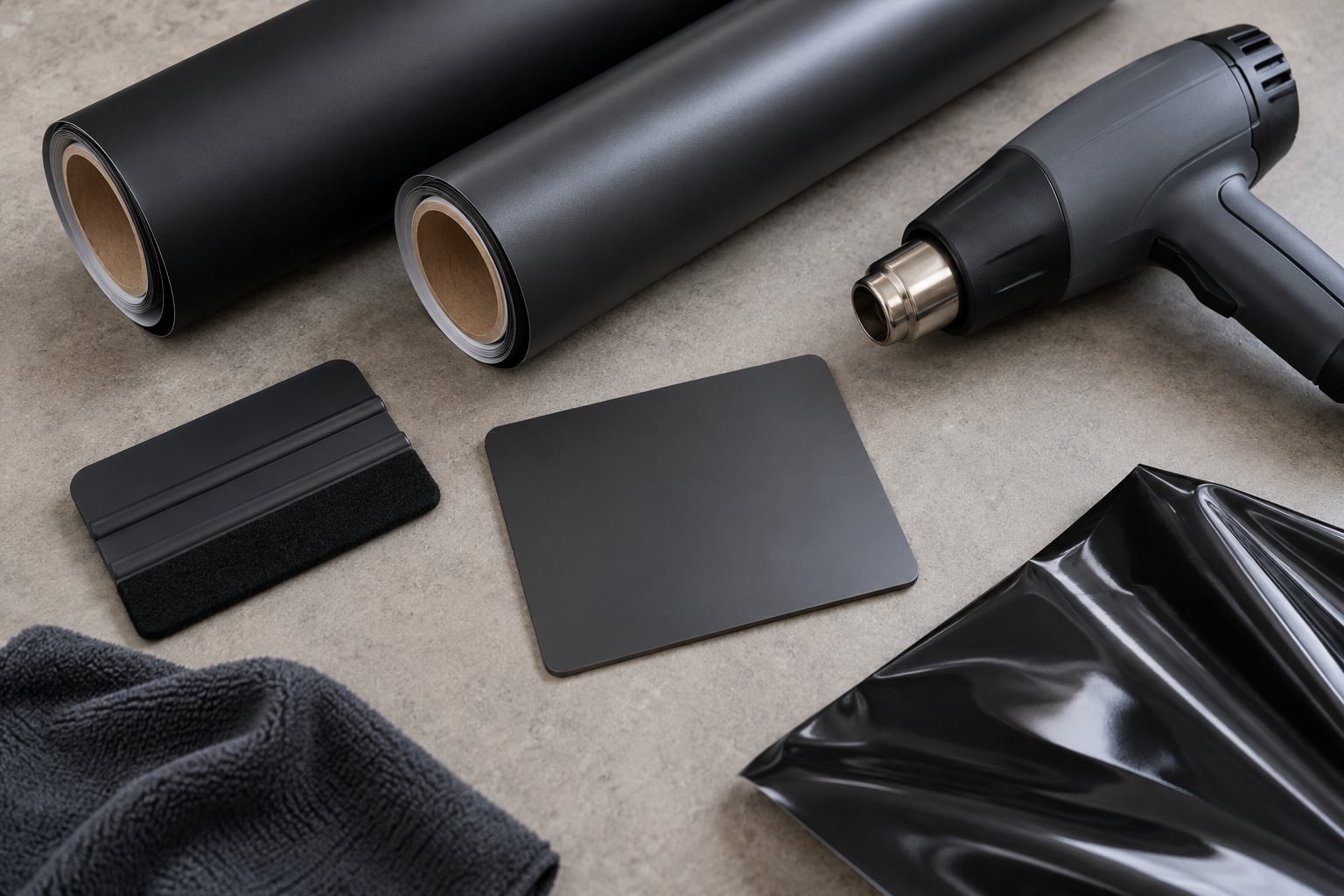
How much does a vehicle wrap cost? Across the US, a partial wrap usually runs $500 to $1,500, while a full vehicle wrap lands between $2,000 and $6,000. Premium finishes such as chrome, matte, or color-shift film add roughly 20% to 50% on top of that, and commercial graphics on vans and work trucks sit in their own range.
Most of that invoice is labor, not vinyl. Material is usually the smaller share of what you pay, which is why the same car can be quoted thousands of dollars apart by two shops in the same city.
Table of Contents
Vehicle Wrap Cost by Coverage and Vehicle Type
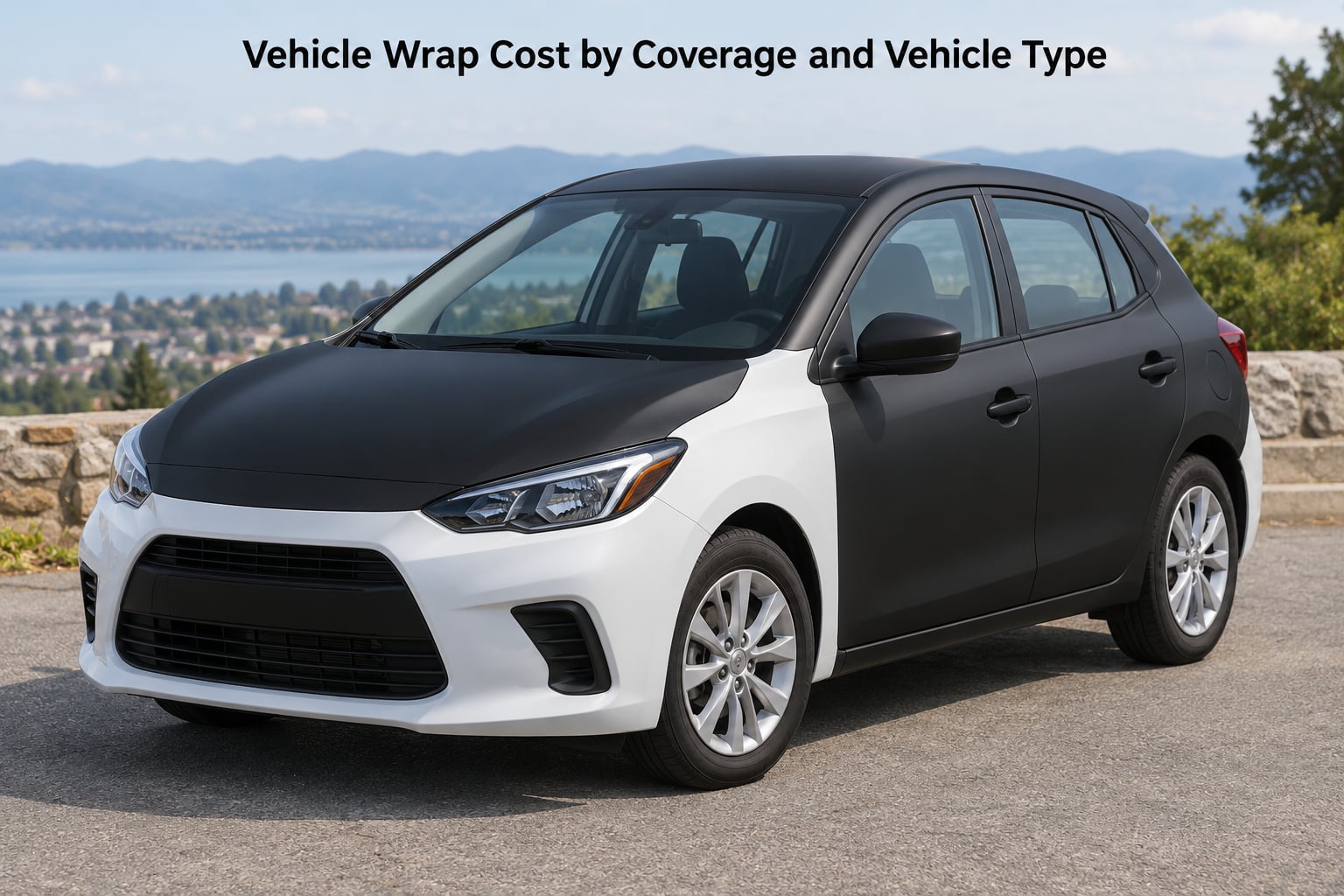
Coverage level moves the price more than anything else. A hood-and-roof package is a small fraction of the labor a full color change takes, because the doors, quarter panels, bumpers, and glass edges are where the time goes.
| Vehicle type | Partial wrap | Full wrap | Full wrap with premium finish |
|---|---|---|---|
| Sedan or coupe | $600 – $1,200 | $2,500 – $4,500 | $3,200 – $6,000 |
| SUV or crossover | $900 – $1,800 | $3,200 – $5,500 | $4,000 – $7,500 |
| Standard pickup | $1,000 – $2,000 | $3,500 – $6,000 | $4,500 – $8,000 |
| Crew-cab pickup or cargo van | $1,400 – $2,600 | $4,000 – $6,800 | $5,200 – $9,000 |
| Printed graphics or commercial fleet, per vehicle | $400 – $1,500 | $3,000 – $5,500 | $3,800 – $6,500 |
These are typical US ranges as of 2026. They vary by region and they change over time, so treat them as a starting budget rather than a quote.
Regional spread is real and large. People shopping the same question on r/CarWraps report identical sedans quoted at $2,100 and $2,600 by two shops in one city, while buyers in Bozeman say every local shop came back above $6,000 for a full wrap. Others in the Dallas area put the same job at $2,500 to $3,000.
What Affects the Price
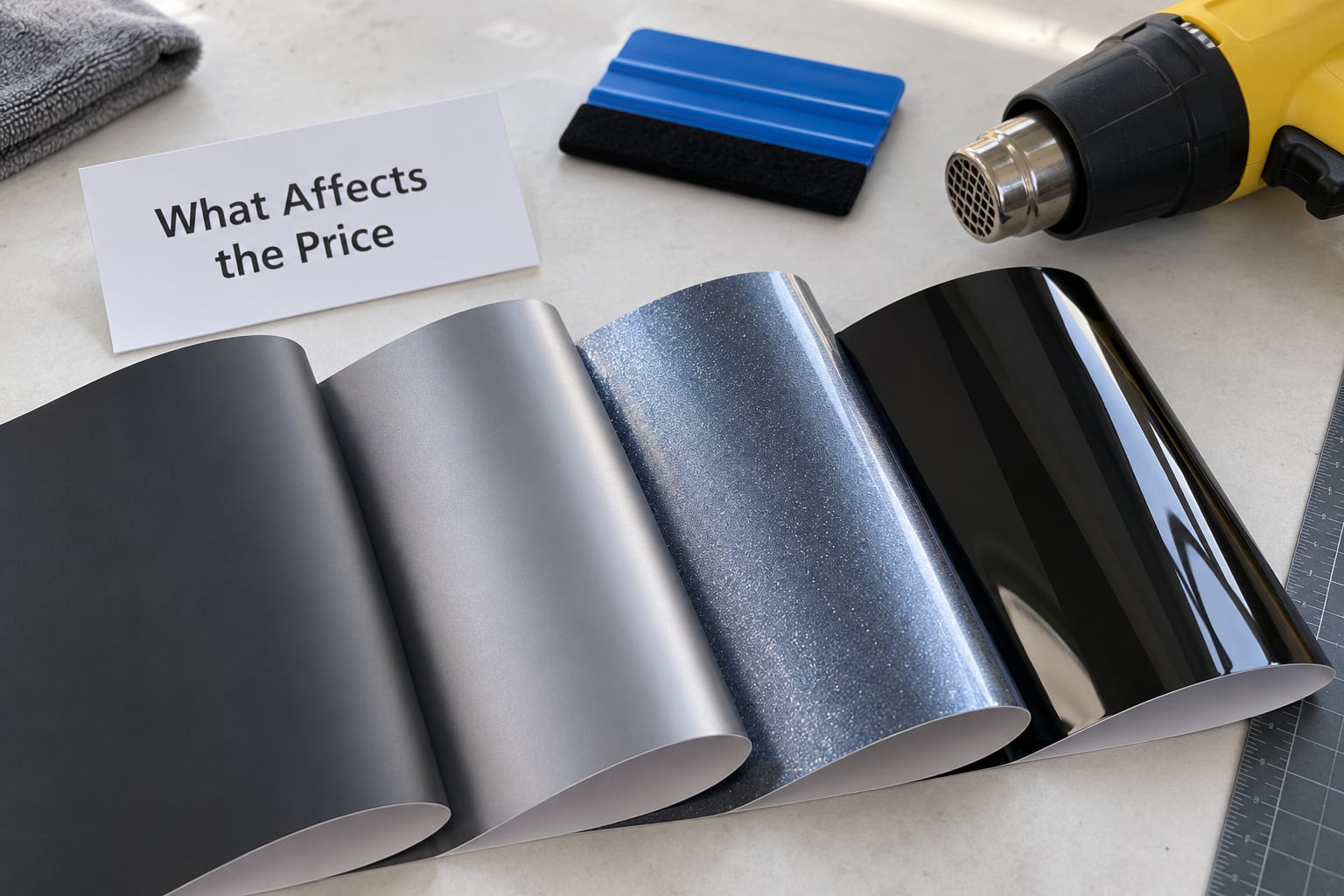
Here are the drivers in the order you should evaluate them.
- Wrap coverage. Full color change, partial package, or spot graphics. Each additional panel adds install time, not just film.
- Vehicle size and surface complexity. A wide-body SUV with roof rails, door handles, and tight body lines takes longer than a two-door coupe with flat panels.
- Vinyl type. Cast vinyl conforms to curves and panels; calendared vinyl is cheaper and stiffer, so it is common on flat commercial panels.
- Print versus solid color. Solid film is cheaper to buy and quicker to install. Printed graphics need design, plotter cutting, and often lamination.
- Design and installation labor. Design work is frequently a separate line item, anywhere from $300 to $1,500 depending on who draws it.
- Removable versus permanent film. Most quality wrap film is non-permanent and comes off later. Cheap film that behaves more like permanent tape is a bad trade.
- Location. Labor rates in high-cost metros push the total up, and shop capacity changes how fast you get a slot.
- Rush work. Turning a normal two-week schedule into a few days usually adds a fee, and rushed installs are where edge lift shows up later.
On film grade, cast vinyl from 3M, Avery Dennison, or Orafol is the mainstream choice for panels that bend, and it carries the manufacturer warranty that lets a certified installer stand behind the work. Premium finishes sit in a different price tier: gloss is the baseline, while satin and matte, chrome, metallic, textured, and color-shift film each add on average 20% to 50% because the material costs more and the surface is harder to lay down cleanly.
How Much Does a Vehicle Wrap Cost for Each Part?
Partial packages are priced by area. That gives you the cleanest way to compare two quotes, because each row is roughly the same job no matter which shop you ask.
| Area | Typical price | What adds labor |
|---|---|---|
| Hood | $250 – $600 | Centered vents, hood scoops, existing stripes |
| Roof | $300 – $700 | Rails, antenna, sunroof surround |
| Single door | $200 – $500 | Handle, mirror, window trim, door edge |
| Both doors | $400 – $900 | Bundling two doors usually costs less than doubling one |
| Rear quarter panel | $200 – $450 | Fuel door, side vent, body crease |
| Full trunk or hatch | $250 – $500 | Badge, spoiler, hidden hardware |
| Bumpers, front or rear | $300 – $700 | Sensor holes, exhaust cutouts, deep sculpting |
| Mirrors | $100 – $250 each | Glass needs masking, seam around the base |
| Windows | $100 – $200 each | Trim removal, dot-matrix patterns cost extra |
Decorative partial wraps and functional commercial messaging are priced differently. A satin black hood is a style choice; a company van needs phone numbers, service areas, and a logo that reads at fifty feet, and that means design time, larger printed panels, and often laminate for UV resistance.
Seams, windows, and concealed hardware are the three reliable labor adders. Wrapping around a fixed window or a spoiler edge requires a cut that cannot be hidden, and hardware behind a door handle or emblem usually has to come off and go back on.
DIY Wraps vs. Professional Installation
Material genuinely is cheap. A full sedan job takes roughly 250 to 300 square feet of film, which is about four to five 75-foot rolls, and that film usually runs $400 to $900 depending on brand and finish. Add a toolkit — squeegee, blade, heat gun, isopropyl alcohol, microfiber towels, and a wrap pad — and you are looking at roughly $500 to $1,100 all in before you touch the car.
That number is why DIY looks attractive, and it is also why it is misleading. A professional full wrap takes two to three shop days of labor; one experienced installer has described spending two hours on a single front fender. A first-timer can lose an entire weekend and still end up with edge lift, a crease along a body line, or film trapped under a door handle.
| Option | What you pay | What you take on |
|---|---|---|
| Professional install, design included | $2,500 – $6,000 for a full wrap | Nothing but the money |
| Professional install, your own design | Install labor only, often $1,500 – $4,500 | Getting the file right, and the shop’s willingness to work from it |
| DIY kit | $500 – $1,100 in material and tools | 20 to 40 hours, surface prep, heat control, and the risk of a bad result |
One r/CarWraps owner reported doing a full wrap himself for roughly $3,100 all in, which is the honest DIY math once you count a second attempt, a door taken off, and the hours you did not get back. If you go this route, follow the film manufacturer’s instructions and your vehicle owner’s manual on cleaning, surface preparation, and how long to leave the vehicle in the sun after application.
Ways to Save
Get at least three itemized quotes before you commit. Ask each shop to separate film, prep, design, installation, and warranty on the written estimate so you can compare like with like. A verbal number is not a quote.
Simplify the design where you can. A single solid color installs faster than a two-tone with a chrome delete, and a stock film you pick off the shelf does not need a custom print run. Trim coverage honestly — if you never see the rear bumper from behind another car, you may be paying for film nobody looks at.
Bundle the work. An owner on r/CarWraps was quoted $700 for one door but $2,600 for both jobs together, which is the normal shape of shop pricing. Wrapping multiple vehicles at once, or adding panels in the same visit, usually gets a better rate than booking them separately.
Ask about off-peak timing and avoid rush scheduling if you can. Shops are quieter between major holidays, and a car that is not waiting on you gives the installer the time to post-heat edges properly.
Check what the quote leaves out. Removal, tax, delivery, and hardware disassembly are the four items that show up as extras on invoices, and the honest way to handle them is to ask for them upfront rather than to be surprised. One design professional put design work near $500 on its own, then a total installed cost of $2,000 to $3,000 — a split worth asking for directly.
The cheapest quote is rarely the cheapest wrap. A low bid often skips surface prep or post-heating, uses economy film that pulls clear coat or leaves adhesive at removal, or quotes a verbal warranty that disappears when an edge lifts in month eight. r/CarWraps owners describe this pattern often enough that it is worth treating a far-below-market number as a question, not a bargain.
What to Ask Before Ordering a Quote
Before you sign anything, get clear answers on the details that quietly move the total.
- Which film? Brand, finish, and whether it is removable cast vinyl.
- Printed or solid? And if printed, who designs it and at what fee.
- Which panels exactly? Get them listed on the estimate.
- Where do seams land? A good installer hides them along body lines or panel edges.
- What is the turnaround? Shop days plus cure time before you drive or wash it.
- What does the warranty cover? Peeling, fading, bubbling, and labor, for how long.
- What does removal cost later? And who owns that risk.
- Will they show proof? Photos of comparable vehicles, plus a written itemized quote.
- Do they handle disassembly? Handles, badges, sensors, and trim should be named in the price.
If the shop cannot answer these without hedging, that hesitation is part of the quote.
Frequently Asked Questions
How much should a full car wrap cost?
A full wrap in the US generally runs $2,500 to $5,000 for a sedan or coupe, with SUVs, pickups, and vans landing between $3,200 and $6,800. Premium finishes such as chrome, matte, or color-shift add roughly 20% to 50%. Labor is most of the invoice, so quotes from different shops can differ by thousands on the same vehicle.
Is a vehicle wrap cheaper than painting the car?
Usually yes. A full wrap costs a fraction of a factory-quality respray, which easily runs into five figures once you count paint, primer, labor, and the lost value of the original finish. The trade-off is durability and repair: paint blends better after a fender scrape, while a damaged panel on a wrap is simply a panel of film replaced.
How long does a vehicle wrap last?
Quality cast vinyl from brands like 3M, Avery Dennison, or Orafol typically lasts five to seven years outdoors, and properly stored vehicles go longer. Sun exposure, garage parking, and washing method matter more than brand. Hand washing is the safe routine; avoid automatic car washes and skip pressure washing directly across matte or textured finishes.
Can I wrap a vehicle myself?
You can, and material is the easy part. A full sedan takes about 250 to 300 square feet of film, roughly $400 to $900, plus a squeegee, blade, heat gun, alcohol, and towels, so $500 to $1,100 all in. Expect 20 to 40 hours as a beginner, plus real risk of edge lift and creases. Follow the film maker’s instructions and your owner’s manual on prep and heat.
What factors can increase a vehicle-wrap quote?
Coverage level, vehicle size and surface complexity, film brand and finish, printed custom graphics, design fees, paint condition, hardware disassembly, and your location all push a quote up. Specialty finishes like chrome or color-shift add 20% to 50%. Rush scheduling is another adder, and so is heavy prep work on damaged or oxidized paint.
Conclusion
Start by fixing four things in writing: the vehicle, the coverage level, the finish, and whether the design is printed or solid. With those decided, ask local installers for itemized quotes and compare them line by line rather than on the total alone.
The final price still depends on scope, materials, vehicle complexity, location, and installer labor — which is exactly why three written quotes beat one headline number.