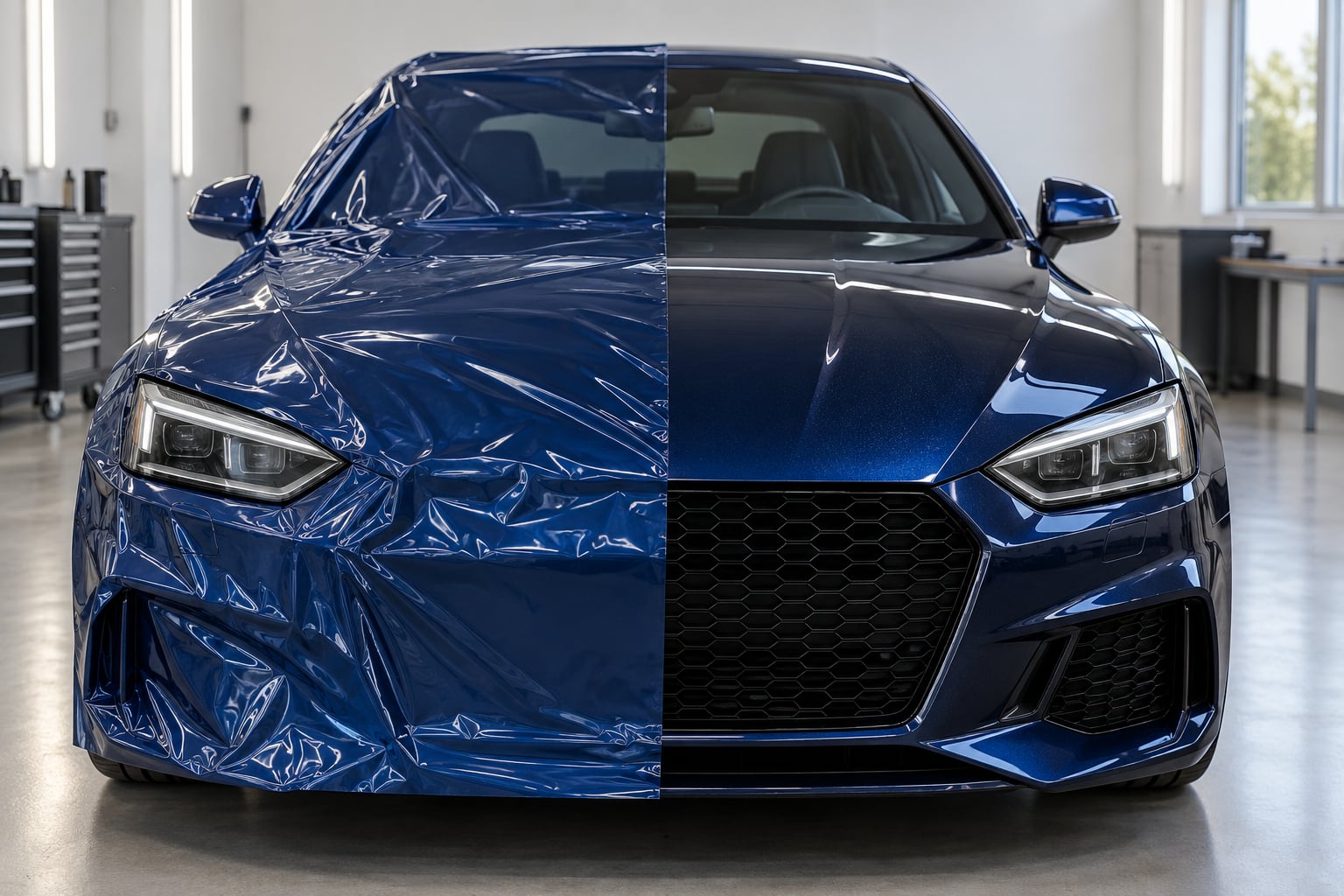
A vinyl wrap is a temporary adhesive film applied over a car’s factory paint to change its color or finish, while car paint is a permanent sprayed coating laid directly onto the panel’s metal and primer. For most people deciding vinyl wrap vs paint for cars, the answer is simple: wrap when you want flexibility and you plan to keep the car under five years, paint when you want a factory-equivalent finish you will live with for a decade.
The two options get compared constantly because they solve the same problem, change the look of a car, with completely different consequences. A wrap peels off and hands the original paint back to you. Paint becomes part of the car and can only come off by sanding. That single difference drives the cost, the lifespan, the resale conversation and whether you can change your mind a year from now.
What follows is a straight comparison built for owners making a decision, not for shops selling one option over the other. Costs below are typical US ranges and they change over time, so treat them as a benchmark for judging a quote rather than a quote themselves.
Table of Contents
- Vinyl Wrap vs Paint for Cars at a Glance
- What Is a Vinyl Wrap for Cars?
- What Is Car Painting?
- Cost and Installation Time
- Appearance and Customization
- Durability, Protection, and Maintenance
- Resale Value and Future Repainting
- Vinyl Wrap vs Paint for Cars: Which Is Better by Use Case?
- A temporary color change on a car you will keep under five years
- Business branding on a fleet vehicle
- A show car chasing a finish paint cannot match
- A used car that needs to look presentable
- A damaged or peeling factory clear coat
- A chrome or plastic-trim refresh
- A long-term owner who will keep the car a decade
- Can a first-timer do either job?
- Which Should You Choose?
- Frequently Asked Questions
- Conclusion
Vinyl Wrap vs Paint for Cars at a Glance
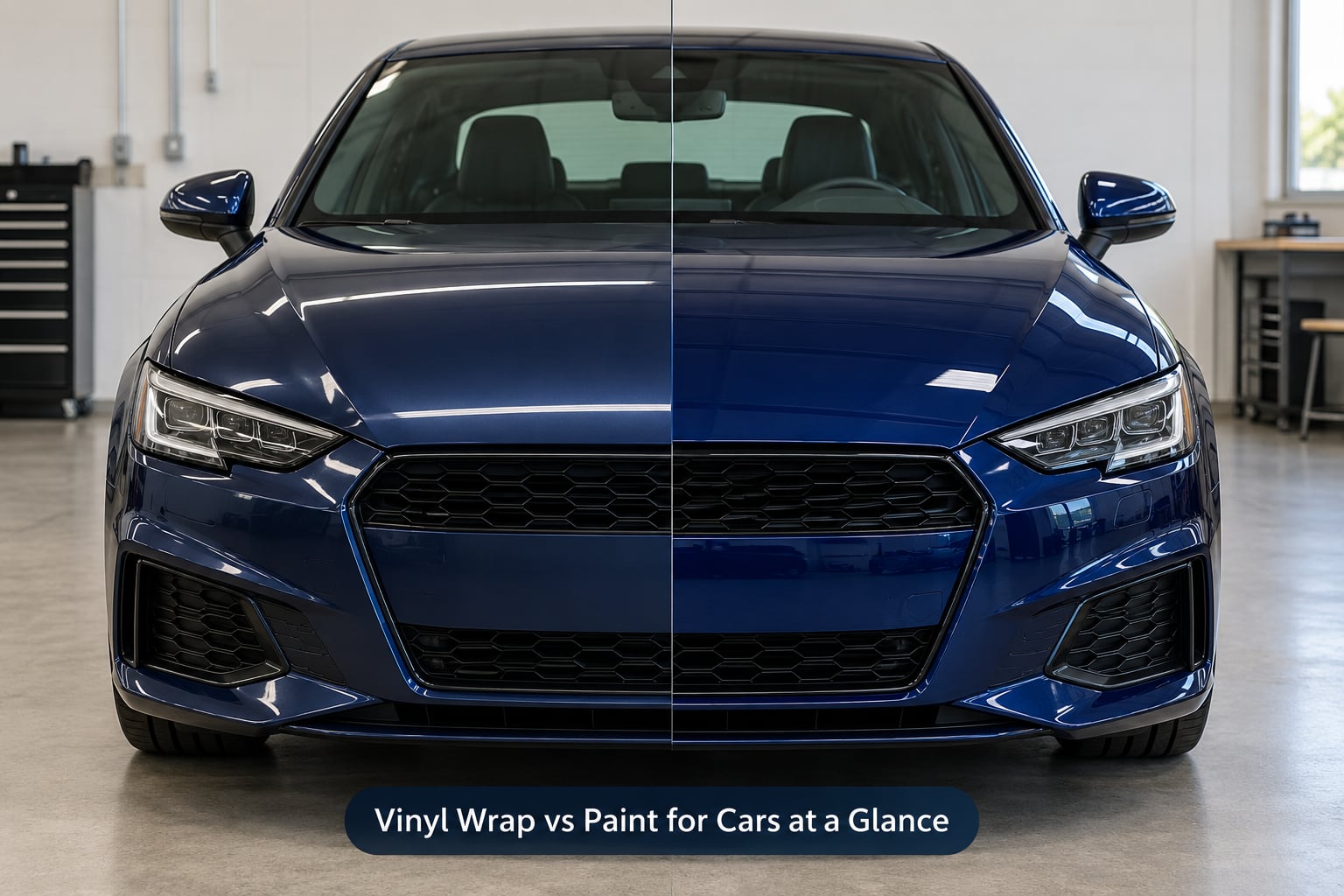
The table below is the whole argument on one screen. Every figure is a typical US range for a professionally installed job in 2026, not a price quote.
| Factor | Vinyl Wrap | Car Paint |
|---|---|---|
| What it is | Cast or calendered adhesive film laid over factory paint | Pigment sprayed onto bare metal, primer and sealer, then cleared |
| Typical cost, mid-size sedan | 2,500 to 5,500 US dollars, full color change | 3,500 to 9,000 US dollars, full three-stage respray |
| Time to complete | 1 to 3 days, longer if panels come off | 5 days to 2 weeks including disassembly and cure time |
| Expected lifespan | 5 to 7 years moderate climate, 2 to 4 years in hard sun | 10 to 20 years with normal care |
| Reversible | Yes, peels off with heat and patience | No, has to be sanded off |
| Original factory paint | Preserved underneath and returned on removal | Removed during prep and replaced by the new finish |
| Finish options | Gloss, satin, matte, chrome, color shift, forged carbon, texture, graphics | Gloss, satin, matte, metallic, pearl, candy, two-tone, custom art |
| Rock chip resistance | Absorbs light impacts; a deep chip goes through to paint | Chips expose primer and metal on bare panels |
| Maintenance | Hand wash, no brushes, no high pressure at edges, wrap-safe sealant | Normal hand or automatic wash, wax, polish and compound |
| Spot repair | Not practical; a damaged section means replacing film on that panel | Feathered blend or refinish the whole panel |
| Best for | Short ownership, business branding, novelty finishes, lease returns | Long-term ownership, restored vehicles, damaged factory clear coat |
Read that last row again if you only read one row. The cheapest-looking option up front is often the more expensive one over the time you actually keep the car.
What Is a Vinyl Wrap for Cars?
A vinyl wrap is a thin sheet of calendared or cast vinyl with a pressure-sensitive adhesive on the back. It bonds to the clear coat rather than soaking into it, which is exactly why it can be removed later.
Installation is more involved than sticking a decal on. Panels and trim come off, the surface gets cleaned and often paint-corrected, and each section of film is stretched into place with a heat gun or torch. The installer post-heats the film so the adhesive flows into the microscopic texture of the clear coat, then trims the edges and hides the seams. Good seams land in factory shadow lines, bad seams show as pale lines across a door.
Film type matters more than any brand sticker. Cast vinyl is thinner, more flexible and more forgiving during installation. Calendered vinyl is thicker and cheaper, but it shrinks faster, resists stretching around compound curves and is a common source of lifted edges and early failure.
Wrapping works best when the paint underneath is sound, the car will be kept for a few years, and the goal is either a color that paint cannot easily produce or a look that will be undone later.
What Is Car Painting?
A professional respray is a permanent coating system. The car is disassembled down to bumpers, lights and trim, damaged metal is repaired, and the panel is sanded through the old clear coat to bare metal or to sound primer.
From there the sequence runs: seam sealer where factory spot welds were, primer on bare metal, a sanded surface, sealer, base coat, then clear coat. A quality job uses a three-stage system where the base carries the color and flake and the clear carries the gloss and the UV protection. Single-stage systems mix pigment into the clear and are cheaper, flatter and fade faster.
Repainting means fixing oxidation, peeling or previous damage on a car you keep. A color change means covering the entire car in the new color, and premium two-tone or candy work adds hours and several passes. That second category is the one most people are actually comparing against a wrap.
Cost and Installation Time
A wrap is usually cheaper than a comparable color change, but not by the margin most shop sites suggest, and the gap narrows fast on trucks, SUVs and anything needing paint correction first.
Vinyl wrap vs paint cost by vehicle size
All figures in US dollars, full professional job, 2026.
| Vehicle | Full vinyl wrap | Full color-change respray |
|---|---|---|
| Compact sedan or hatchback | 2,000 to 3,800 | 3,000 to 6,000 |
| Mid-size sedan or coupe | 2,500 to 5,500 | 3,500 to 9,000 |
| SUV or crossover | 3,200 to 6,500 | 4,500 to 10,000 |
| Full-size pickup or van | 3,800 to 7,500 | 5,000 to 11,000 |
| Exotic or European sports car | 6,000 to 15,000 | 12,000 to 30,000+ |
| Partial wrap (roof, hood, accents) | 600 to 2,000 | 900 to 2,500 for the same panels |
What drives the price
Vehicle size and body complexity set the base. A hatchback with big glass areas is quick; a vehicle with heavy chrome, textured plastic bumper trim or deep concave curves takes far longer for both options.
Panel disassembly adds labor on the wrap side. Door handles, lights, badges and sometimes entire grilles come off, and each one is a chance for a visible seam or a scratch.
Color and finish set the material cost. Chrome, color shift and forged carbon films cost several times more per yard than solid gloss, and specialty sprays cost more in both paint and booth time.
Location matters more than buyers expect. Shops in high-cost metros and in areas with heavy salt or rock use legitimately charge more, and freight and film availability both feed into it.
How long each job takes
A full wrap on a sedan usually takes one to three days, longer if the car needs a paint correction or if trim has to be removed and refitted.
A full respray takes roughly five days to two weeks. Disassembly, metal repair, sanding, primer, several color coats, clear, reassembly and cure time all sit in that window, and a candy or two-tone job pushes toward the long end.
So a wrap gives a car back to normal use faster, which matters when the car has to earn its keep while the work happens.
The prep work that quietly adds to the bill
This is where quotes diverge most and where no competitor on the search page talks openly. Paint correction is the big one. Wrapping over oxidized, chapped or peeling paint traps the damage underneath and bakes it with heat, so a wrap job on a rough car needs a decontamination and one-stage polish first. Repainting does not need that polish, but it does need the panel properly prepared, which is the labor the paint is hiding.
Damaged panels are the second hidden cost on the paint side. One rusted quarter panel turns a straightforward respray into a metal repair plus refinish. Most owners who get a shock quote discover this afterward rather than beforehand.
The five-year math
Annualize it and the picture changes. A wrap at 4,000 that lasts four years costs about 1,000 a year; a respray at 6,000 that lasts fifteen years costs about 400 a year. Flip the logic and the wrap wins if you sell or re-finish inside roughly five years, and paint wins comfortably past that mark.
Appearance and Customization
A wrap can do things paint cannot. Satin, matte, brushed metal, forged carbon, chrome, chameleon color shift and textured finishes all exist in film, and a wrap delivers them with no risk of the coat reading uneven under a parking-lot light.
Paint wins on depth and consistency. A quality three-stage metallic or pearl sprayed in a clean booth shows more of that layered, shifting look than any film, and a factory-style respray is the only one of the two options that repairs a panel to look like it came out of the factory.
Graphics are a wrap specialty. Business names, phone numbers, service fleets and racing liveries can be printed directly into the film, which is why commercial fleets are almost always wrapped rather than painted.
Two wrap-specific things to watch. First, seams. A large flat panel can often be covered in one piece, but doors, roofs and rockers are stitched from two or three sections, and the seam placement decides whether the car looks premium. Second, paint matching. Film is made in repeatable batches, so a later panel added by a different shop can come in a slightly different shade. Paint matched from a formula can land on the same color, which is a real advantage for repair work.
Durability, Protection, and Maintenance
Paint outlasts film. A sound respray runs 10 to 20 years, while a quality cast wrap runs five to seven years in moderate climates and two to four years where UV is constant. Gloss films fade more gracefully than matte ones, which have no gloss to lose and show every wash mark, fingerprint and swirl.
The two protect against different things. Film absorbs small stone impacts and blocks UV fading, light abrasion and road grime, so rock chips that would reach bare paint on an unwrapped car usually never reach it. Paint resists chemical exposure, road salt and fuel spills far better than film does, and a waxed or ceramic-coated finish shrugs off bird droppings and bug residue that will etch film.
Corrosion is where paint wins outright. Film does nothing for rust because it sits on top rather than bonding into the panel, so a wrapped car still needs its drains clear and its paint sound underneath.
Climate changes the answer more than most articles admit. In a hot desert, expect gloss fade and edge lift sooner and plan a full wrap at three years instead of five. In a humid coastal market, salt and moisture attack the panel edges, which makes both a sound respray and a wrap over corrected paint better options. In a snow belt, film edges are the weak point, because grit and plow spray attack the seam and the rocker areas first.
Washing rules for a wrapped car are stricter than most owners expect:
- Hand wash only with a pH-neutral soap and clean microfiber mitts.
- Never use an automatic wash with spinning brushes; the brush catches edges and lifts them.
- Keep high-pressure water away from panel gaps, seams and the underside of trim.
- Wax with a wrap-safe sealant. Do not compound or polish film, and treat matte and satin with a dedicated product or nothing at all.
- Never use solvent degreasers, pressure washer chemicals or tire shine on the finish.
Painted cars need none of that. A normal wash, wax and occasional polish keeps clear coat in good shape, and if a panel does get chipped, the repair path is straightforward: blend it or refinish it.
Resale Value and Future Repainting
Wrap removal is a genuine advantage and the most repeated piece of advice on enthusiast forums: if you wrap it and dislike it, you take the wrap off and no damage is done. If you paint it and dislike it, you are stuck with the repaint until the next one.
Wrapping also preserves original paint for lease returns and trade-ins. Owners keeping a car three years or less consistently choose a wrap to avoid end-of-lease wear penalties and to hand the dealer back factory-finished sheet metal. Paint cannot help there at all, because a full respray on a leased vehicle is generally charged against you at return.
A car that has been resprayed in a non-factory color can also complicate a sale. Some buyers see it as a defect, some see it as customization they will pay for, and the value effect is inconsistent enough that it should not drive the decision on its own.
Two practical details people miss. A full color change may need to be declared to your insurer, since a declared value can increase and some policies treat a non-original finish differently. In some states, inspection looks at the finish closely enough to matter after an unauthorized repaint. Both are cheap to check and awkward to discover later, so ask your insurer and your state motor vehicle office before the work is done.
Vinyl Wrap vs Paint for Cars: Which Is Better by Use Case?
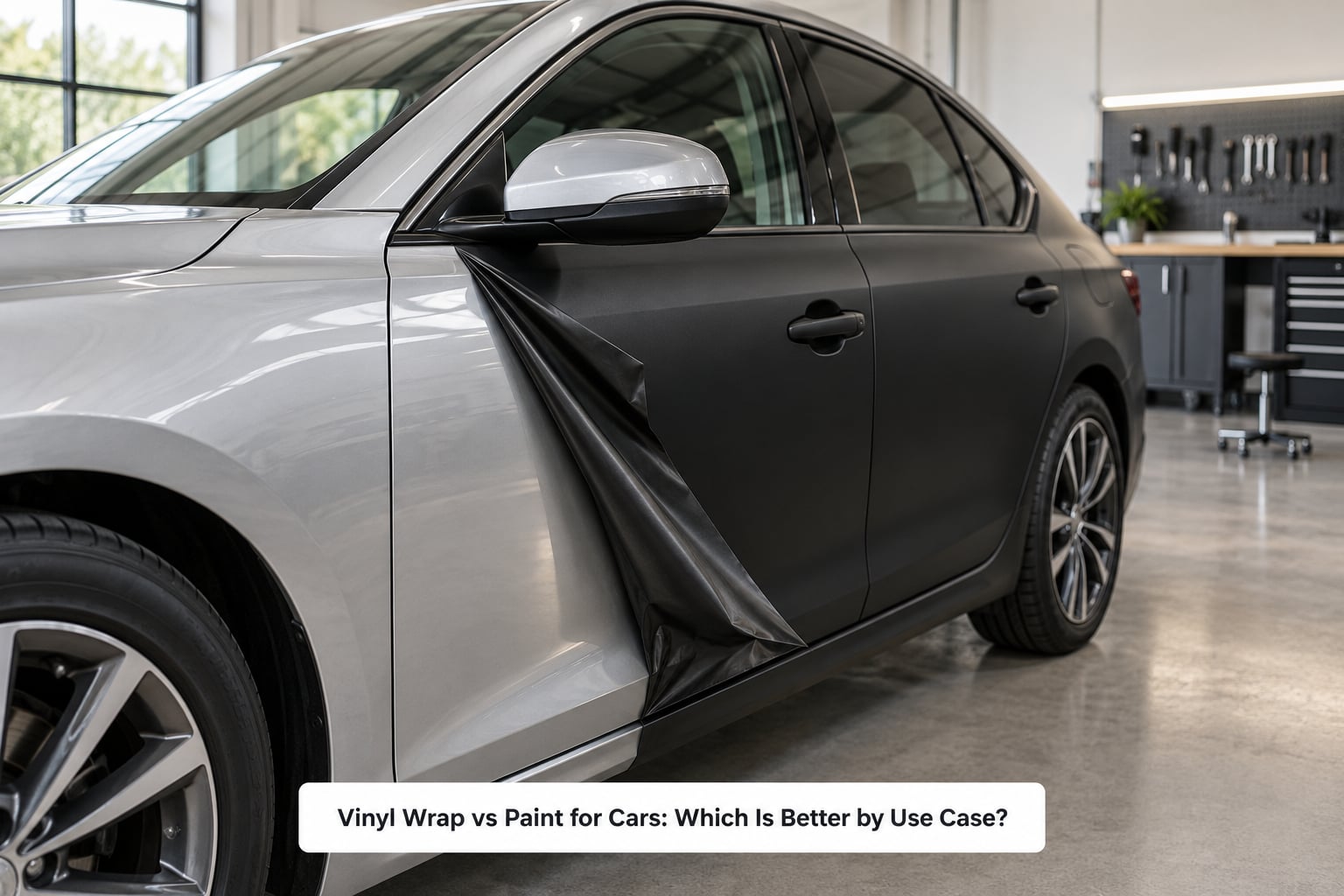
Most arguments go wrong because people compare the best case for one option with the worst case for the other. Match the scenario instead.
A temporary color change on a car you will keep under five years
Wrap. The math favors it, the resale favors it, and reversing course later costs nothing. Paint makes a permanent decision in the first year of a five-year ownership window.
Business branding on a fleet vehicle
Wrap, without much debate. Phone numbers, logos and service areas change as the business changes, and fleet vehicles get repainted or sold constantly. Film prints graphics in one pass and peels off when the van is retired.
A show car chasing a finish paint cannot match
Wrap, if the look is a matte, satin, forged or color-shifting finish. If the car is a restorable project and the goal is a flawless deep candy or a flawless pearl, a paint shop in a clean booth is the only way to get depth like that, and the car will be finished properly either way.
A used car that needs to look presentable
Wrap it, but correct the paint first. A gloss wrap over oxidized paint looks dull and traps the damage. Once it comes off after two years, the paint underneath is the same paint you had, which matters when you sell.
A damaged or peeling factory clear coat
Paint. This is the clearest case on the whole page. Wrapping failing clear coat hides it for a season and makes it worse, because the film holds heat against paint that is already separating. A full respray treats the panel properly. Owners on r/Autobody and r/AcuraTSX reach the same conclusion, and it is the one place where spending more is the cheap decision.
A chrome or plastic-trim refresh
Wrap. Paint has famously poor adhesion to chrome and to textured plastic bumper trim, and peeling trim is a fast way to make a car look worse than before. A satin or gloss film over trim, or a chrome delete, is faster, cheaper and reversible.
A long-term owner who will keep the car a decade
Paint. Lower annualized cost, better chemical and salt resistance, the ability to polish, and spot repairs that are actually possible all point the same direction once you are past the five-year breakpoint.
Can a first-timer do either job?
A full wrap is genuinely learnable and lots of people get through a sedan in a weekend, but the results split sharply: clean hands, a proper heat gun, a squeegee and patience for edges decide the outcome. Paint is a different story. A full respray needs a booth, a gun, mixing, sanding and clear coat, and a first attempt at home ends in a car that needs a respray anyway. If you are working on a budget, get the wrap professionally done and the paint corrected at the same time.
Which Should You Choose?
Choose a vinyl wrap when you want a color change you can undo, a finish paint cannot easily produce, removable branding, or the best possible outcome when selling or returning a car in the next few years.
Choose paint when the car is a long-term keeper, when the factory finish is already failing, when you want a restored or show-quality result, or when you simply do not want a film sitting between you and the panel for a decade.
There is a third option worth pricing: a full wrap with paint protection film on the front clip. The PPF takes the stone chips on the bumper, hood and mirror housings while the color film handles the look, and the two together often land near the cost of a modest respray. If you will drive it on highway salt and gravel for years, that is the combination I would ask a shop to quote.
Either way, ask for the film brand and whether it is cast or calendered, ask whether paint correction is included, and ask what happens to the warranty of the finish.
Frequently Asked Questions
Is a vinyl wrap cheaper than a full paint job?
Usually, yes. A full color-change wrap on a mid-size sedan typically runs 2,500 to 5,500 US dollars, while a comparable three-stage respray on the same car runs 3,500 to 9,000 or more. Vehicle size, disassembly, paint condition and color complexity move both numbers, so compare quotes that list the same work.
How long does a vinyl wrap last on a car?
A quality cast vinyl wrap lasts about five to seven years in a moderate climate and roughly two to four years in hot, sunny regions with constant UV exposure. Film quality, thickness, finish and installation skill move that range more than the brand label does, and gloss films generally outlast matte ones.
Can a vinyl wrap be removed without damaging the paint?
Yes, when the wrap went onto sound paint and the film is removed before it bakes on or hardens. Heat and patience do most of the work. Wraps applied over peeling, oxidized or repainted surfaces can lift that coating along with the film, which is the main way a removal causes damage.
Should I wrap or paint a car with existing paint damage?
Repair the damage first, then choose. A wrap hides failing clear coat and holds peeling edges down temporarily, but the film traps the problem underneath and post-heating makes it worse. A respray treats damaged panels properly, and broad clear coat failure across many panels usually justifies a full repaint.
Can you wash and wax a vinyl-wrapped car?
Hand wash only, using a pH-neutral soap and clean microfiber mitts. Skip automatic car washes with spinning brushes, and keep high-pressure water away from seams and panel gaps. Waxing is fine with a wrap-safe sealant, but never polish film, and treat matte and satin finishes with a dedicated wrap product or nothing at all.
Does vinyl wrap protect the original car paint?
It does more than most owners expect. Cast film blocks UV fading, light abrasion and road grime, and absorbs small stone impacts that would chip bare paint. It does not prevent corrosion, because film sits on top rather than bonding into the panel, and it is no substitute for a respray on metal that is already failing.
Conclusion
Vinyl wrap vs paint for cars comes down to time and permanence. Short ownership, reversible looks, branding and finishes film can do better all point to a wrap. Long ownership, damaged factory clear coat, corrosion resistance and true factory quality all point to paint.
Before booking anyone, walk around the car in daylight and note every chip, peel and oxidized panel. Decide the finish you actually want and what you can spend, then get two written quotes from a reputable wrap installer and a qualified body-and-paint shop. Comparing those two quotes on the same scope of work is usually the fastest way to a decision you will not regret.