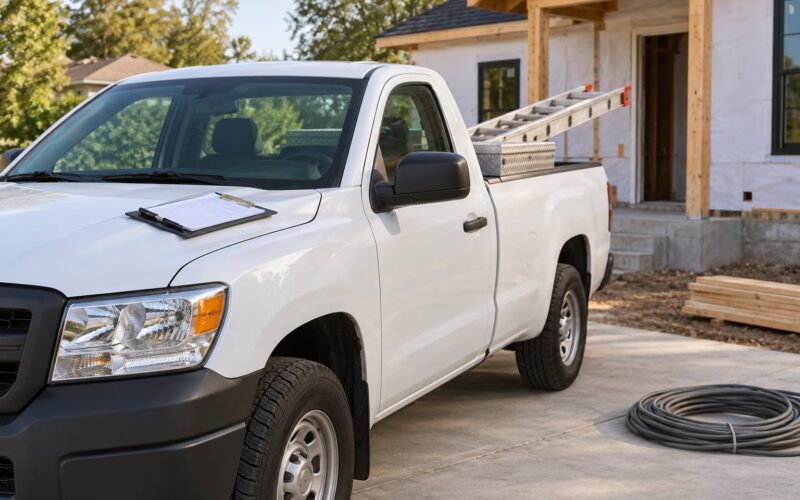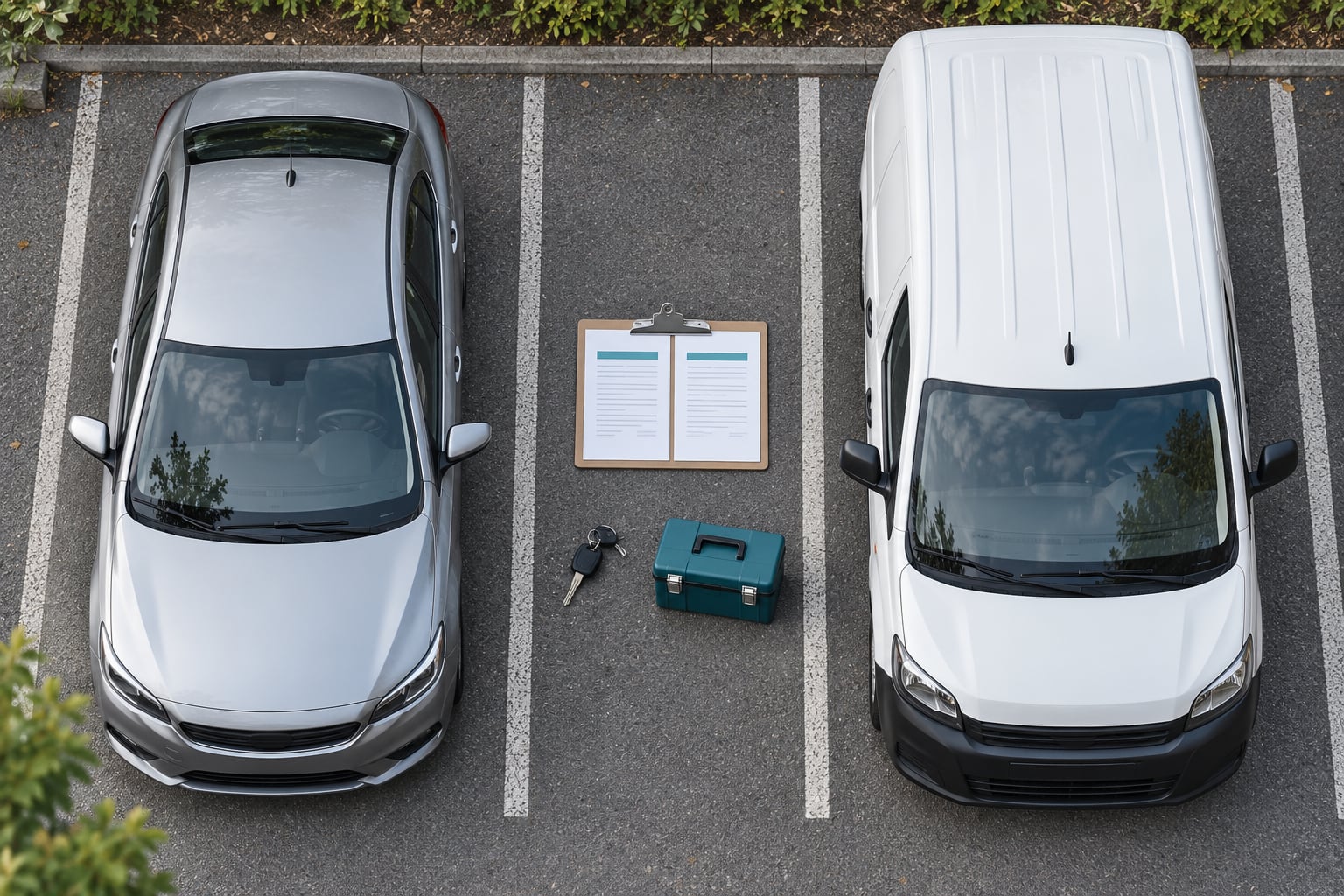
Personal auto insurance covers vehicles driven for private purposes: commuting, errands, and family trips. Commercial auto insurance covers vehicles used in the course of business, including deliveries, job-site visits, hauling tools, and carrying people or goods for pay. Insurers judge a claim by how the vehicle was being used at the time of the loss.
That last sentence is the whole reason this decision matters. A claim denied for business use means you pay for the repairs, or a business pays for someone else’s injuries.
If you are somewhere in the grey zone, you are not the only one. Home-based business owners, field sales reps, and mobile healthcare workers ask the same question on insurance forums: should I have told my insurer I drive to client homes? One recurring answer there is worth repeating. An agent verbally approving personal coverage for job-site driving, and then a claim still being questioned at adjust time. A conversation is not a coverage guarantee. Written confirmation is.
Table of Contents
- Personal Auto vs Commercial Auto Insurance Differences at a Glance
- What Is Personal Auto Insurance?
- What Is Commercial Auto Insurance?
- How Do Insured Activities and Business Use Differ?
- There is no mileage number to trust
- Use is judged at the time of the loss
- Which Vehicles Can Each Policy Cover?
- Personal auto vs commercial auto insurance differences for a one-car LLC
- What Are the Liability Coverage Differences?
- How Do Physical Damage, Comprehensive, and Collision Coverage Differ?
- How Do Deductibles, Premiums, and Claims Costs Compare?
- Which Policy Is Required for Delivery Drivers, Rideshare Work, and Employee Vehicles?
- Rideshare and delivery apps: endorsement or commercial policy
- When an employee drives their own car for work
- What Documents and Questions Should You Ask an Insurer?
- How to tell which policy type you actually have
- Seven questions to ask before you switch or add a vehicle
- Which Should You Choose?
- Frequently Asked Questions
- Will my personal auto policy pay if I was driving to a job site?
- Do I need both personal and commercial auto insurance?
- Can I keep a work truck on my personal policy if I own an LLC?
- Is a rideshare endorsement the same as commercial auto insurance?
- What is hired and non-owned auto?
- What happens if I use a commercial vehicle for personal errands?
- Conclusion: Choose the Policy That Matches the Vehicle and Its Use
Personal Auto vs Commercial Auto Insurance Differences at a Glance
The table below covers the ten comparisons that decide which policy a vehicle belongs on: use, who the policy defends, vehicle eligibility, driver eligibility, liability limits, physical damage, exclusions, documentation, personal use, and cost.
| Factor | Personal auto insurance | Commercial auto insurance |
|---|---|---|
| Intended use | Private driving, commuting, errands, family travel | Business operations: deliveries, job sites, service calls, hauling, transit |
| Who it defends | The named insured and household family members | The business entity named on the policy |
| Eligible vehicles | Household vehicles, plus occasional business use in some policies | Company-owned, rented or leased fleet vehicles, and certain personal vehicles used for work |
| Who may drive | Named insureds and listed household drivers | Any employee or hired driver, rated by licence class and hours |
| Liability limits | Often state minimums, commonly 100/300/100, sometimes a combined single limit | Much higher limits, often 500,000 dollars or 1 million dollars or more per accident |
| Physical damage | Collision and comprehensive on owned vehicles, with rental reimbursement | Physical damage on scheduled autos, plus trailers, tools, cargo and equipment |
| Key exclusions | Public or livery conveyance, delivery of products for compensation | Personal use, unless an incidental use clause is added |
| Paperwork others request | Rarely required by clients or contracts | Certificates of insurance, additional insured, waiver of subrogation, primary and non-contributory |
| Personal use of the vehicle | Fully allowed | Usually excluded unless a symbol or endorsement is added |
| Cost drivers | Vehicle value, driving record, household drivers, mileage, location | All of those, plus industry class, annual mileage, radius of operations, cargo, employees, claims |
What Is Personal Auto Insurance?
Personal auto insurance is a liability plus physical damage contract written for private use of a household vehicle. The most common version is the ISO personal auto policy form, which carriers adapt and file in each state.
It protects you, other named insureds, and household members who are listed or regular drivers. Liability pays for injury and property damage you cause to someone else, up to the limits you chose, and physical damage covers your own vehicle under collision and comprehensive coverage.
Business use sits outside what the policy is priced for. Commuting to a day job, dropping kids at school, a weekend trip, and an occasional errand for a relative are all normal. A vehicle that earns money is a different exposure the insurer never quoted you for.
What Is Commercial Auto Insurance?
Commercial auto insurance covers vehicles used in business operations, and the named insured is the business rather than a person. The standard commercial form, CA 00 01, is built around symbols that tell you exactly which autos, trailers, and coverage types are on or off the contract.
That symbol structure is why commercial policies are harder to read than personal ones. A symbol for hired and non-owned auto extends liability to vehicles the business does not own. Other symbols add trailers, cargo, or forklift-drawer types of equipment.
Commercial policies also respond to the paperwork side of running a business. Contractors routinely need certificates of insurance, additional insured endorsements, and waivers of subrogation before a client will let them on site. Personal policies simply do not provide them.
Certain businesses that operate vehicles for hire on an interstate basis fall under federal motor carrier rules and may need a motor carrier endorsement and a filed form. That is a separate requirement layered on top of the commercial policy.
How Do Insured Activities and Business Use Differ?
The dividing line is the purpose of the trip, not the distance. Here is roughly how insurers and agents describe the split in practice.
- Stays personal: commuting to an employer, errands, family visits, trips for personal errands during the workday.
- Grey zone: sales calls at client offices, occasional service visits, a work laptop in the trunk. Often acceptable, but disclosure is the safe move.
- Moves to commercial: regular job-site visits, hauling tools or materials, delivering goods, carrying clients or crew, driving on a mileage allowance.
- Needs its own endorsement: rideshare and app-based delivery work on an otherwise personal policy.
There is no mileage number to trust
People searching for a rule want one number: how many work miles per year before a personal policy stops applying. There isn’t a universal one. Carriers look at the purpose of the driving, how often it happens, and how the vehicle is equipped.
Use is judged at the time of the loss
If business use was never disclosed and insured, the adjuster investigates what the vehicle was doing on the day. That is the moment the exclusion is tested, not the day you signed the application.
Which Vehicles Can Each Policy Cover?
Personal policies are written around vehicles you own or have a long-term lease on and drive for personal purposes. Some carriers offer a business-use endorsement that adds limited commercial exposure to a named personal vehicle, usually with stricter rules on who may drive it.
Commercial policies can schedule company-owned vehicles, rented or leased fleet vehicles, and vehicles titled to the business, plus autos the business hires or borrows. A single company van driven by a rotating crew of five is a completely different risk profile from one family sedan.
Personal auto vs commercial auto insurance differences for a one-car LLC
Owning an LLC does not move your truck to a commercial policy. Title does. A vehicle titled to the business, or used regularly for business purposes, is rated commercially even when one person drives it and no employees are involved. Some carriers still write a single commercial auto policy for a one-vehicle LLC, but the form is the commercial one.
What Are the Liability Coverage Differences?
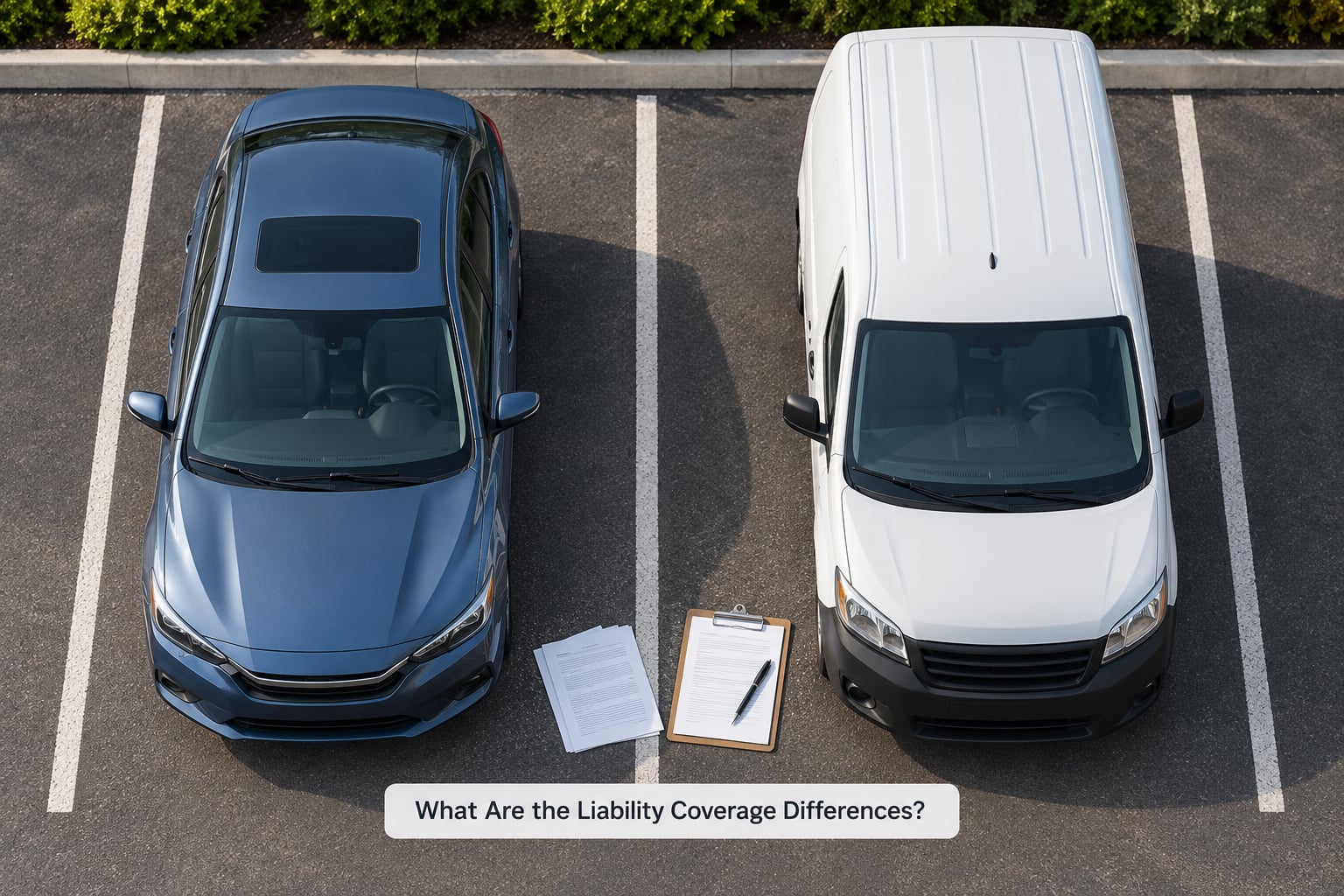
Liability is where the two policies differ most in dollar terms. Personal policies are frequently written at the state minimum, which in many states is 100,000 dollars per person, 300,000 dollars per accident for bodily injury, and 100,000 dollars for property damage. A common upgrade is 100/300/100 paired with a personal umbrella that adds 1 million dollars or more on top.
Commercial policies are written with much higher limits because the exposure is larger. The vehicle may carry employees, customers, or valuable cargo, and a badly injured person generates costs that a 300,000-dollar per-accident cap may not cover. Limits are commonly quoted per occurrence or as a combined single limit, where one number is the most the insurer pays for a single accident.
Uninsured and underinsured motorist coverage usually exists on both forms, but personal injury protection and medical payments are largely personal-policy features. Coverage for towing and loading and unloading is the reverse: it matters mostly on the commercial side, where a truck at a loading dock is doing its job with the cargo still in the bed.
Hired and non-owned auto is the coverage most small businesses miss. It extends liability to vehicles the business does not own but uses, including an employee’s own car sent on a work errand. It is liability coverage only, and it does not substitute for the employee’s own personal policy.
How Do Physical Damage, Comprehensive, and Collision Coverage Differ?
Both policy types can carry physical damage. The difference is the breadth of what gets covered and how the vehicles are listed. Personal collision and comprehensive typically apply only to vehicles scheduled on the personal policy, with a deductible the insured chooses and rental reimbursement often available as a separate coverage.
Commercial physical damage works off a schedule of vehicles and can extend to non-owned autos only if that is added. It also brings in property that never exists on a personal policy: trailers, mounted equipment, tools and materials, cargo in transit, and in-transit loss between stops.
Deductibles are a chosen trade rather than a fixed rule. A higher deductible lowers the premium; a lower one costs more. Some carriers also apply actual cash value rather than replacement cost to older commercial vehicles, which is a detail worth asking about before binding.
Loading and unloading coverage deserves its own line for contractors. Injuries that happen while transferring cargo between a truck and a job site happen far from a roadway, and they are treated differently from an ordinary collision.
How Do Deductibles, Premiums, and Claims Costs Compare?
Commercial auto insurance usually costs more than personal auto insurance, but it is not simply a dearer version of the same contract. The two are rated on different exposure bases, and the gap widens with the number of drivers, the annual mileage, the industry class, the value of the cargo, and the size of the operating radius.
Price depends on the vehicle and its value, the driving record of everyone who touches it, how many miles it runs in a year, what it carries, who rides in it, where it operates, and the claims history. Nobody can quote a premium without all of that, and any number offered before those details are known is a guess.
A few things do tend to move a commercial premium in the right direction: keeping the driver roster accurate and removing terminated employees, verifying annual mileage at renewal instead of guessing, keeping vehicles garaged when possible, accepting a telematics program, bundling with the business’s other lines, and right-sizing limits to real risk instead of copying a round number.
Which Policy Is Required for Delivery Drivers, Rideshare Work, and Employee Vehicles?
Scenario is everything here, because a delivery van, a family sedan, and a company pickup can all be in one fleet and still belong on different contracts.
| Situation | What usually stays personal | What the business still needs |
|---|---|---|
| Family commute and errands | The family car, personal policy | Nothing commercial |
| Drive to a single office | Usually still personal | Disclosure of the arrangement |
| Occasional client site visits | Often acceptable on a personal policy | Business-use endorsement, or disclosure first |
| Regular job sites, tools, deliveries | Rarely | Commercial auto with tools and equipment coverage |
| Vehicle titled to the LLC | No, title decides | Commercial auto named to the entity |
| Employee drives their own car on an errand | The employee’s personal policy | Hired and non-owned auto liability |
| App-based rideshare or delivery driving | Only with a rideshare or delivery endorsement | Commercial policy if driving is a business function |
| One family car plus one work truck | The family car | A separate commercial policy for the truck |
Rideshare and delivery apps: endorsement or commercial policy
A rideshare endorsement is not business auto insurance. It extends a personal policy into the waiting period between accepting a request and completing the ride, and many platforms require it. It is not written for a driver who is dispatching staff, carrying equipment, or running deliveries all day.
When an employee drives their own car for work
Both sides matter. The employee keeps personal coverage on their own car, and the business adds hired and non-owned auto liability so its entity is protected when that car is used for work. The employee cannot add their employer to a personal policy, and the business cannot force the employee to surrender personal coverage.
If an employer asks to be listed as a named insured on an employee’s personal policy, the honest answer is that this usually does not work the way the employer hopes. Forum consensus on this point is consistent: the personal policy stays personal, and the business handles its exposure through its own commercial policy.
What Documents and Questions Should You Ask an Insurer?
Before binding or changing coverage, have this ready: who owns the vehicle, who holds the title, how it is used on a typical week, who drives it, how many miles it runs annually, what it carries, how far it travels, and whether any client requires a certificate.
How to tell which policy type you actually have
If you already have a policy and want to know what you are holding, this takes about five minutes.
- Pull out the declarations page, which is the first page of the policy.
- Read the named insured. If it is a person’s name and your household members are listed, it is personal. If a business entity appears, it is commercial.
- Look at the vehicles listed and how they are described. A private passenger auto is personal wording; a symbol-based schedule of autos is commercial.
- Check the form number. Personal policies run on the PP 01 00 family of forms, commercial on the CA 00 01 family.
- Look for any business-use, rideshare, or delivery language and note the effective date of any endorsement.
Seven questions to ask before you switch or add a vehicle
- Is this vehicle eligible for my existing policy, or does it need a separate contract?
- Does my current policy cover any business use, and what exactly does that wording exclude?
- Do I need hired and non-owned auto, and does it cover liability only?
- What liability limits do you recommend, and how do they compare with what I carry at home?
- Are my tools, equipment, cargo, and trailer covered, and are they covered in transit?
- What is the annual mileage assumption, and how do I correct it at renewal?
- Can you issue a certificate of insurance, additional insured, and waiver of subrogation on this policy?
Which Should You Choose?
Personal auto insurance is the right contract for commuting, errands, family travel, and limited business use that your carrier has confirmed in writing. If the answer is yes on paper, keep it personal and save the difference.
Commercial auto insurance is the right contract when a vehicle is titled to or owned by the business, when it goes to job sites or makes deliveries, when employees or clients ride in it, when it carries tools or cargo, when a client contract requires certificates or additional insured status, or when app-based driving is a business function rather than a side errand.
Many small businesses need both. A personal policy for the family car and a commercial policy for the work truck is the normal, correct arrangement, and it is not double coverage. If your usage is genuinely mixed, have a licensed insurance professional review it before you buy, not after a loss.
Frequently Asked Questions
Will my personal auto policy pay if I was driving to a job site?
It may not. Most personal policies exclude driving in connection with a business, and the adjuster judges how the vehicle was being used at the moment of the loss. Agents on forums repeatedly report owners who were told personal coverage was fine, then met a denial inquiry anyway. Disclose the business use in writing before the trip, and get the endorsement or a commercial policy.
Do I need both personal and commercial auto insurance?
Many owners do, and having both is normal rather than redundant. The family car stays on a personal policy for commuting and errands. The work truck, company vans, and employee-driven vehicles sit on a commercial policy. The two contracts price different risks, so bundling everything onto one personal policy is the option most likely to leave a gap.
Can I keep a work truck on my personal policy if I own an LLC?
Forming an LLC does not by itself move the truck. Title and use do. A vehicle titled to the business, or used regularly for deliveries, job sites, or client service, is normally rated commercially even when you are the only driver and there are no employees. A few carriers will still quote a single-vehicle commercial policy rather than a full fleet contract.
Is a rideshare endorsement the same as commercial auto insurance?
No, and the difference matters if you drive more than occasionally. A rideshare endorsement extends a personal policy into the waiting and driving periods for a platform, which is exactly what most platforms require. It is not written for full-time delivery, crews, tools, or business dispatch, where a commercial policy with the right symbols is the correct contract.
What is hired and non-owned auto?
It is a commercial coverage that extends liability protection to vehicles the business uses but does not own, including an employee personal car sent on a work errand or a hired contractor’s vehicle. It is liability only, with no physical damage on the other vehicle, and it does not replace the employee’s own personal policy. It is the coverage most small businesses discover too late.
What happens if I use a commercial vehicle for personal errands?
Commercial policies usually exclude personal use unless an incidental personal use clause is attached, and the claim can be denied on that basis. If personal use of a company vehicle is routine rather than rare, ask for the symbol or endorsement that allows it, and confirm whether the coverage is physical damage as well as liability before you rely on it.
Conclusion: Choose the Policy That Matches the Vehicle and Its Use
Personal auto vs commercial auto insurance differences come down to one test: was this vehicle being used for personal purposes or for the business when it hit the road. Everything else, limits, drivers, deductibles, paperwork, follows from that answer.
Write down every vehicle you own or lease, who holds the title, who actually drives it, and what it is used for in an average week. Take that list to a licensed US insurance professional before you buy, add a vehicle, or change how you use one. Requirements vary by state, carrier forms change, and the policy contract itself controls what is covered.
This article is general information, not coverage or legal advice, and it is current for 2026. Verify the exclusions and limits in your own policy documents.