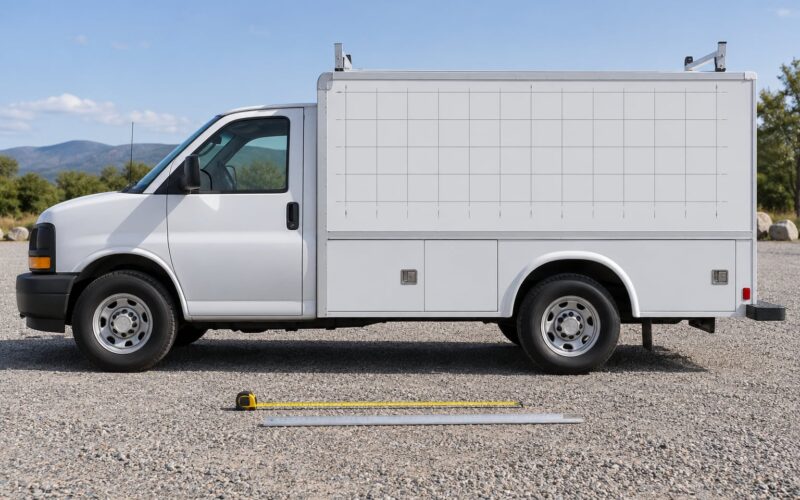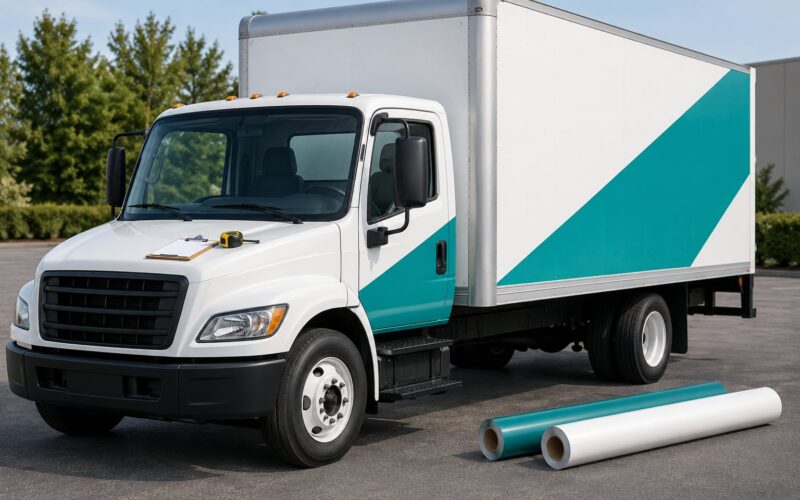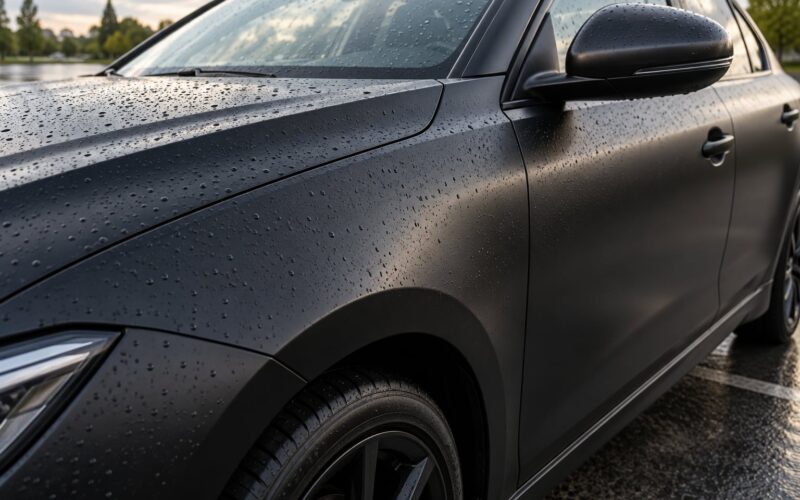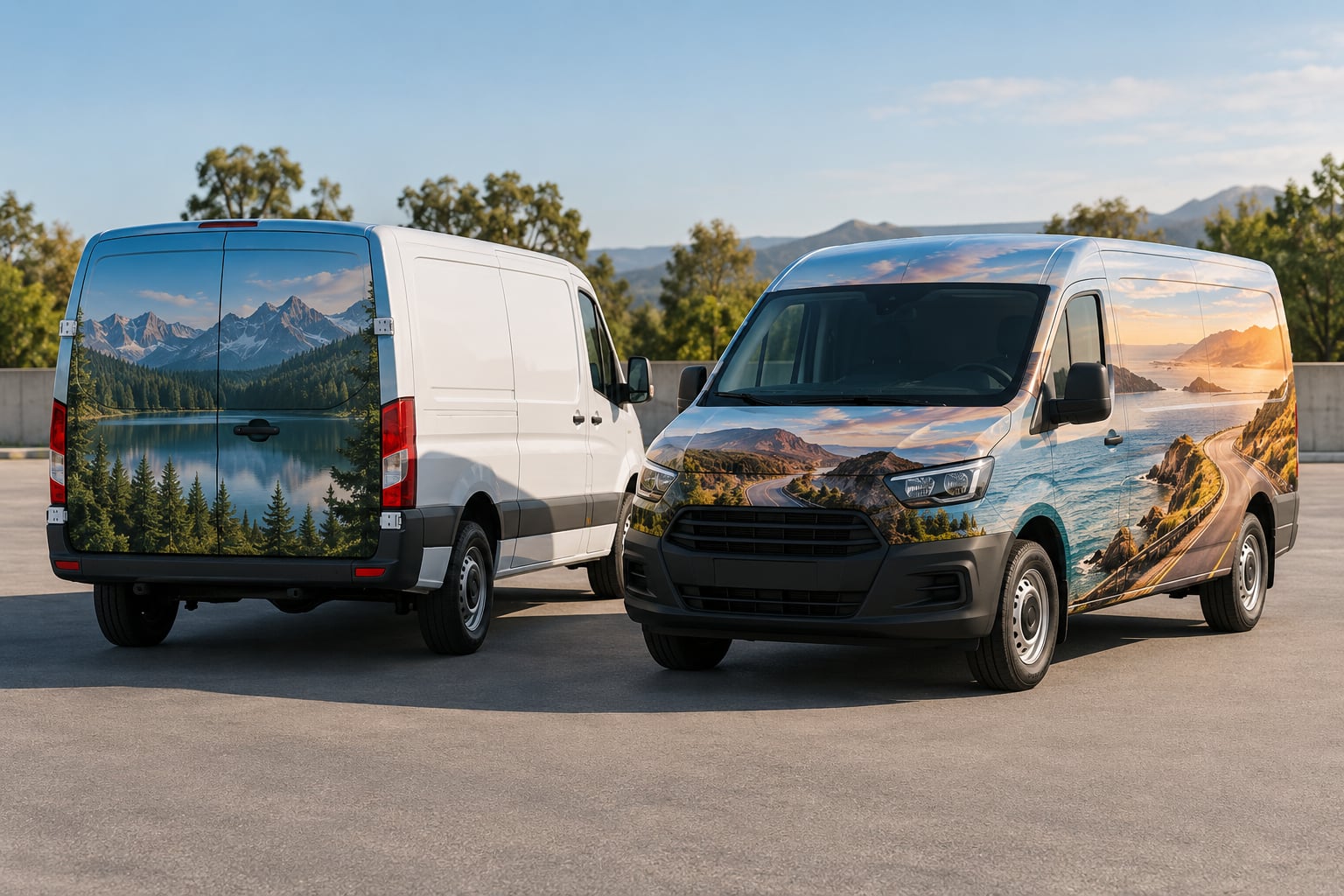
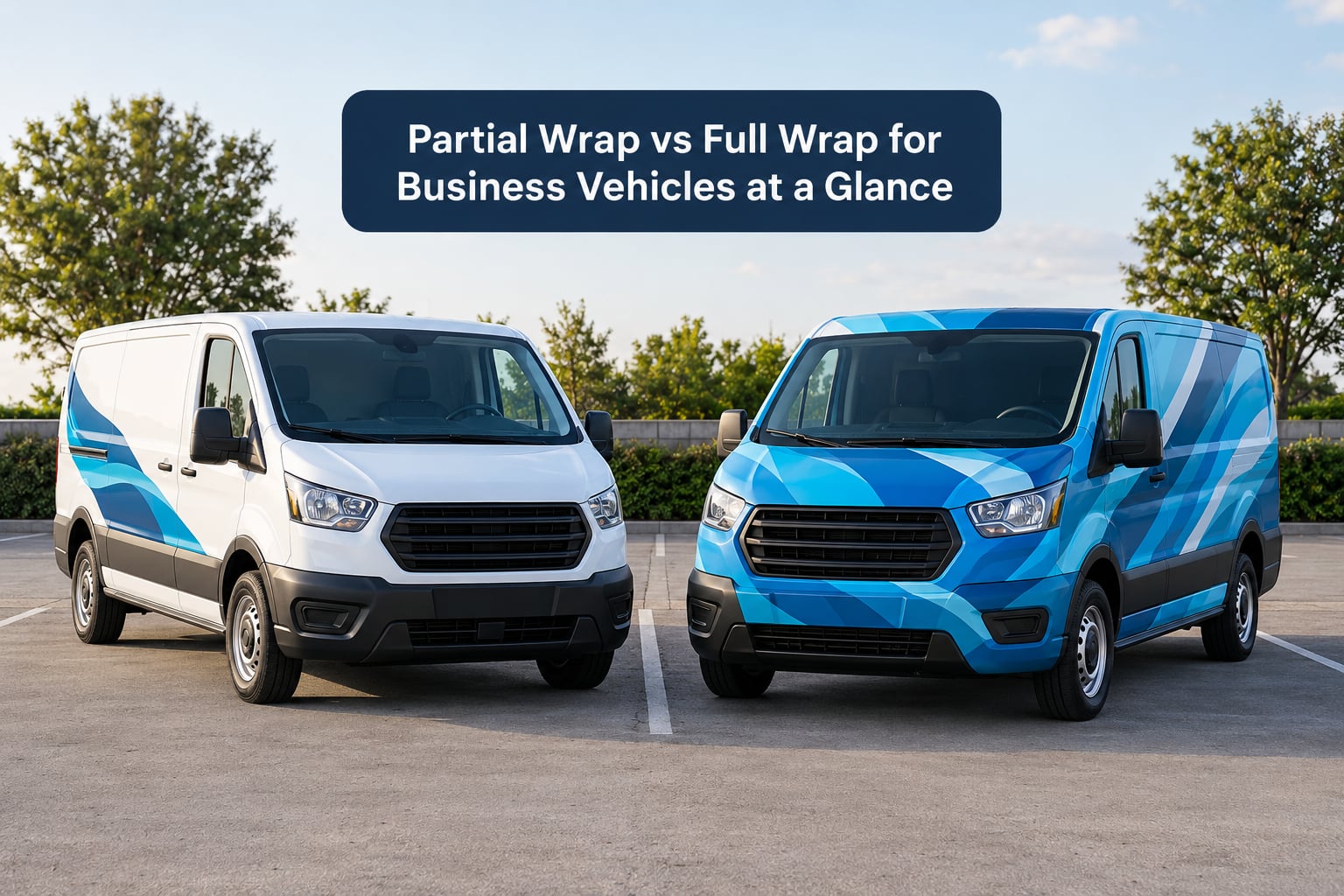
A partial wrap covers selected panels of a work vehicle, usually the doors, bed and rear panel, running about 25% to 75% of the visible surface. A full wrap covers nearly every visible exterior panel, so the factory paint disappears. Both use the same printed cast vinyl film. The real difference is coverage, installation scope and how much of your budget goes to labor versus ink.
Neither option is automatically better. A partial wrap is the right call for a one-vehicle service business that wants recognition without a long install or a big outlay. A full wrap pays off when the vehicle spends its day in traffic, sits at job sites in full view, or needs to match a fleet that already looks uniform.
Table of Contents
- Partial Wrap vs Full Wrap for Business Vehicles at a Glance
- How Do Partial and Full Wraps Differ?
- Cost and Installation Scope
- Brand Visibility and Professional Appearance
- Partial Wrap vs Full Wrap: Which Offers Better Design Flexibility?
- When a partial wrap offers more flexibility
- When a full wrap offers more flexibility
- Which Vehicle Type and Fleet Size Fits Each Option?
- Durability, Maintenance, and Resale Considerations
- Which Should You Choose?
- Frequently Asked Questions
- Are partial vehicle wraps less noticeable than full wraps?
- Can a business use different wrap designs on different vehicles?
- How long does a professional vehicle wrap last?
- Is a full wrap worth the cost for a one-vehicle business?
- Can vehicle wrap graphics be changed without repainting the vehicle?
- Conclusion
Partial Wrap vs Full Wrap for Business Vehicles at a Glance
| Factor | Partial wrap | Full wrap |
|---|---|---|
| Appearance | Branded panels sit on top of factory paint | One continuous surface across the vehicle |
| Brand visibility | Strong from the side and rear, limited head-on | Strong from every angle and distance |
| Vehicle coverage | Typically 25% to 75% of visible panels | Nearly all visible exterior panels |
| Design flexibility | Works with any paint color as negative space | Free rein across the whole body |
| Installation scope | Fewer panels, less preparation, shorter bay time | More material, more seams, longer bay time |
| Typical cost level | Roughly 40% to 60% of a full wrap on the same vehicle | The higher spend, driven by material and labor |
| Maintenance | Only branded panels need careful washing | Whole exterior needs careful washing |
| Fleet consistency | Harder to match across mixed paint colors | Easier to make every unit identical |
| Wins when | Budget is tight or the vehicle stays one to three years | The vehicle is a long-term brand billboard |
How Do Partial and Full Wraps Differ?
A full vehicle wrap covers nearly every surface a passerby can see: hood, roof, doors, mirrors, bumpers, bed or cargo panels, and often the rear. What you see on the street is graphics, not paint.
A partial vehicle wrap concentrates the message on selected areas. On a cargo van that usually means both doors and the rear panel, since those are the surfaces visible in traffic and at the customer curb. On a pickup it is commonly the doors, tailgate and lower bed sides, and the roof and hood stay in factory paint.
That leftover paint matters more than beginners expect. A partial wrap has to be designed so the unwrapped areas read as deliberate negative space rather than as panels somebody forgot. If your truck is white, that is easy. If it is an off-brand color you inherited from the used market, covering more surface is usually the cheaper route to a coherent look.
There is a third tier worth ruling in or out early. Lettering and spot graphics, or cut graphics, apply only what the message needs: a logo, a phone number, a web address, a unit number. It costs the least, installs in a few hours, and updates often. It is the right answer for support vehicles parked in a yard most of the day, and the wrong answer for anything that has to earn attention at speed.
Cost and Installation Scope
On the same vehicle, a partial wrap usually lands somewhere around 40% to 60% of what a full wrap costs. That ratio comes from four inputs, and it is worth understanding all four before you compare quotes.
- Material. Cast vinyl from 3M, Avery Dennison or Oracal comes priced by the roll, so square footage drives the film line. A partial wrap on a van might consume a fraction of what a full wrap does; the exact footage depends on how far up the panel the design runs.
- Print. Large-format print time scales with covered area, and so does ink and media waste.
- Over-laminate. A clear or matte laminate layer over the print extends outdoor life and takes the abrasion instead of the graphic. It is worth paying for on a vehicle that sees daily commercial use.
- Surface preparation and labor. Panels get decontaminated before film goes on. A full wrap means more panels to prep, more edges to tuck, and more seam work where the design crosses a body line or panel gap.
Install time follows the same pattern. Shops commonly quote multiple days for a full wrap on a large vehicle and about a day for a solid partial, with spot graphics in a few hours. Downtime matters when the truck is earning. Every extra day off the road is a day of missed stops, and that cost is invisible in the quote but very real in the season.
Because bundles differ between shops, normalize any quote before you compare. Ask each vendor to separate design time, printing, film and laminate grade, surface prep, old-graphic removal, and labor hours. A cheaper quote that quietly skips prep or laminate is not cheaper, and forum installers describe bubbling and edge lifting as the failure mode that shows up a few months later.
Brand Visibility and Professional Appearance
Visibility is a function of area and distance. At a stoplight, the side and rear panels do most of the work on any vehicle. On a highway, area scales with the square of viewing distance, so a full wrap keeps earning attention at 300 feet where a door logo has already become a smudge.
A full wrap also solves the mixed-paint problem outright. If two trucks in your fleet are one white and one dark blue, a single full-wrap design reads correctly on both. A partial wrap has to be re-colored per unit or your fleet drifts.
The counter-argument is real. A partial wrap that is designed with intent looks deliberate and modern, and a cramped full wrap can look worse than nothing at all. Busy backgrounds, low contrast, and a design forced around every panel edge produce a vehicle nobody wants to park in front of their shop.
Partial wraps look cheap when the graphic is a rectangle floating on an untouched door. They look deliberate when the design anchors to a body line, when the panel edges line up with a door gap or handle, and when the untouched paint is clearly part of the layout.
Partial Wrap vs Full Wrap: Which Offers Better Design Flexibility?
The design question behind this comparison comes down to how much of the vehicle you are allowed to ignore. Working out partial wrap vs full wrap for business vehicles is often easier once you accept that each panel you leave alone is a constraint your designer has to respect.
When a partial wrap offers more flexibility
Leaving factory paint visible buys you a simpler graphic. A logo, a phone number and a service-area line sit comfortably on white or silver and need no background. You can also run the same partial file on vehicles of different sizes, which matters when a second van is added six months from now.
When a full wrap offers more flexibility
Complete coverage frees the designer to use the whole body, including the roof, as one composition. A diagonal or wraparound pattern that would break across a partial panel boundary stays continuous on a full wrap, and every unit in the fleet can carry an identical design regardless of its paint color.
Which Vehicle Type and Fleet Size Fits Each Option?
Match the coverage tier to the shape of the vehicle and to how often the public sees it.
- Compact cars and sedans. Company cars parked at a client office benefit from a partial treatment on the doors and trunk. A full wrap on a low sedan is expensive per unit of visibility because there is little flat surface to work with.
- SUVs. A partial wrap handles the doors and rear hatch well. Full coverage makes sense when the SUV also carries a job-site display role.
- Pickup trucks. Doors, tailgate and bed sides carry the message, so a well-planned partial is the common choice. Full wraps make sense for show-trucks, mobile displays and trucks that tow branded trailers.
- Cargo vans. The easiest partial-wrapping candidate, since the two flat side panels and rear doors are the visible surfaces. Full coverage pays off when vans run daily urban routes and act as mobile billboards.
- Box trucks. Partial coverage here wastes the largest flat panel on the vehicle. If you are wrapping a box truck at all, cover the box.
- Mixed fleets. Standardize the file and pick one tier per vehicle class. A flagship full wrap with a consistent partial across the rest is a workable compromise, but wrapped and unwrapped panels meeting across different units is where consistency problems show up.
Fleet size changes the math quietly. At one vehicle, the wrap is a branding decision. At twenty, it is a procurement decision, and consistency, install scheduling and a single repeatable file start to matter more than any single vehicle’s look.
Durability, Maintenance, and Resale Considerations
Coverage does not change how long the film lasts. Cast vinyl from a major manufacturer carries a manufacturer-rated outdoor life in the range of five to seven years, and edges fail long before the graphic fades if the vehicle is pressure-washed weekly. Hand washing, gentle cleaning, and keeping pressure washers away from edges matter more than whether the wrap covers half the truck or all of it.
Weather and road debris hit every panel equally, but a full wrap gives the bed, bumpers and lower rockers the same protection the doors already get from a partial. That is worth something on a vehicle that works out of a gravel lot.
Panel replacement is where coverage bites. After a collision, insurance often replaces the damaged panel in factory paint rather than reproducing graphics, so a fully wrapped vehicle can end up mismatched while a partial vehicle with unwrapped panels blends back in. Ask your carrier how graphics are treated on a claim before you commit, since terms vary by policy.
On resale, a properly installed removable wrap returns the vehicle to factory paint at removal, which generally means no lasting change to how the vehicle is valued. Removal residue and paint shadowing are the two things buyers worry about, and both are installation-quality issues rather than coverage-level issues. Have any wrap removed professionally rather than pulled by a crew in a yard.
One more thing only applies to commercial vehicles. Federal Motor Carrier Safety Administration rules and state requirements govern how DOT numbers, unit numbers and MCS-150 data are displayed on vehicles above a certain weight, along with required reflective safety markings on the rear. A wrap shop should install your legal markings in the correct size, font and placement, and in reflective material where the rules require it. Full coverage makes no difference to those obligations.
Which Should You Choose?
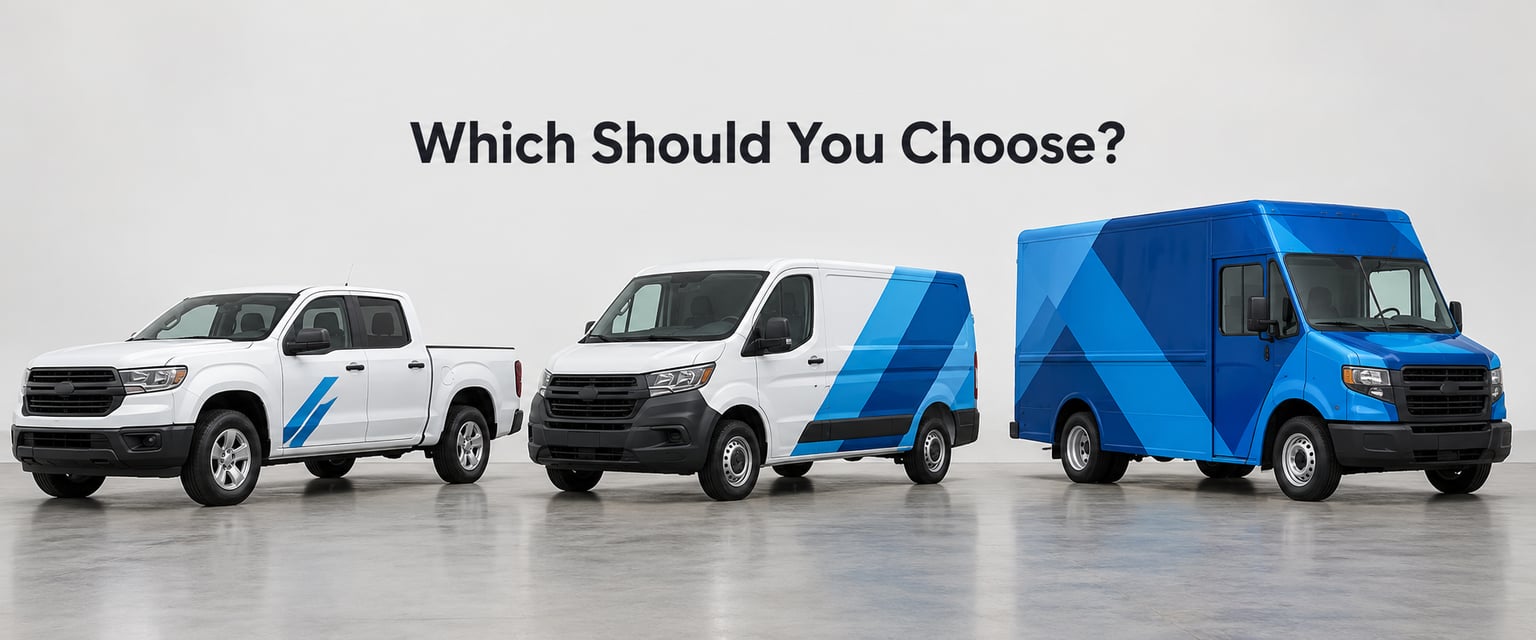
For a mobile service business running one or two vans, choose a partial wrap on the doors and rear panel. You get recognition at the curb, a short install, and money left for the equipment in the back.
For a delivery fleet that drives daily urban routes, choose a full wrap. Area drives visibility, and visibility on every approach angle is the whole point of a delivery fleet.
For a branded company car, choose a partial wrap. These vehicles spend most of their life parked, and a clean door graphic earns the same recognition at a fraction of the scope.
For a growing fleet, standardize on one design file and one coverage tier per vehicle class before you order. Consistency across units is what customers read as a real company.
Before requesting quotes, work through this short list:
- Which panels are visible most often from where your customers and traffic actually are?
- What paint color are you starting with, and does it work as negative space?
- How long will you keep this vehicle, and how long do you keep the graphics?
- What legal or safety markings must be visible, and where do they sit?
- What is the downtime cost of a multi-day install for each vehicle?
- Does the quote itemize design, print, film grade, laminate, prep and labor?
Frequently Asked Questions
Are partial vehicle wraps less noticeable than full wraps?
Partially, yes, but not where it matters most. At a stoplight or in a driveway, a partial wrap on the doors and rear panel is just as visible as a full wrap because those panels fill most of your view. The gap opens up at distance and from angles a full wrap covers. If your vehicle spends its day in local traffic and at job sites, partial coverage is usually plenty.
Can a business use different wrap designs on different vehicles?
You can, and many growing fleets do. The usual pattern is a full wrap on one flagship vehicle, a consistent partial on the working units, and plain lettering on support vehicles. Keep one master design file and adapt it per vehicle class rather than redesigning from scratch, so the colors, type and logo placement stay identical across the fleet.
How long does a professional vehicle wrap last?
Major manufacturers rate their outdoor cast vinyl in roughly the five to seven year range, and a professionally installed wrap with a laminate over-laminate usually performs well within that window. Real life is shorter on vehicles that are pressure-washed often, parked in salt-heavy climates, or exposed to constant road debris. Hand washing and keeping pressure off the edges extends life noticeably.
Is a full wrap worth the cost for a one-vehicle business?
Sometimes, but it is the harder case to justify. A full wrap on a single vehicle makes sense if it is driven constantly in visible traffic, works at job sites where customers see the whole side, or serves as a mobile display. If the vehicle mostly parks or runs short local routes, a partial wrap or lettering delivers most of the recognition for a much smaller scope of material and labor.
Can vehicle wrap graphics be changed without repainting the vehicle?
Yes. Graphics can be removed and replaced without touching the paint, which is the main practical reason businesses choose vinyl over a respray. Removal costs labor, so plan a change around the vehicle’s schedule rather than doing it casually. Ask the installer how removal fees are priced and whether they offer on-site removal for multi-vehicle fleets.
Conclusion
Choose a partial wrap when you want targeted visibility on the panels people actually see, a shorter install, and a smaller share of your budget tied up in vinyl and labor. Choose a full wrap when the vehicle spends its day in traffic and you want recognition from every angle plus a consistent look across the fleet.
Before you request quotes for partial wrap vs full wrap for business vehicles, inventory the panels that get seen most in your area, decide what message has to fit on them, and check whether your paint color can work as part of the design. Then ask each shop to break the quote into design, print, film grade, laminate, prep and labor so you are comparing like with like.