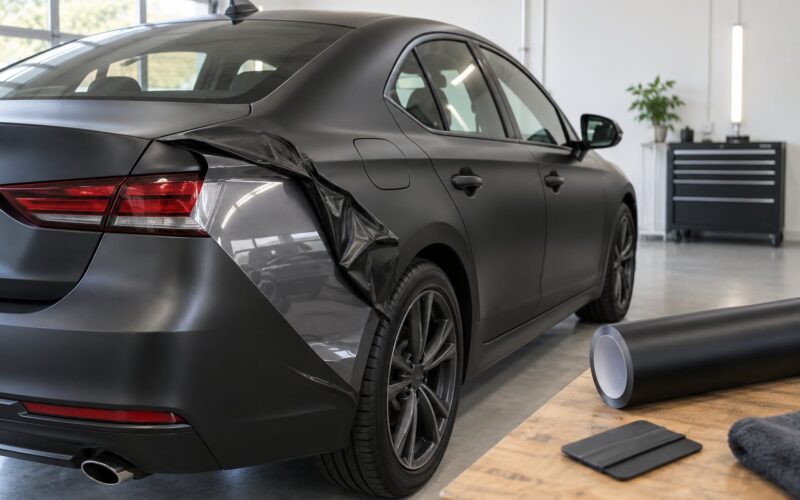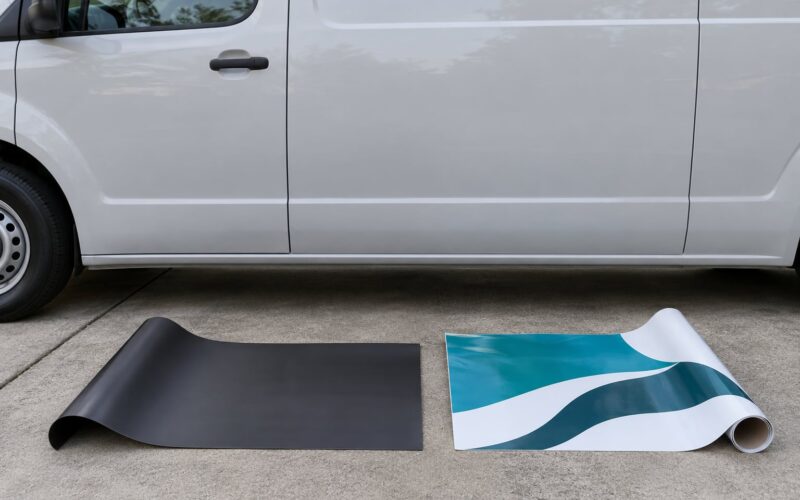
A professionally installed wrap made from quality cast vinyl usually lasts 5 to 7 years. Harsh climates, cheaper film and poor workmanship can cut that to 2 or 3 years, and the hood and roof usually start showing age before the doors do.
That range is what most installers quote, and it is honest as a rule of thumb. It is not a promise. On car wrap forums you will find owners whose wraps looked new at six years and others who were peeling at edges within eighteen months, sometimes on the same car, in the same parking lot.
The gap between those two outcomes is where the useful information lives. Material, finish, sunlight, where the car sleeps, how it is washed and who applied the film all move the finish line. Here is what actually decides how long your wrap holds up.
Table of Contents
- How Long Does a Car Wrap Last?
- How long a wrap lasts by material
- What Determines How Long a Car Wrap Lasts?
- Vinyl quality: cast film versus calendered film
- Paint condition and preparation before install
- Installation workmanship
- How the vehicle is used and parked
- Which Wrap Materials Last the Longest?
- How Do Sunlight, Weather, and Driving Affect Wraps?
- How Do You Extend the Life of a Car Wrap?
- What Are the Signs a Car Wrap Needs Replacing?
- Can You Remove a Car Wrap Without Damaging the Paint?
- Frequently Asked Questions
- Can a car wrap last 10 years?
- Is a car wrap covered by insurance if it is damaged?
- How long does a car wrap last on a vehicle that is mostly stored?
- Do car wraps fade in the sun?
- Should a wrapped car go through an automatic car wash?
- Bottom Line
How Long Does a Car Wrap Last?
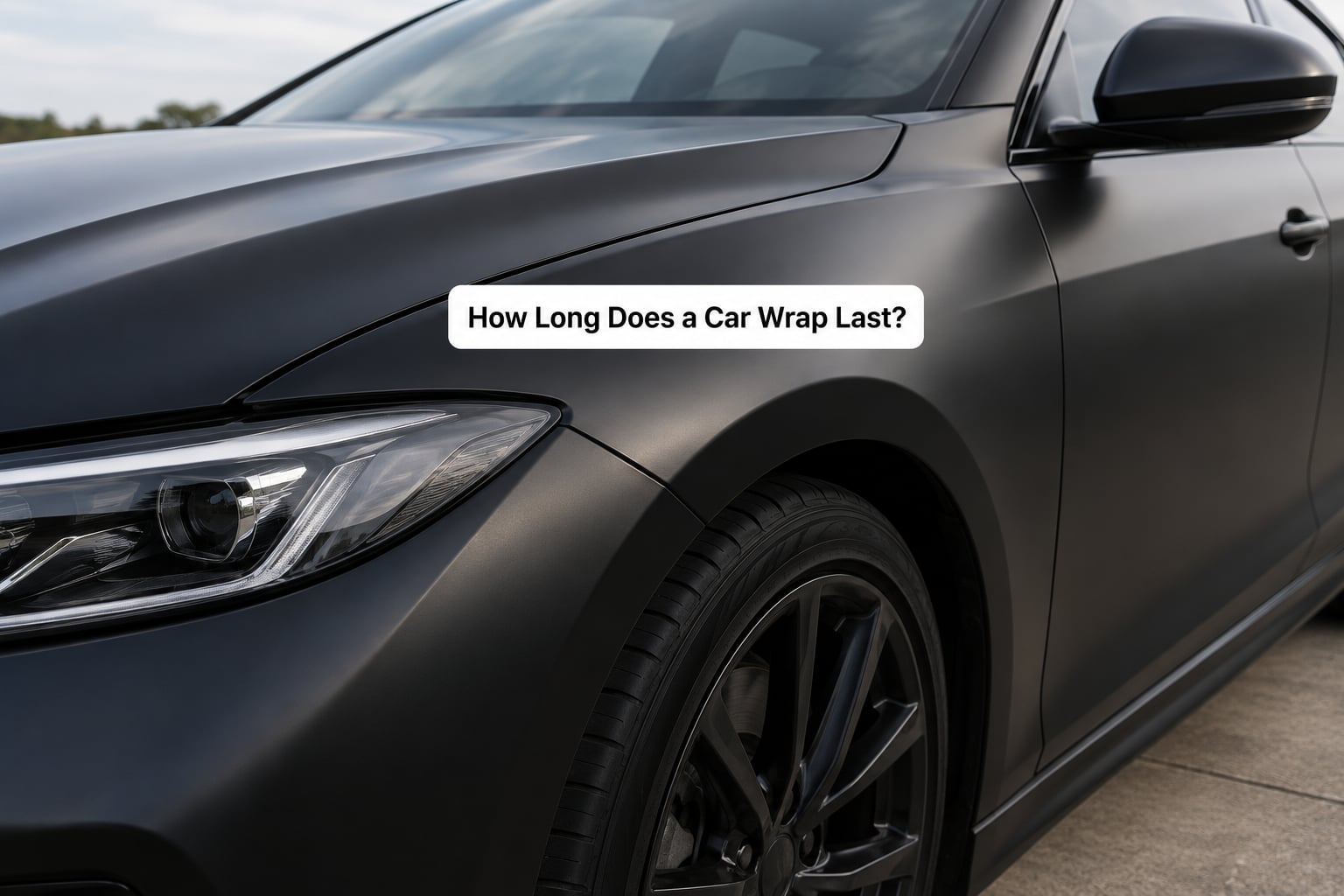
The short answer is 5 to 7 years for good film, installed properly and cared for. Budget films and harsh conditions pull that down to 2 to 3 years, and the ends of the range show up first on horizontal panels.
Why do published estimates disagree? Mostly because some are quoting the manufacturer’s rated service life and others are quoting what owners report afterwards. Those are two different numbers. Rated service life comes from accelerated weathering tests on flat panels under lab conditions. Real life means a hood taking 140-degree sun in July, road salt in January and fifty highway miles a day in between.
How long a wrap lasts by material
| Wrap material | Realistic lifespan | Appearance | Best used for | Maintenance note |
|---|---|---|---|---|
| Premium cast vinyl | 5 to 7 years | Deep colour, factory-style gloss or matte | Colour change, daily drivers, commercial vehicles | Hand wash only; responds well to a vinyl-safe sealant |
| Cast vinyl, mid-tier | 4 to 6 years | Good colour, slightly flatter finish | Colour change on a moderate budget | Fades a little earlier in full sun |
| Calendered vinyl | 2 to 4 years | Slightly thinner, more prone to hazing | Short-term branding, event wraps | Edges lift sooner; more fragile in cold |
| Printed graphics wrap | 3 to 5 years | Custom artwork, logos, full-colour layouts | Business advertising, fleet vehicles | Ink fades under UV before the film itself does |
| Specialty films (chrome, colour-shifting, textured) | 2 to 4 years | Metallic mirror, textured grain | Show cars, styling builds | Most sensitive to heat and chemicals |
Panel orientation matters more than most buyers expect. Roof, hood and trunk lid sit horizontal, take the full weight of sun and rain, and hold water longer than a door does. Vertical doors and fenders shed water and dry faster, so they usually outlast the panels above them by a year or more.
What Determines How Long a Car Wrap Lasts?
Vinyl quality: cast film versus calendered film
Cast vinyl is manufactured by casting a thin liquid layer onto a moving belt, which produces a thicker, more flexible film with a longer rated life. Calendered film is rolled thinner and costs less. For a car that lives outdoors, cast film from 3M, Avery Dennison, KPMF or Orafol is the sensible choice; Hexis is widely used for matte and specialty finishes.
Paint condition and preparation before install
The film bonds to clear coat, so that clear coat has to be sound. A wrap applied over faded paint, deep scratches, oxidation or uncured spot repairs will trap the defect and show it forever underneath. Paint correction before wrapping is money well spent.
Installation workmanship
Wrinkles, stretched film, contaminated edges and rushed seam work all shorten life. Streaks of slip solution left under the film or over-heated corners cause bubbling later. This is the variable owners on r/CarWraps single out most often when they describe problems appearing within days of collection.
How the vehicle is used and parked
A garaged weekend car is a completely different case from a work truck parked on a street. Miles driven matter, but exposure matters more. A car that lives in a hot driveway in Arizona and a car that sleeps in a garage in Ohio are not running the same test, even if the mileage is identical.
Which Wrap Materials Last the Longest?
| Film type | Expected lifespan | Why it differs | What it costs you in care |
|---|---|---|---|
| Solid black or white cast vinyl | 5 to 7 years | Dark solids absorb heat but hide scuffs; white reflects UV | Minimal; white shows dirt, black shows swirl |
| Gloss cast vinyl | 5 to 7 years | Clear laminate resists UV and washing | Shows water spots and light scratches readily |
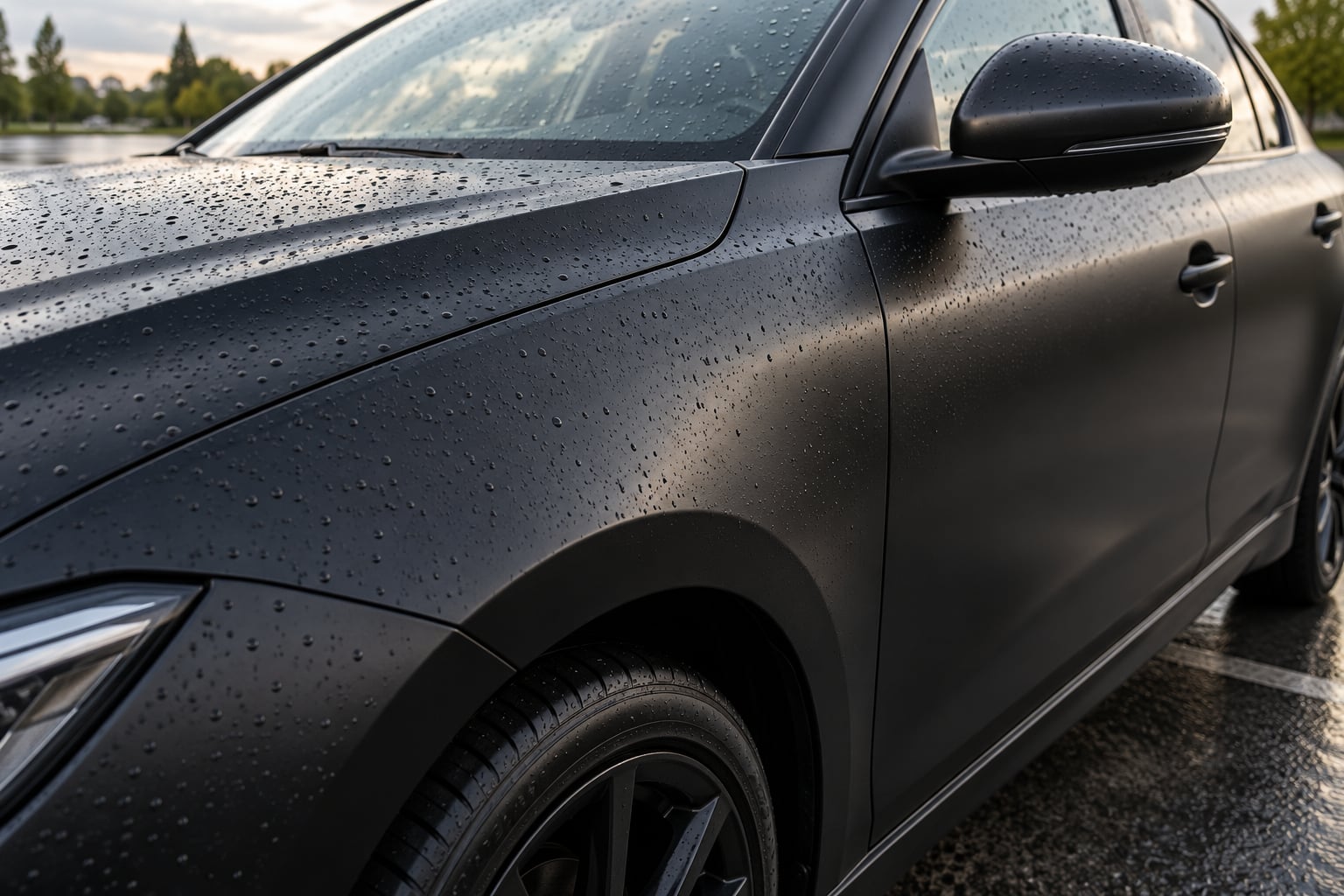
| Satin or matte cast vinyl | 4 to 6 years | No gloss layer to take the abuse; matte is prone to marking | No wax or polish, ever; careful washing only |
| Metallic or colour-shifting film | 3 to 5 years | Metallic pigments fade unevenly, and shifts hide patching | Shortest-lived finish owners report |
| Chrome wrap | 2 to 4 years | Mirror finish shows every defect and yellowing shows fastest | Shows fingerprints, dust and hazing immediately |
| Printed graphics film | 3 to 5 years | Printed pigment layer degrades before the vinyl | Can usually not be spot-repaired cleanly |
Owners reporting on r/cars and challengertalk.com consistently place metallics and chromes at the short end and solid black and white at the long end. That matches what installers see: a metallic wrap cannot be patched invisibly, so one damaged panel usually means respraying the whole panel or living with a mismatch.
That said, installation quality and care often matter more than the label on the roll. A well-installed mid-tier film that is hand washed and garaged will outlast a premium film beaten up through brush car washes for five years. Nobody on the forums has ever posted a photo of a wrap surviving bad behaviour.
How Do Sunlight, Weather, and Driving Affect Wraps?
| Environment | Expected lifespan | Notes |
|---|---|---|
| Garaged, mild climate | 6 to 7+ years | Best case; UV exposure is minimal |
| Outdoor parking, moderate climate | 5 to 7 years | Normal expectation for most drivers |
| Snow and road salt, no garage | 3 to 5 years | Salt attacks edges; slush and grit get under seams |
| Desert or high-UV climate | 3 to 5 years | Constant UV bakes the vinyl; hood and roof degrade first |
| Coastal air | 4 to 6 years | Salt-laden air works into edges and seams |
| Mostly stored, driven occasionally | 5 to 7 years | Fewer miles but edges can still lift without maintenance |
Ultraviolet light is the constant pressure. UV breaks down the topcoat and the pigments underneath it, which is why colours go chalky and uneven rather than simply dull. Heat accelerates the whole process, and a dark wrap on a hood in summer runs hot enough to soften adhesive and invite bubbles.
Cold is the opposite problem. Film goes stiff and brittle below freezing, and flexing a stiff panel through a freeze-thaw cycle is how edge lifting starts. Road salt and coastal air do their own quiet damage by working into seams and eating at the adhesive.
Then there is what the car drives through. Gravel, stones and winter grit chip the leading edges of bumpers and the lower door edges. Automatic car washes with spinning brushes are the single most reported cause of early failure, because the brush drags grit across the whole panel and catches every edge and seam. Touchless washes are far gentler, though high-pressure jets can lift a loose edge.
How Do You Extend the Life of a Car Wrap?
The first 48 hours matter more than anything else you will do for the car. Adhesive needs time and warmth to bond, and driving or washing the vehicle in that window is the most common self-inflicted early failure.
- Leave it alone for two days. No washing, no rain exposure if you can help it, no long highway trips. In cold weather the adhesive needs closer to a week.
- Hand wash with a pH-neutral soap. Two buckets, a clean microfiber mitt, rinsed and dried before you reuse it. Dirt trapped under the mitt scratches the laminate.
- Dry with a microfiber towel or blower. Letting water air-dry leaves mineral spots that are tedious to remove later.
- Use a vinyl-safe sealant or ceramic spray. These add UV protection without the solvents in ordinary carnauba wax. Skip polish entirely; nothing with abrasive particles belongs on vinyl.
- Avoid automatic car washes with brushes. This is the cheapest way to add two years to a wrap, or to lose them.
- Keep pressure washing at a distance. A wide fan, no closer than roughly a foot, below 2,000 PSI, and never aimed at an edge that is already lifting.
- Deal with bird droppings, sap and fuel spills immediately. Hours, not days. These stain and etch the laminate in a way that polish will not fix.
- Store it indoors when you can. A cover breathes less than you think, but shade still cuts cumulative UV exposure.
- Fix small tears early. A puncture or a loose corner patched with a repair patch while the adhesive is still alive is a five-minute job. The same damage left for a season spreads.
What Are the Signs a Car Wrap Needs Replacing?
Cosmetic ageing and actual failure are different problems. A wrap can look tired and still be perfectly bonded, which is a finish problem. It can also look almost fine on the hood while one corner is peeling off the bumper, which is a safety problem.
Cosmetic signs that it is ageing: uneven chalking or a hazy film, colour fade concentrated on the sun-facing horizontal panels, a matte finish that has picked up a permanent sheen from waxes and wrong products, and dirt that no longer rinses out of the texture.
Signs it is failing: edges lifting away from the panel, small bubbles that reappear after you press them down, fine cracks along seams or trim lines, adhesive browning appearing as an amber halo along an edge, and sections that have shrunk enough to pull away from the wheel arches.
Lifting edges matter beyond appearance. Water gets under a lifted edge and sits on the paint, and a stone caught in a lifting bumper corner does real damage. Peeling around a door handle or a fuel flap is also the kind of thing that draws attention at exactly the wrong moment.
Can You Remove a Car Wrap Without Damaging the Paint?
Usually yes, provided the wrap comes off before the adhesive has turned to tar. Modern automotive vinyl releases cleanly from sound clear coat, and removal usually costs less than the wrap did.
Age is the deciding factor. A wrap removed within a few years peels off with heat and tension. One that has baked on for seven years in the sun is harder to shift, and the vinyl itself becomes brittle, so it can tear and leave a layer of adhesive behind. That residue usually comes off with heat and a plastic scraper, but it is slow work.
Warm conditions help. Wrapping removal guides commonly suggest warming the film to somewhere between 104 and 140 degrees Fahrenheit before pulling it, using a heat gun or a hot water and soap solution. Never use a blade on the paint, and work slowly along a seam rather than yanking at a corner.
Ask the original installer first if the car is still under an installation warranty. Many shops will remove their own work at a reduced rate, and they know which panels were stretched hardest. If the wrap is already browning, cracking or fused at the edges, a professional removal is worth the cost of protecting a clear coat that is expensive to replace.
Frequently Asked Questions
Can a car wrap last 10 years?
It is possible but uncommon. A 10-year wrap usually means a premium cast film, a garage or partial cover, hand washing only and no brush car washes. Owners on car forums mostly report 3 to 7 years, with 4 to 7 the realistic ceiling for a daily-driven car parked outside. Check the film yearly and be ready to budget for a second wrap around year six or seven.
Is a car wrap covered by insurance if it is damaged?
Rarely. A wrap is normally treated as a cosmetic modification, so comprehensive collision coverage pays for the damage to the underlying panel but usually not for the film or the cost of rewrapping it. Some policies and some business fleet policies can be endorsed for wrap coverage, and state rules vary. Ask your insurer in writing before installation, not after.
How long does a car wrap last on a vehicle that is mostly stored?
A stored vehicle is the best case, and 5 to 7 years or more is realistic if it also lives indoors. Storage does not stop edge lifting entirely, though. Adhesive creeps and shrinks slowly with heat cycles, and a film that sits untouched can still curl at seams. Have a shop inspect it every couple of years and press down any lifting edges while the adhesive is still workable.
Do car wraps fade in the sun?
Yes, and finish choice changes how fast. Solid gloss colours hold longest, around 5 to 7 years. Metallics fade unevenly and usually need replacing at 3 to 5 years. Chrome shows yellowing and hazing fastest, often within 2 to 4 years. Fade concentrates on the hood, roof and trunk because those panels take direct sun all day. Garage parking slows all of it considerably.
Should a wrapped car go through an automatic car wash?
Avoid brush car washes. Spinning brushes drag grit across the film and catch every edge, seam and trim line, and that is the most common cause of early lifting and scratches reported by owners. A touchless wash is gentler, though a strong jet can get under an already loose edge. Hand washing with pH-neutral soap is the safest option and adds years to a wrap.
Bottom Line
How long does a car wrap last? Five to seven years for quality cast vinyl installed well and cared for, closer to three years for a cheap film, a brush car wash habit or an exposed car in a harsh climate. Real owner reports cluster between 3 and 7 years, and premium film is the most commonly cited reason for the longer ones.
Before you book anything, do three things. Get a quote that names the film brand and type rather than just saying vinyl, have the paint inspected and corrected if it needs it, and agree on a care plan with the installer so you know exactly what they will guarantee. That conversation is worth more than any lifespan number printed on a brochure.