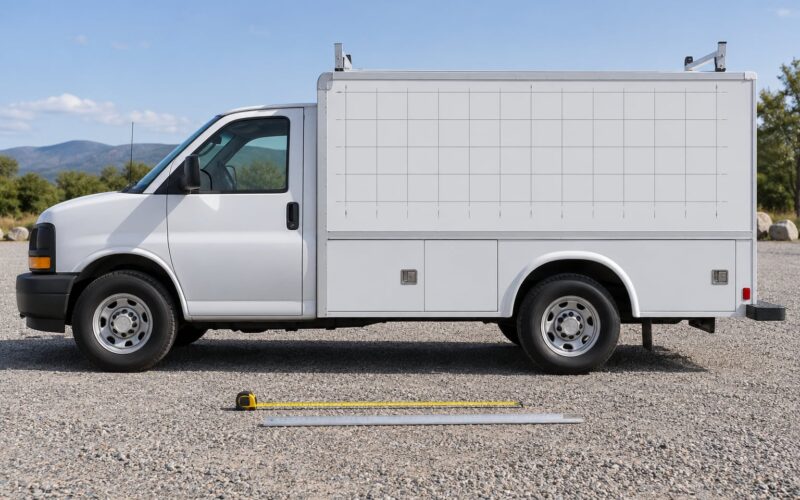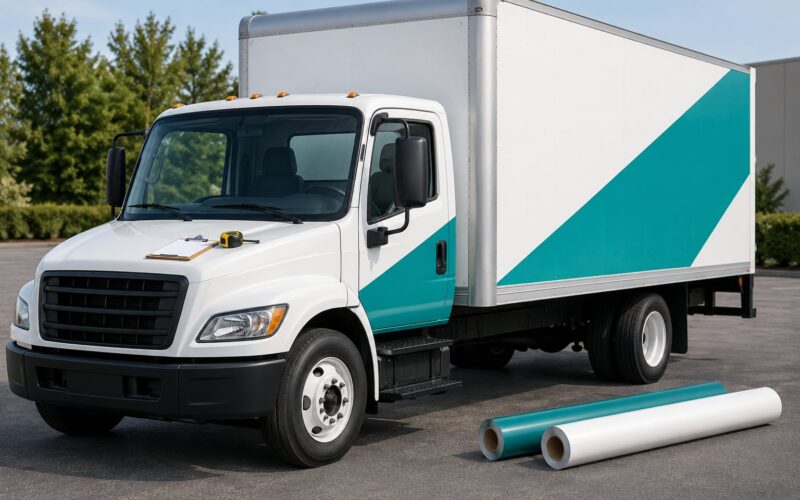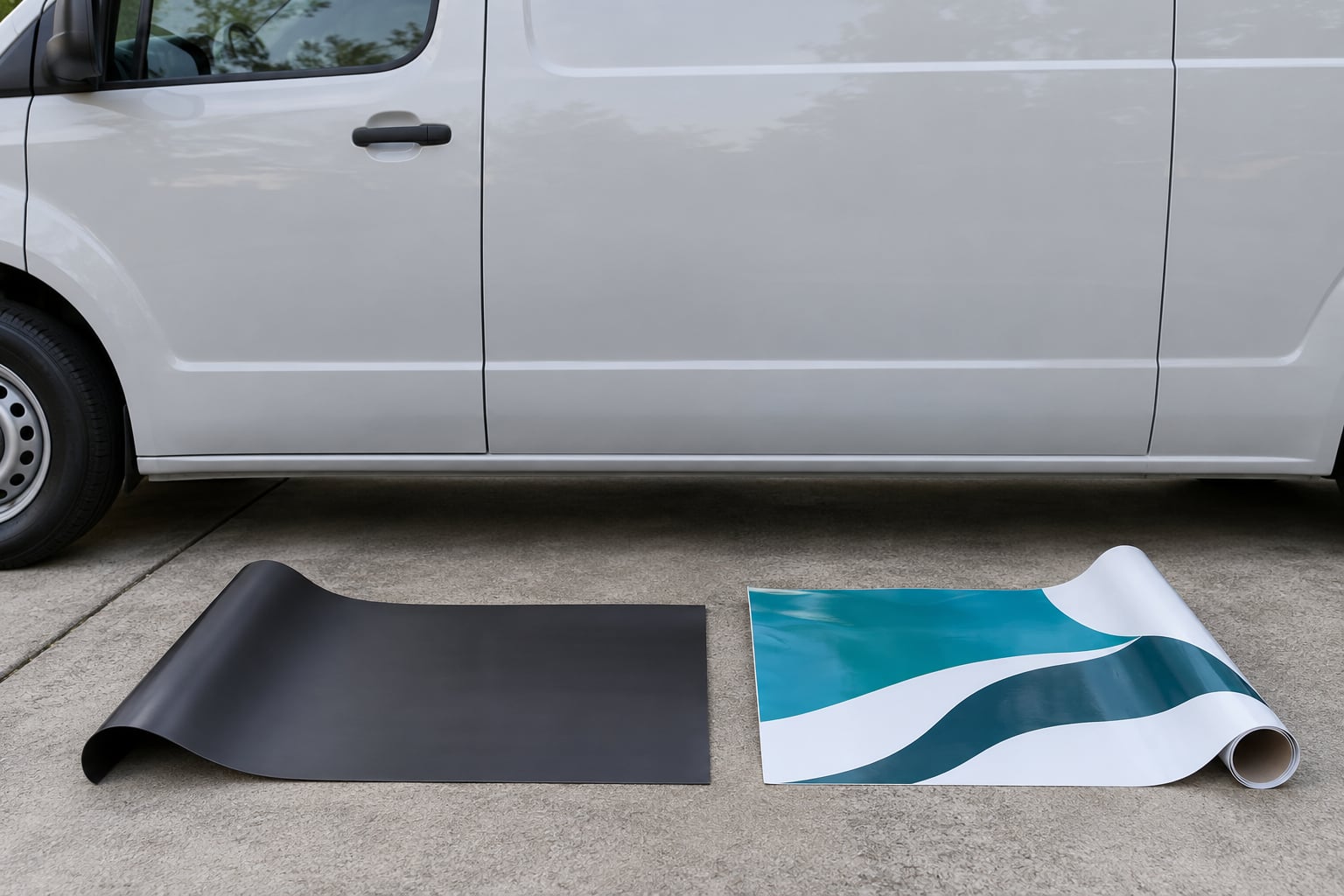
Car magnets vs vinyl decals for business comes down to one question: does the message on that vehicle ever need to change? Magnetic signage goes on in seconds and comes off just as fast, so it suits fleets that rotate drivers, swap seasons or test a new service area. Vinyl decals stay put, look more finished and outlast almost anything, which suits vehicles that carry the same logo every day for years.
Both are cheap next to a full vehicle wrap, and both are reversible if installed properly. The wrong choice shows up later as a magnet sliding across a dusty door panel or as permanent lettering you can’t get off without a heat gun, so let’s look at the real trade-offs.
Table of Contents
- Car Magnets vs Vinyl Decals for Business at a Glance
- Durability and Weather Resistance
- How long do car magnets vs vinyl decals last on a vehicle?
- Appearance and Branding Quality
- Installation, Removal, and Reuse
- Cost and Fleet Considerations
- Vehicle Safety and Paint Protection
- Best Uses for Each Option
- Which Should You Choose?
- Frequently Asked Questions
- Are car magnets better than vinyl decals for a business vehicle?
- Do car magnets damage vehicle paint?
- Can vinyl decals be removed and reused?
- Which option is cheaper for a small business fleet?
- What is the best vehicle branding option for temporary promotions?
- Wrapping Up the Magnet or Decal Decision
Car Magnets vs Vinyl Decals for Business at a Glance
| Factor | Car magnets | Vinyl decals |
|---|---|---|
| Appearance | Thin, flat, slightly flexible; reads fine at distance, can look plain | Print and laminate options, crisp edges, seamless finish |
| Typical lifespan | About 2 to 5 years with sensible care | About 3 to 7 years for quality vehicle-grade film |
| Weather resistance | Good; edges can lift in extreme heat, grit can trap underneath | Very good with an overlaminate; UV topcoat adds years |
| Installation | Wipe the panel, press on, done. No tools | Wash, degrease, dry, align, squeegee out |
| Removal | Lifts straight off in seconds, no residue | Removable adhesive lifts with warmth and patience; permanent needs real work |
| Relative cost | Lower per set, spread across many vehicles | Higher, mostly in print setup and install labour |
| Reuse | Rolls up, moves to the next van, campaign after campaign | Reapplication weakens adhesive; permanent versions cannot be reused |
| Panel compatibility | Steel and other ferrous panels only | Steel, aluminum, fiberglass, plastic and glass |
| Theft and tampering | Anyone can peel one off in a parking lot | Firmly bonded; harder to steal intact |
Short version: magnets buy flexibility, decals buy permanence. Everything below is really an argument about which of those two your business actually needs.
Durability and Weather Resistance
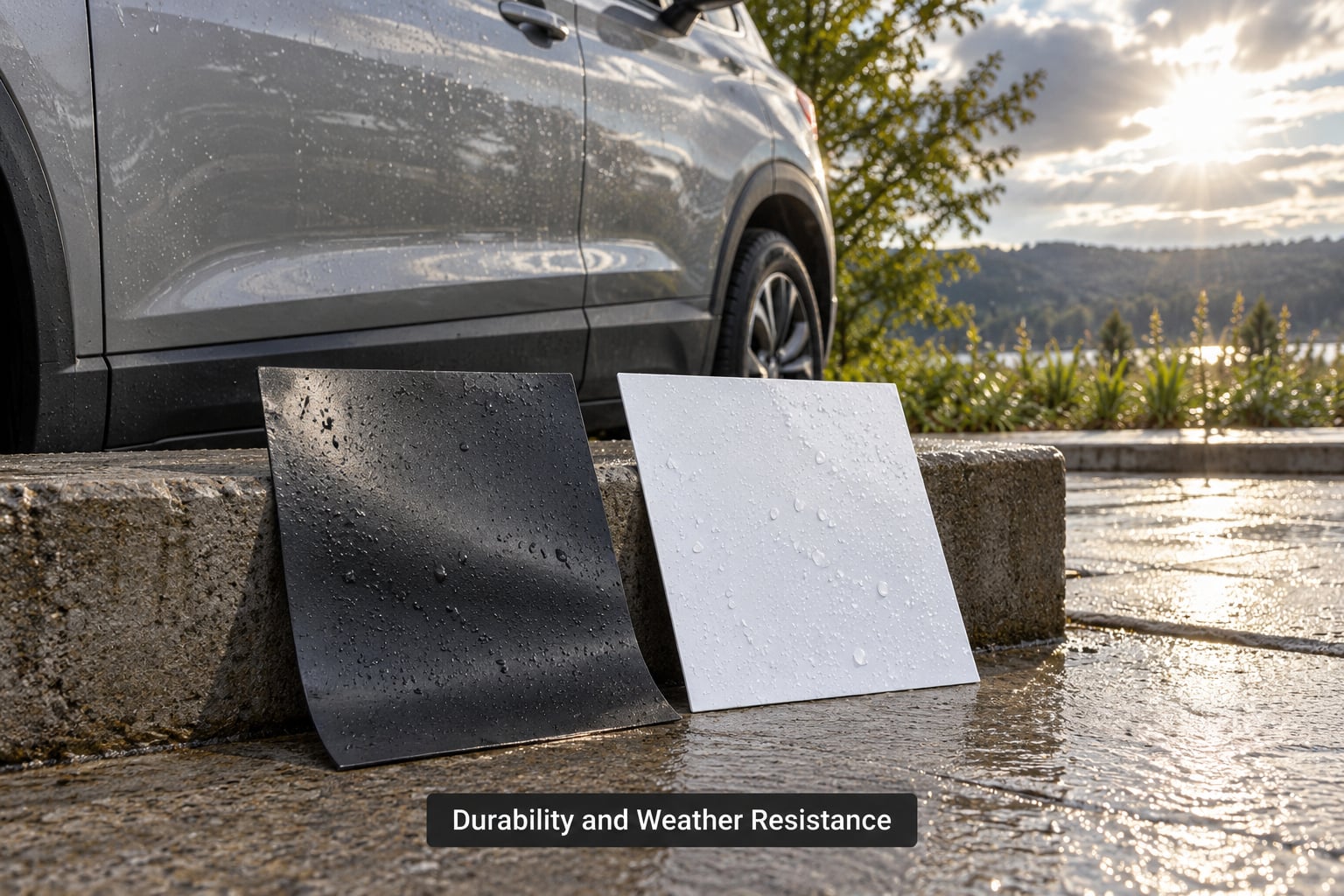
Flexible magnetic vinyl is usually 30 mil, roughly 0.04 inch thick, which is thick enough to hold a curve without creasing but thin enough to flatten onto a crowned door panel. Quality vehicle decals use 4 mil printable film with a cast adhesive, then often a laminate on top for UV protection.
The failure mode nobody expects is dirt. In a long-running thread on r/realtors, users kept describing the same thing: grit works its way under the magnet, the sign flexes slightly at highway speed, and that grit acts like sandpaper on the clear coat. One realtor put it plainly, the magnet moves and even the slightest shift feels like sandpaper on the paint.
Magnets still handle weather better than most people expect. They do not fade, delaminate or wash away, and a wiped panel brings them back to full grip. The problems are mechanical rather than chemical: edges curling in desert heat, signs fluttering on loosely fitted doors, and stolen signage.
Decals weather better but age differently. The ink and film hold up for years, yet the adhesive bond slowly loses strength, and edge lifting usually starts at a door seam or a panel gap where the body flexes. Wash chemistry matters too, so avoid pressure washers held too close to the panel.
How long do car magnets vs vinyl decals last on a vehicle?
A quality magnetic sign set lasts roughly 2 to 5 years in normal service, and quality vehicle-grade decals run about 3 to 7 years. Adhesive-dot film, sold as iDot, sits in between: signmakers on Signs101 describe it coming off cleanly after a couple of weeks of sun exposure and still rolling out for reuse.
Signs of replacement are easy to spot. Replace magnets when the print scratches off, corners start curling, or the grip feels weak on a clean panel. Replace decals when edges lift across a growing area, colours fade to pink under UV, or the adhesive leaves a shadow on the paint.
The factor most people underestimate is the car wash. Chemical washes and brushes work magnetic signage faster than weather does, and a fleet vehicle that goes through a tunnel wash every week will age sooner than one hand washed at home.
Appearance and Branding Quality
Vinyl decals win the aesthetics argument, and it is not close. Prints sit on the panel with no visible thickness, so lettering looks painted rather than stuck on, and laminate choices range from gloss to matte to reflective. A sign shop will match your brand colours exactly because the print is calibrated per job.
Magnets are constrained by what the material allows. Colour is solid, not photographic, so gradients and photographic logos turn to mud. A thick flexible sheet can also look slightly soft next to crisp paint, and on a dark vehicle a matte magnet reads as a patch rather than a design.
Legibility at road distance matters more than anyone expects. The rule signwriters use is simple: one line of business name, one line of the service, and one number that a driver can read in two seconds. Extra detail is invisible at speed, so put the website or phone number on the doors, not the rear.
PropertyChat, a signwriting community, reflects the trade’s view that cheap magnets make a vehicle look unprofessional. For a full-time branded fleet that impression matters. For a van parked at a job site for an hour, nobody is judging your typography.
Installation, Removal, and Reuse
Installing a magnet takes about a minute per panel. Clean the surface, dry it, press the sign flat with the centre first, then the edges, and check that nothing sits over a light, sensor or badge. That is the entire process, which is exactly why fleets love them.
Removing one is the same motion in reverse. Lift a corner straight off rather than peeling it across the panel, and never drag a magnet along the paint. Store them rolled, not folded, in a box so the edges do not take a crease over winter.
Vinyl takes more preparation because the adhesive needs a clean, grease-free surface. Wash the panel, degrease with isopropyl alcohol, dry fully, then align the decal with masking tape before you squeegee from the centre outward. Installation on a warm panel gives a better bond than a cold one.
Removable adhesive lifts with warmth and a steady pull, and the film often stays intact enough to reapply a few times. Permanent adhesive is a commitment: it will not come off cleanly, and a decal left on too long can leave a faint shadow that takes polish to fade.
For campaign swaps, print two interchangeable messages and buy the mounting twice over. Signs101 signmakers confirm the storage and re-application workflow is workable, but only when film is rolled rather than folded and panels are cleaned between uses.
Cost and Fleet Considerations
Magnets are the lower entry point. A magnetic set costs the same whether you brand one van or ten, because you buy the artwork and the printing once, then reuse the same signs on every vehicle. Spread across a five-year life and a six-vehicle fleet, the cost per vehicle per year lands very low.
Vinyl decals cost more because of labour. The film is cheap by comparison; the money goes into artwork setup, panel-specific sizing and professional installation on every vehicle in the fleet. That spend is real, but it buys a result that lasts the vehicle’s working life without replacement.
Flexible vinyl sheeting thickness is where price differences hide. Thicker sheeting holds a flat curve and reads as higher quality, while thinner sheeting is lighter and cheaper. Where budget matters more than appearance, thin sheeting on a steel van is a reasonable trade.
Add the third option to the budget line when you have aluminum. Adhesive-dot film behaves like a removable decal and works on non-magnetic bodies, and magnetic sign grippers hold a magnet to an aluminum panel through friction rather than magnetism. Both avoid the panel problem that silently ruins a magnet order.
Vehicle Safety and Paint Protection
Neither option belongs anywhere it obstructs the job of the vehicle. Keep signage clear of license plates and their frames, tail lights, brake lights, indicators, reverse cameras, parking sensors, door handles, and any panel gap that flexes when the door shuts. Sightlines matter most for the driver.
Paint damage from magnets is almost always the trapped-grit mechanism rather than the magnet itself. Prevent it with a routine: take signs off roughly weekly, wipe both the sign and the panel, and never place a sign over dust, road film, sap or fresh wax. Wax under a magnet is the worst case, because it grinds into the finish.
One more habit pays for itself. Reposition signs every few months so the same patch of paint is never shaded for years, which prevents uneven fading under the covered area.
Decals protect less and risk more at removal time. Proper preparation is what matters: a clean panel, no residue underneath, and removal with controlled heat rather than force. A rushed pull is what causes the shadowing people complain about.
Best Uses for Each Option
Magnets make sense when the message moves. Service vans with multiple drivers, employee personal vehicles used for work, shared fleets, seasonal promotions, a realtor’s active-listing period, and testing a new service area before committing to anything permanent all fit the format.
Decals make sense when the message stays. Long-term logo vehicles, a consistent fleet look, food trucks and event vehicles, and any vehicle that must look polished at a customer’s curb should carry adhesive graphics.
Neither is right for every panel. Aluminum and fiberglass doors and hoods need decals, adhesive-dot film or grippers, and any vehicle you plan to sell, lease or hand back needs removable adhesive rather than permanent vinyl.
Which Should You Choose?
If you want one reusable message across several vehicles and the message changes often, choose car magnets and run the household-magnet test on every panel before you order.
If the logo is permanent and the vehicle is yours for years, choose quality vinyl decals with an overlaminate and a professional install, and expect no removal without a heat gun.
If the vehicle is aluminum, fiberglass or mixed-body, skip straight to adhesive-dot film or grippers. If the vehicle is leased, rented or an employee’s personal car, use removable adhesive or magnets so nothing is left behind at resale.
The decision rule in one line: choose magnets when you may need to change the message, choose decals when you will not.
Frequently Asked Questions
Are car magnets better than vinyl decals for a business vehicle?
Magnets are better when the message changes often, when several vehicles share one set of signs, or when the vehicle is an employee car or a lease you must return clean. Vinyl decals are better when the branding is permanent, the vehicle has aluminum or fiberglass panels, or a polished finish matters. A full wrap is worth it only when a vehicle is a rolling billboard all day, every day.
Do car magnets damage vehicle paint?
The magnet itself rarely harms paint. The risk comes from grit trapped underneath, which turns into sandpaper the moment the sign flexes at speed. Remove signs weekly, wipe both surfaces, never mount over wax or road film, and lift straight up instead of dragging. If a sign is always repositioned, check for dull patches before they become permanent.
Can vinyl decals be removed and reused?
Removable adhesive decals can be taken off with controlled heat and a slow pull, and the film often survives one or two reattachments if it is lifted in one piece and stored rolled. Permanent vinyl is not reusable; it tears and usually leaves adhesive or a faint shadow on the paint. Adhesive-dot film, sold as iDot, is designed for repeat use and comes off cleanly.
Which option is cheaper for a small business fleet?
Magnets usually cost less overall because one set of printed signs covers every vehicle and can be reused for several years. Vinyl decals cost more because each vehicle needs its own professionally installed graphics, but they last longer and cannot be peeled off in a parking lot. For a fleet of one or two vehicles, magnets usually win. For a consistent branded look across many vehicles, the vinyl spend pays off.
What is the best vehicle branding option for temporary promotions?
Car magnets are the simplest answer for steel-bodied vehicles because they change in seconds and cost one set for the whole campaign. On aluminum or fiberglass panels, use adhesive-dot film or removable adhesive vinyl instead, since a magnet will not hold there. Print each campaign message separately and keep the mounting hardware so the vehicle stays consistent between promotions.
Wrapping Up the Magnet or Decal Decision
Before you order anything, count the vehicles and count the messages. One set of signs across several vehicles that change their message seasonally is a magnet job. Six vehicles carrying the same logo for five years is a decal job, and any aluminum-bodied vehicle makes that the only sensible answer. Test every panel with a household magnet first, then buy for the message you expect to be running in a year, not the one running today.