A vinyl wrap does protect the paint underneath, but only as a sacrificial layer against light damage. It will not stop deep gouges, hard impacts, or chemicals that sit on the surface for too long, and a cheap film or a rushed removal job can do more harm than the wrap ever prevented.
I have talked to enough installers and detailers to be wary of the blanket claims on both sides. Some treat a wrap like body armour, others like decoration that will eventually strip your clear coat. Both pictures are wrong, so here is how the film actually behaves.
Table of Contents
- Does a Car Wrap Protect the Paint Underneath?
- What the film takes the hit for
- What the film cannot take for you
- What Does a Car Wrap Actually Protect Against?
- Sun fade and oxidation
- Scratches and stone chips
- Contamination that sits too long
- Wrap vs PPF vs ceramic coating
- How Different Wrap Materials Affect Paint Protection
- Benchmarks worth asking about
- Finish changes the risk
- Paint condition matters as much as film quality
- Can Removing a Car Wrap Damage the Paint?
- Situations where removal turns risky
- Will a Car Wrap Increase Resale Value?
- How to Extend the Life of a Car Wrap
- Wash it by hand, or touchless if you must automate
- Clear contaminants fast
- Watch the edges, not just the panels
- Give it shade and time
- Frequently Asked Questions
- Are car wraps safe for factory paint?
- How long can a vinyl wrap be left on a car?
- Will sunlight damage the paint under a car wrap?
- Does a car wrap hide scratches and dents?
- Can a wrap be removed without damaging the clear coat?
- Is a thicker vinyl wrap better for paint protection?
- The Best Protection Starts With Careful Installation
Does a Car Wrap Protect the Paint Underneath?
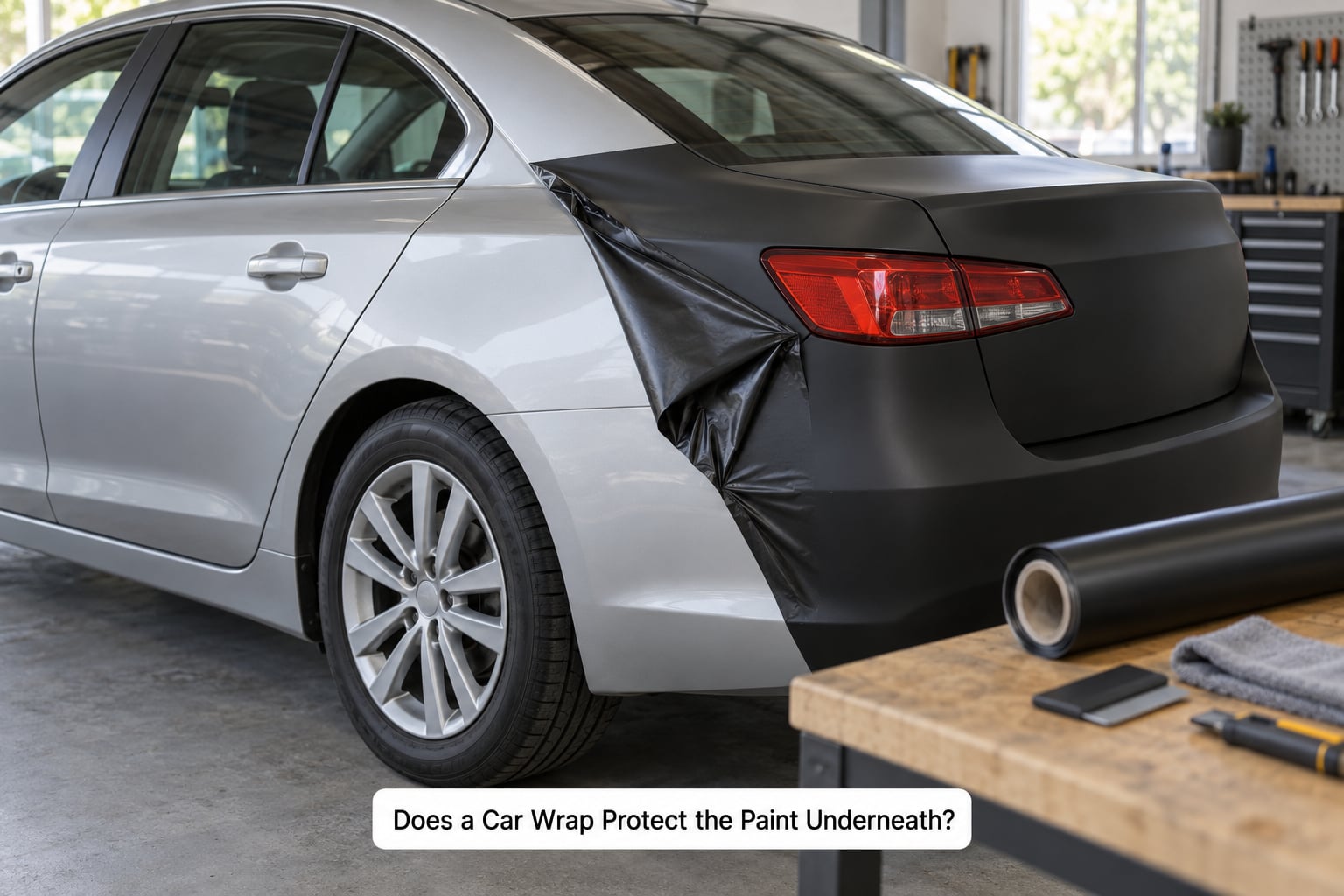
Yes, a quality vinyl wrap is a genuine barrier over your factory paint. The film takes the UV exposure, the light scratches, the bug splatter and the road grime that would otherwise reach the clear coat, so the paint underneath stays closer to how it left the factory than an unwrapped panel on the same car.
The question people actually ask is simple: does a car wrap protect the paint underneath, or does it just hide whatever is already there? It does the first, and mostly not the second.
A wrap protects the paint while it is on. Once the film comes off, whatever the paint absorbed during those years is still there.
What the film takes the hit for
- UV radiation that fades and oxidises paint over time
- Light scratches, key scrapes and swirl marks from washing
- Small stone chips and sand kicked up by traffic
- Bug splatter, road grime and bird droppings if you clean them off promptly
- Fine scratches from keys, shopping carts and parking bay walls
What the film cannot take for you
- Deep gouges that cut through film and clear coat in one hit
- Direct high-speed stone impacts at close range
- Dings and dents, which change metal rather than paint
- Pressure washer jets held too close to seams and edges
- Chemicals such as fuel, oil, solvent and bird droppings allowed to sit for weeks
- Tree sap, bird droppings and matte finishes that stain rather than shed
What Does a Car Wrap Actually Protect Against?
The honest way to think about a wrap is that it slows accumulation of damage instead of preventing it. Most paint wear on a daily driver happens in small increments: sun fading across a horizontal panel, chips along the leading edge of the bumper, swirl marks from a sponge wash that never got a separate bucket.
A wrap covers all of that with a layer that gets scuffed instead. When you pull a three-year-old wrap off a bumper, the film carries the story of those three years and the clear coat underneath has barely started its own.
Sun fade and oxidation
Clear coat and paint oxidise slowly under sunlight and roadside UV. A film with quality UV pigments blocks a good share of that exposure, which is why owners of wrapped cars often describe the paint revealed at removal as noticeably brighter than an adjacent panel that was never covered.
Scratches and stone chips
Vinyl absorbs shallow scratches and small debris impacts, and on colour-change wraps a light scuff can even blend in. The protection drops off sharply as force rises, so a single deep key gouge will still cut through the film and mark the clear coat.
Contamination that sits too long
Bug splatter and bird droppings are corrosive. On bare paint the damage is measured in hours. On a wrap the window is much longer, which is why matte and satin finishes still need prompt cleaning even though the film is underneath them.
Wrap vs PPF vs ceramic coating
Vinyl, paint protection film and ceramic coating solve different problems. PPF is roughly twice the thickness of colour vinyl, and it is built for impact rather than appearance.
| Factor | Vinyl Wrap | Paint Protection Film | Ceramic Coating |
|---|---|---|---|
| Typical thickness | 3-4 mil | 8 mil | Chemical coating, no film |
| Expected lifespan | 5-7 years | Around 10 years | 2-5 years depending on product |
| Main job | Colour and finish change, light sacrificial protection | Impact, chip and UV protection | Gloss, chemical resistance, easier washing |
| Repairs small marks itself | No | Yes, self-heals under heat | No, but hides light swirl |
| Removable without paint work | Yes, with heat and patience | Yes | No, it has to be stripped off |
| Biggest weakness | Edges lifting and residue on removal | Cost, haze and install skill | Does nothing against chips or gouges |
Detailers generally advise picking one surface treatment rather than stacking all three. Wrapping over PPF is possible and gives colour plus real impact protection, but it doubles the cost and adds a second removal job later.
How Different Wrap Materials Affect Paint Protection
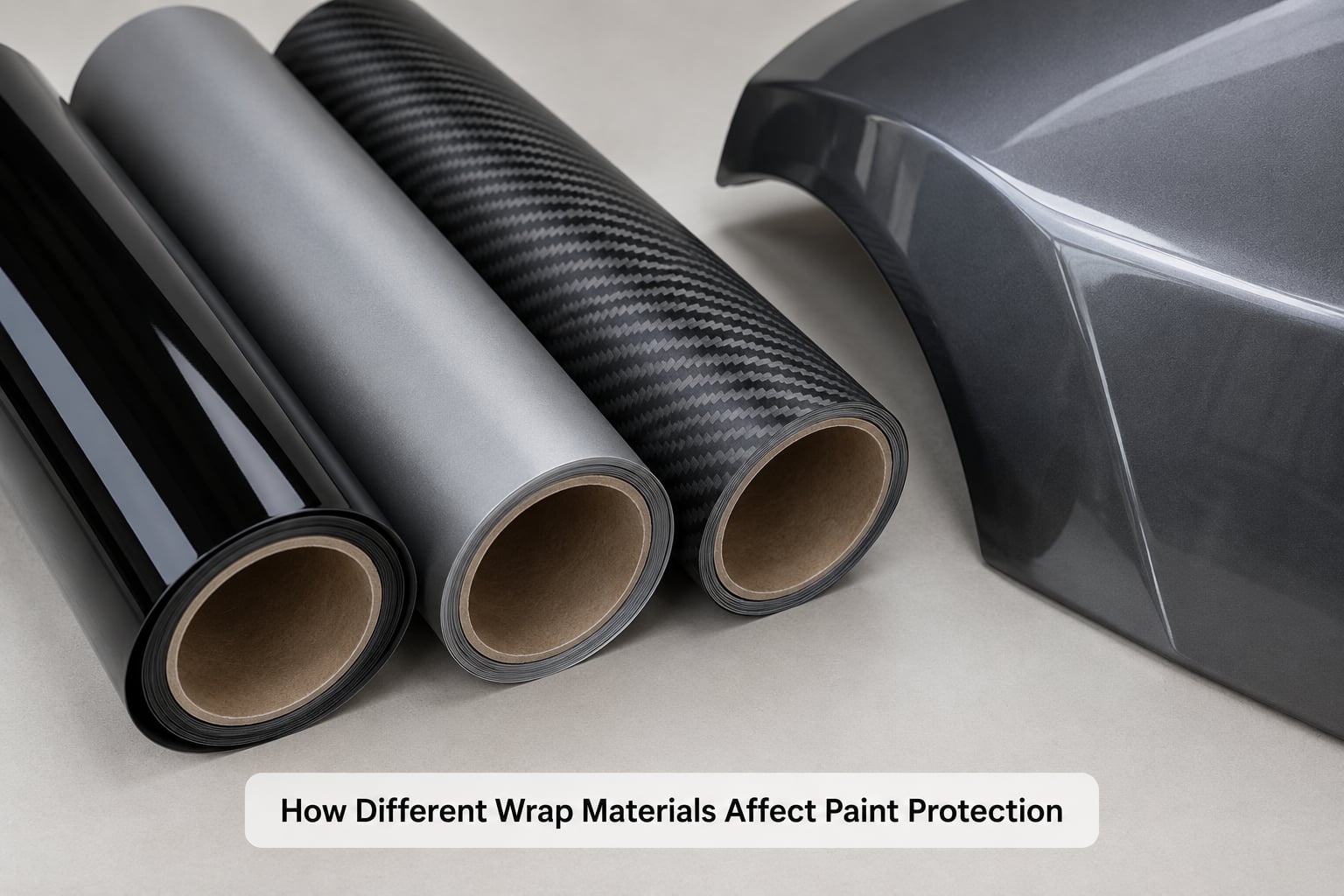
Most paint damage stories trace back to film quality rather than to wrapping itself. Cast vinyl is extruded and then stretched in a controlled way, which gives it a thinner, more flexible face and an adhesive layer that releases predictably. Calendered film is rolled and pressed, which makes it cheaper and stiffer.
Stiffer film is harder to work around curves, door handles and jambs. Installers compensate with more heat, and heat plus an aggressive adhesive plus a thin factory clear coat is exactly the combination that lifts paint on removal. Damage claims tend to cluster around generic film, while cast brands come off cleanly given time and heat.
Benchmarks worth asking about
3M, Avery Dennison, XPEL and SunTek are the names shops mention when they talk about cast film. What matters on the quote is the brand and product line, the thickness, and the length of the film warranty, typically 5 to 7 years for quality colour film.
Finish changes the risk
Matte and satin wraps have no gloss layer to hide fine marks, so every swirl and fingerprint reads plainly. Specialty finishes such as chrome, textured carbon-look and soft-touch films are also stiffer than a standard gloss cast vinyl, which means more heat during install and removal.
Paint condition matters as much as film quality
A wrap seals whatever condition the paint was in. Wrapping sun-faded, oxidised or chalky paint locks that defect in, and the problem only becomes obvious at removal. Fresh repaint also needs to cure, commonly about 90 days, before film goes on, or the adhesive can pull the new clear coat with it when it comes off.
Can Removing a Car Wrap Damage the Paint?
Removal is the part that can hurt, and it is the part most wrap marketing skips. On a well-maintained car with quality cast film, removal is routine work. Heat softens the adhesive, the film comes away in sheets, and what is left is a clean panel.
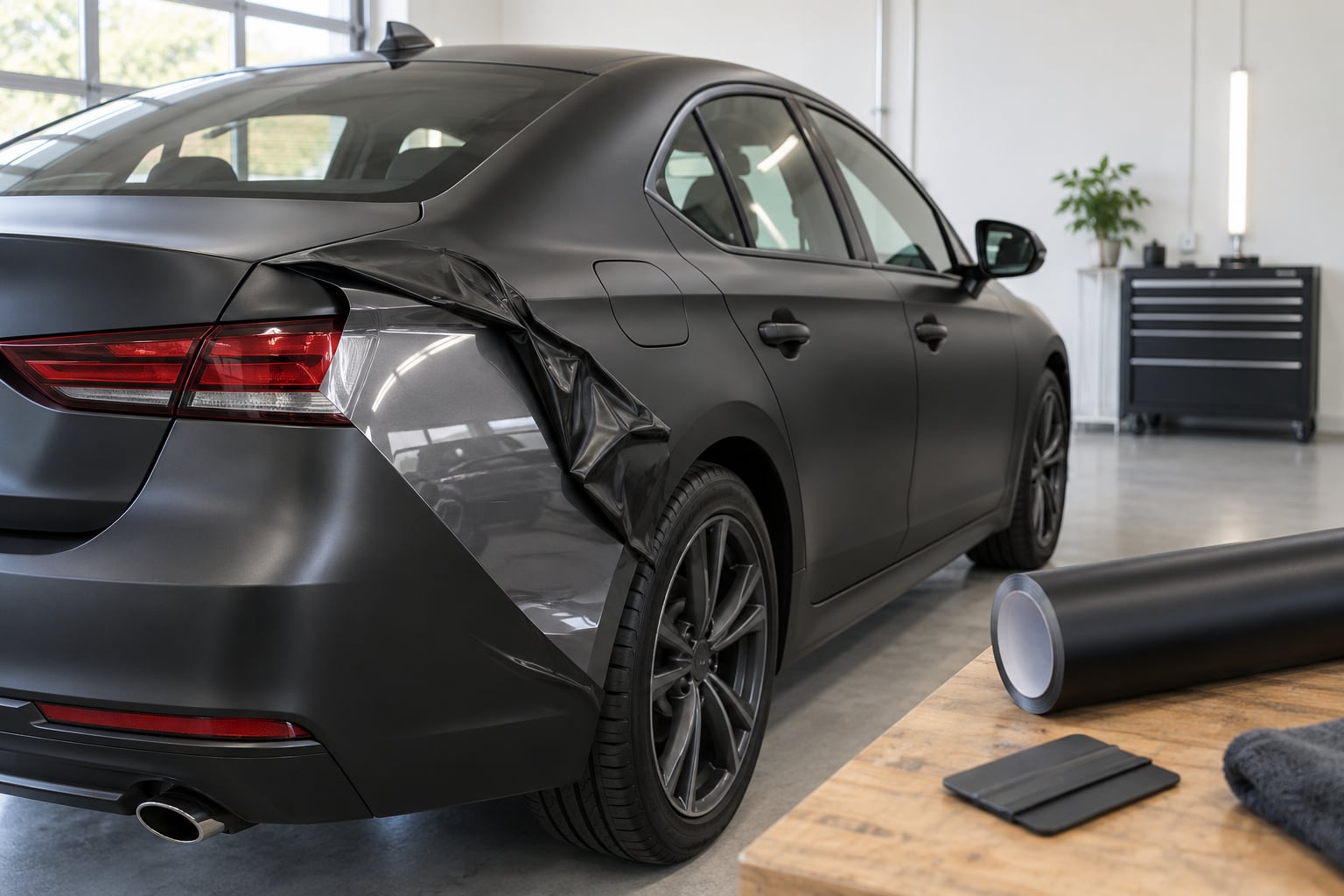
Residue is normal in small amounts. Slight adhesive film and a faint matte patch after removal are ordinary and usually clear with a detailer product or a light polish. A soft, sticky layer that needs sanding off is a red flag, and so is paint coming up with the edge of the film.
Situations where removal turns risky
- The wrap has been on past the film warranty, so the adhesive has hardened and become part of the equation
- Cheap calendered film has yellowed, shrunk or torn and bonded aggressively to the clear coat
- The paint is single-stage rather than base coat and clear, which has no sacrificial layer to lose
- Edges and corners were lifted, re-taped or re-wrapped, so adhesive built up in those spots
- Removal is done cold and fast with a plastic blade instead of heat, patient peeling panel by panel
- Several wraps have been stacked on the same panel over the life of the car
The safe sequence is simple. Warm the panel, lift a corner slowly, peel at a shallow angle following the contour of the body, and stop if the film starts to stretch rather than release. A shop that has removed hundreds of wraps will tell you the same thing: the job that goes wrong is the one that was rushed on a cold morning.
If you want the safest possible outcome, agree the removal plan before the wrap goes on and confirm who does it. Most quality installers would rather take a car back for removal than watch someone else pull film off it.
Will a Car Wrap Increase Resale Value?
It depends on what the buyer sees. Wrapped cars split opinion right down the middle, and the forum consensus reflects it.
On one side, untouched factory paint is worth real money. A vehicle that never had a bumper scuff, a repainted panel or a colour change carries a premium, and new-car owners on the Mustang, Bronco and Tesla forums routinely wrap at delivery precisely to keep OEM paint pristine.
On the other side, a car that arrives fully wrapped offers a buyer no wear history to inspect. Some buyers read that as caution rather than care, and used-car dealers may discount a car they cannot easily assess. On lease vehicles the argument is simpler: a wrap that removes cleanly keeps you inside the paint clause of the lease.
Whichever way you lean, documentation matters. Keep before photos, service records and the installer invoice naming the film brand and warranty length. That record turns an unseen claim into something the next owner can verify.
One warning worth repeating: leave a wrap on for seven years and the covered panels can end up brighter than the ones you never wrapped. That mismatch is the single most common resale surprise reported by owners removing their own film.
How to Extend the Life of a Car Wrap
A wrap lasts 5 to 7 years on a daily driver if you treat it sensibly. Most early failures are washing mistakes and lifted edges, not bad film.
Wash it by hand, or touchless if you must automate
Use a clean microfibre mitt, a separate soapy bucket for the car, cool water and a mild pH-neutral shampoo. Skip the automatic brush carwash: the brushes work at edges and seams where the film is already weakest.
If a touchless wash is your only option, keep the pressure washer moving and hold the lance at least a foot away from the wrap. A static jet at close range will lift a seam or cut the film, and those cuts become the starting points for tearing.
Clear contaminants fast
Bird droppings, tree sap and bug splatter go on as soon as you can see them. Keep a detailer-safe spray in the car and wipe the surface rather than scrubbing it.
Watch the edges, not just the panels
Lifted corners show up first on door handles, the bumper lip, the hood edge and around badges and trim. A lift catches water and grit, and a small lift becomes a torn corner over a season. Have a shop re-tape or re-edge it before it spreads.
Give it shade and time
Park under cover when you can and clean the wrap before it accumulates a season of film. Vertical panels such as doors last longer than horizontal ones such as the hood and roof, and a matte wrap in cold weather goes brittle, so handle those panels gently in winter.
Frequently Asked Questions
Are car wraps safe for factory paint?
Yes, when quality cast film is installed on healthy paint and removed within a reasonable window. Installers regularly use a wrap as a sacrificial layer so the OEM paint never takes the scratches. The risk comes from cheap calendered film, wrapping faded or oxidised paint, and stripping old film off quickly instead of with heat and patience.
How long can a vinyl wrap be left on a car?
A quality cast vinyl wrap lasts about 5 to 7 years on a daily driver, which is roughly the film warranty length. Leaving it longer is possible, but the adhesive hardens, edges become brittle and removal gets riskier. If you keep the same wrap past seven years, covered panels can look brighter than the ones that were never wrapped.
Will sunlight damage the paint under a car wrap?
Not the way bare paint fades. A wrap with quality UV pigments blocks a good share of sunlight, so the paint underneath ages more slowly than exposed panels. The trade-off is a colour mismatch at removal, because the unwrapped panels faded while the covered ones did not. That difference is usually the first thing buyers notice.
Does a car wrap hide scratches and dents?
It hides light surface marks on colour-change wraps, because a shallow scratch that only disturbs the film often blends into the finish. It does not hide dents, and it does not hide deep gouges that cut through the film into the clear coat. A wrapped car can still show every crease in the metal exactly as it did before.
Can a wrap be removed without damaging the clear coat?
On a car with quality cast film and sound factory paint, yes. Heat softens the adhesive and the film peels away in sheets with a faint residue that a detailer product clears. Damage tends to follow the same three causes: cheap film, paint that was already faded or single-stage, and cold, fast, rushed removal with a blade.
Is a thicker vinyl wrap better for paint protection?
Not much. Colour vinyl normally runs 3-4 mil and paint protection film runs about 8 mil, which is where the real impact resistance comes from. Thickness alone does not make colour vinyl safer, because stiffer film needs more heat at install and at removal, and heat is what puts clear coat at risk.
The Best Protection Starts With Careful Installation
So, does a car wrap protect the paint underneath? It does, in the way a screen protector protects a phone: enough to absorb the everyday hits, not enough to make the surface beneath invincible. Get that right and a wrap is one of the better ways to hold factory paint for the five or seven years most owners keep a car.
Get it wrong and the film itself becomes the problem. Before anything goes on, look at the paint in daylight. If it is faded, oxidised or freshly repainted, correct it first and let new paint cure, commonly about 90 days.
Then ask the shop which film they are using and what the warranty covers, and check that it is a cast brand such as 3M, Avery Dennison, XPEL or SunTek rather than a generic roll. Agree in writing who removes the wrap later and when, so removal happens under someone who did the install.
That is the whole decision in four steps: sound paint, quality film, a professional install, a planned removal. Everything else on this page is detail.