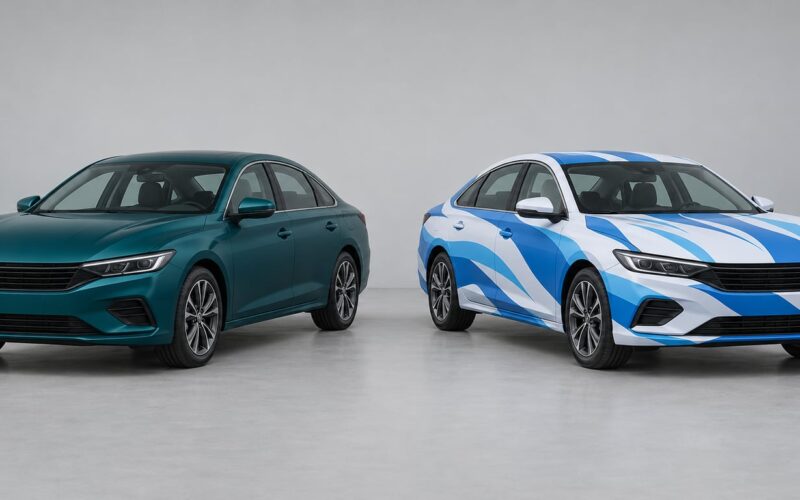
A wrap laminate is the thin, clear or tinted film laid over printed or colored vinyl to set the finish and protect the graphic underneath. It is the last layer of a vehicle graphics system, and it changes how colors read in daylight, how the surface handles washing, and how long the job holds up on a vehicle that works every day.
Most people notice a wrap because of the design. Almost nobody thinks about the film on top of it, which is a shame, because swapping laminate changes the look more than most people expect. I have watched two vans with identical graphics look completely different purely because one had gloss and the other had matte.
Table of Contents
- What Is a Wrap Laminate?
- What the word laminate actually refers to on a wrap job
- How a wrap laminate differs from a clear coat spray
- Why Does Wrap Laminate Matter for Vehicle Graphics?
- What Is the Difference Between Wrap Film and Laminate?
- What Types of Wrap Laminate Are Available?
- How Do You Choose the Right Wrap Laminate?
- What Is Wrap Laminate Caliper, and Does Thickness Matter?
- How Does Wrap Laminate Affect Print Quality and Color?
- How Do You Install and Care for a Laminated Wrap?
- Installation basics
- Washing and long-term care
- Frequently Asked Questions
- Is a wrap laminate necessary for a vehicle wrap?
- Is gloss or matte laminate better for a business vehicle?
- Can wrap laminate be removed and the vehicle re-wrapped later?
- How long does a laminated wrap last on a business vehicle?
- Does thicker laminate always mean better quality?
- Can I laminate a vehicle wrap myself?
- Conclusion
What Is a Wrap Laminate?
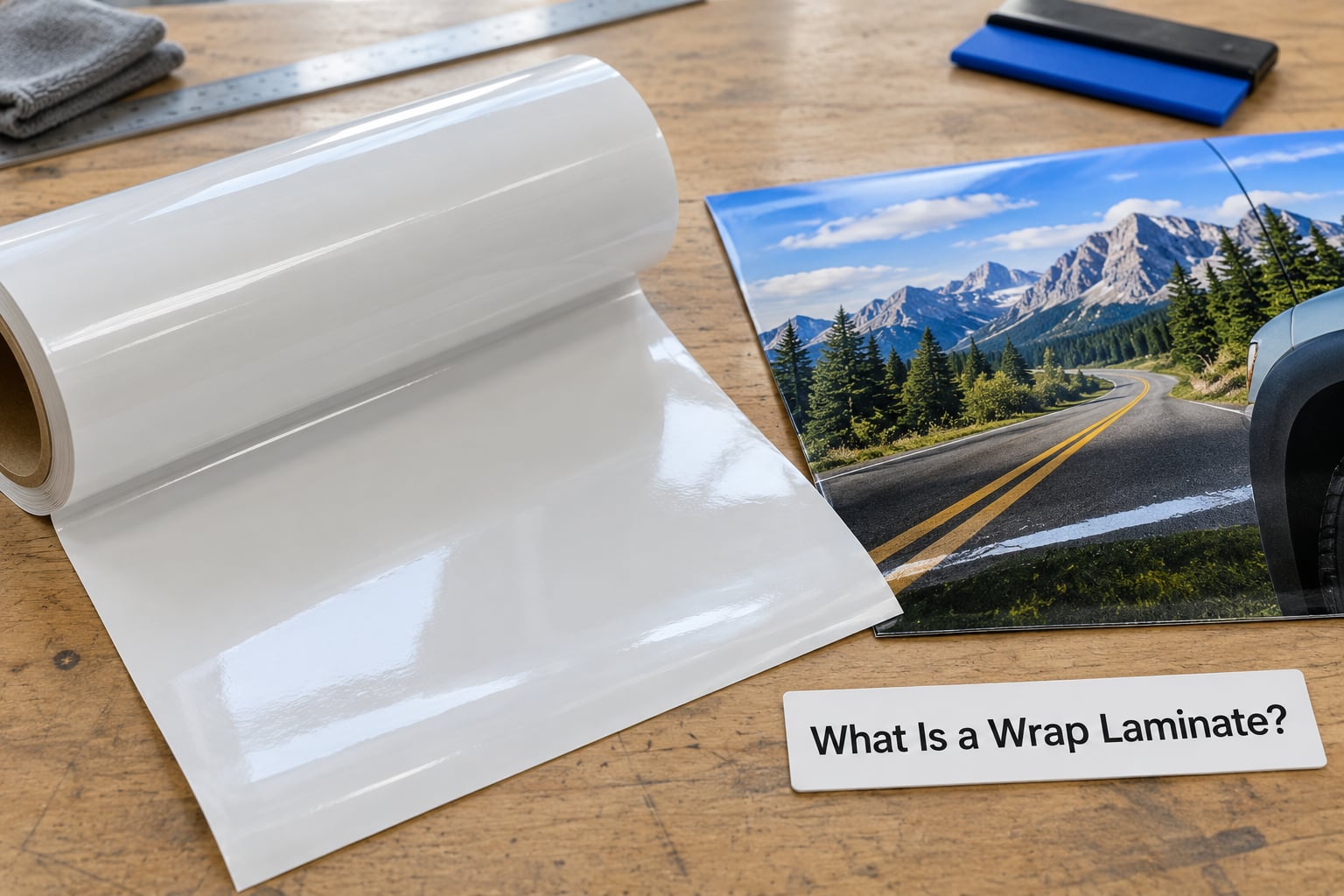
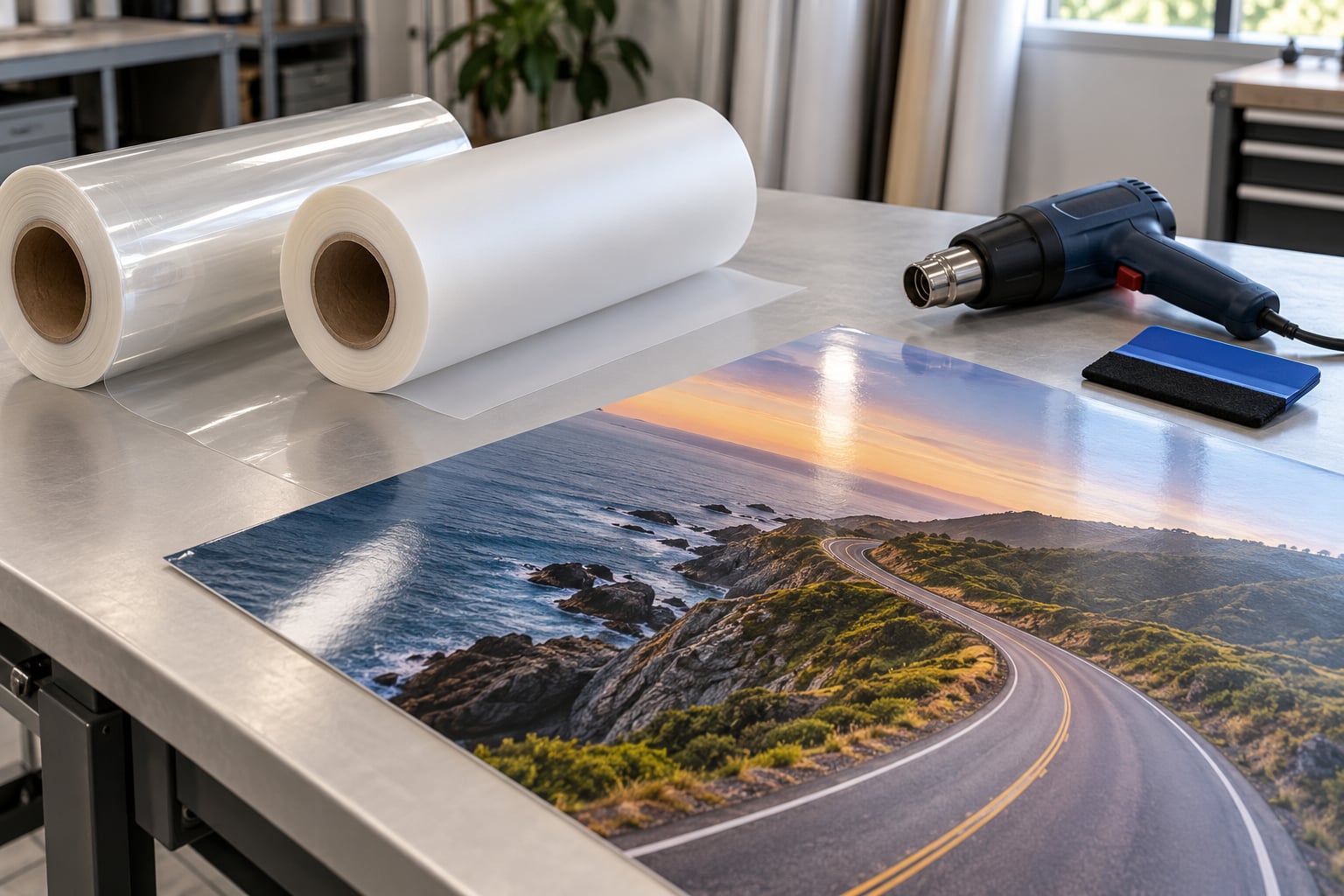
Laminate, in wrapping terms, is the sacrificial skin over your artwork. It is a flexible, self-adhesive film that goes on after the vinyl has been printed, cut, and applied, either wet or dry. Its jobs are simple to state and easy to get wrong: set the sheen, seal the ink, and take the abuse that the graphic itself should not have to take.
Three layers make up the finished panel. The base is the printed or solid-color vinyl carrying your design. The adhesive is a pressure-sensitive acrylic that bonds film to vinyl as the squeegee pushes air out. The laminate is the top film, and its own clear coat is what you actually see when you look at the vehicle.
What the word laminate actually refers to on a wrap job
In sign shops and print shops, laminate can mean two different things depending on who says it. Sometimes it means the flexible film applied over a graphic. More often it means a rigid panel: high-pressure laminate, low-pressure laminate, or overlay film bonded under heat and pressure. Those rigid products are not wrap films and cannot be rolled onto a curved door.
Ask which one you mean before ordering. The word on its own is genuinely ambiguous, and shop owners usually can tell which one you mean from context.
How a wrap laminate differs from a clear coat spray
Automotive spray clear coat, the liquid kind, protects the same layers. The difference is that it comes out of a gun, needs booth conditions, and adds measurable thickness. A wrap laminate arrives as a roll and goes on with a squeegee in a bay or a parking lot.
Spray gives a deeper, harder gloss on a panel that looks factory finished. Film gives you matte and satin options, comes in specific color tints, and can be replaced panel by panel later without repainting anything underneath.
Why Does Wrap Laminate Matter for Vehicle Graphics?
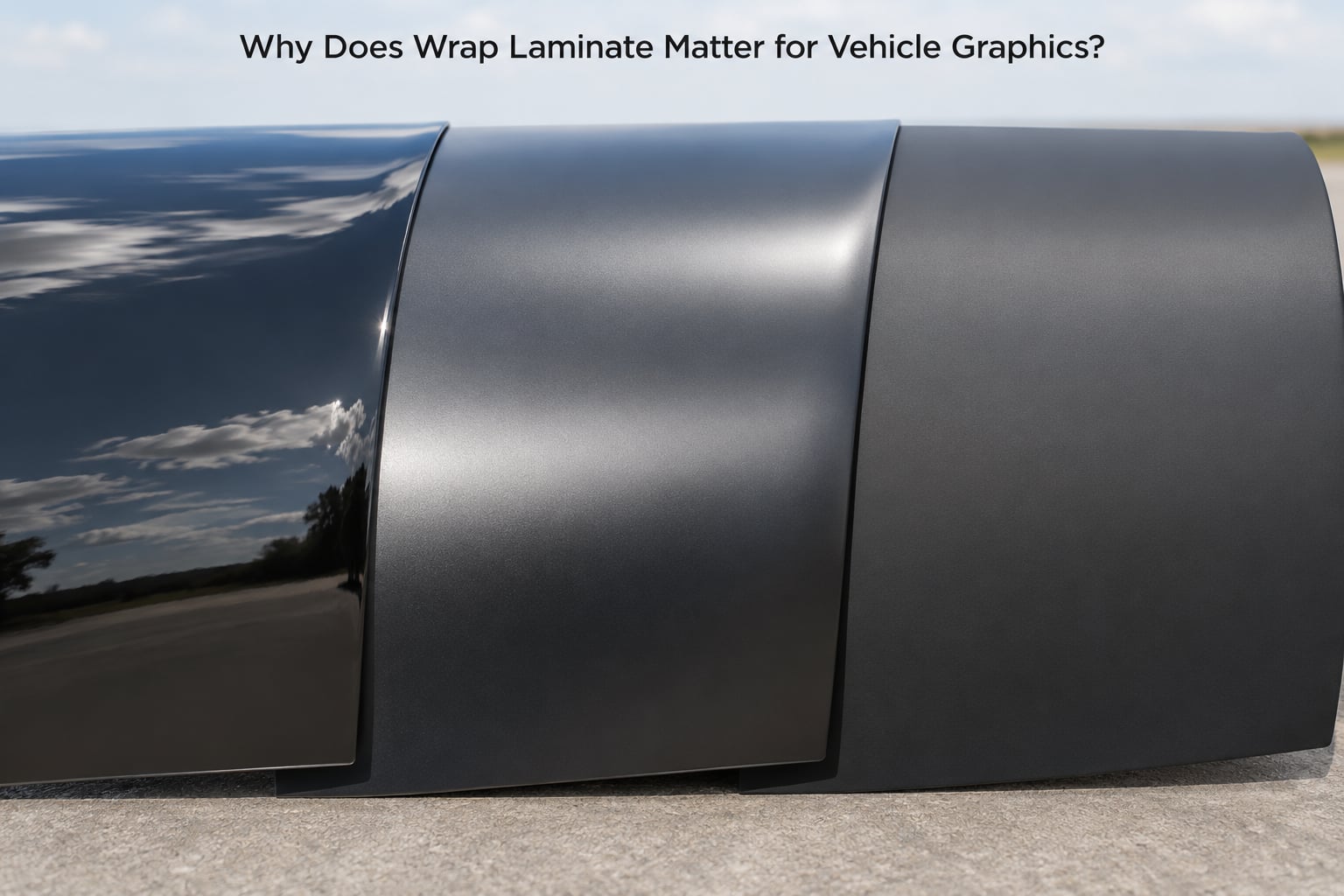
Laminate decides color depth. Gloss deepens a color and makes it look almost wet. Matte mutes it and pulls it toward a flatter, softer tone. If a color has looked dull in the sample room, the laminate is usually why, not the ink.
It also decides how the graphic survives daily work. Print sits close to the surface and scratches easily, and bare ink fades under UV exposure. A laminate adds a sacrificial barrier for branch rubs, belt buckle scratches, wash mitts, and road film. On a van that sees highway miles, that layer is the difference between a graphic that still reads well at three years and one that looks tired at eighteen months.
Cleaning is the other big one. Gloss films are forgiving and wipe down easily. Matte and satin films show streaks, scuffs, and fingerprints more because of the surface texture, and they need a gentler product and a clean microfiber cloth. Hand washing is kinder than a drive-through tunnel, which adds its own abrasive grit to the finish.
Edges matter too. A wrapped edge and a folded edge look different at two feet, and corners are where lift usually starts. A well-fitted laminate pushes the graphic right out to the edge and wraps around it, so there is no raw vinyl seam to catch a door frame or a hinge.
None of this is automatic. Results depend on the film system, the ink underneath, the installer, and how the vehicle is actually used. A truck parked under a tree all week and a van on a coastal route see very different amounts of sun and salt.
What Is the Difference Between Wrap Film and Laminate?
Wrap film carries the design. Laminate carries the protection and the finish. One is what your customer looks at, and the other is what your customer does not look at until something goes wrong.
Solid-color vinyl on a work van is still film, not laminate, and it still needs a protective layer if you want it to hold color. Printed graphics need it even more, because pigmented ink sits closer to the surface and takes abrasion directly.
The adhesive underneath is what turns the whole thing into one removable skin. Wrap laminates normally use a permanent acrylic adhesive designed to hold for years and lift cleanly later. Some specialty laminates pair with a removable or changeable adhesive system if you plan to re-graphics the vehicle often.
Skip the laminate and your graphic is one wash mitt away from a scuff. Add it and the same graphic sits behind a clear barrier that can be replaced independently of the panels it covers.
What Types of Wrap Laminate Are Available?
Gloss, satin, and matte are the finishes most shops stock. Gloss is the most reflective and hides fingerprints best. Satin sits in the middle and has grown popular because it looks modern without the mirror effect. Matte is the most demanding to keep clean and the most dramatic on a large panel.
Finish and construction are separate choices. Cast laminate is thinner and more pliable, which matters on compound curves, complex body lines, and tight wheel arches. Calendered laminate comes off a roll at higher thickness and generally stays flatter, which suits long doors, roof panels, and box trucks where the surface is broad and straight.
Specialty options exist as well. Color tinting adds a slight hue across the whole vehicle. Texture films hide panel imperfections and add grip to accent graphics. Printable overlaminates for white or light ink colors solve problems with inks that need something underneath them to read properly.
How Do You Choose the Right Wrap Laminate?
Start with the design intent. Gloss for a loud color scheme, matte for a premium or tactical look, satin when you want the compromise. Then check what the print shop’s data sheet lists as compatible, because a laminate that does not pair with your ink system can haze or discolor it.
Next look at geometry. Compound curves, tight radii, and wheel arches pull harder on film than flat doors, so pliable construction earns its place. Long flat panels can handle thicker material without any benefit being lost.
Then look at exposure. A vehicle parked outdoors in direct sun every day puts more pressure on UV stability than one in a garage. Salt air and coastal routes are their own test. Tell the supplier how the vehicle is used rather than describing it as a normal fleet van.
Finally consider the installer and the refresh schedule. Panel-by-panel replacement later is much easier if the whole vehicle was built from one film system. Asking that question before the job starts costs nothing and saves a mismatch later.
What Is Wrap Laminate Caliper, and Does Thickness Matter?
Caliper is just thickness, measured in mils. One mil is one thousandth of an inch, so a 2 mil film is roughly half the thickness of a 4 mil film. It is the least glamorous spec on the list and the one most often used as a proxy for quality, which it should not be.
What thickness actually changes is conformability. Thicker film holds a crease and resists shrinking, which helps on flat panels and long seams. Thinner film drapes into curves more easily and hides its own thickness at the edge. Neither is better in general. Cast film can be thin and calendered film can be thick, which is why construction and caliper need reading together.
Every vehicle graphic is a film system. Adhesive chemistry, ink type, top coat, and caliper all interact. A thicker laminate paired with an incompatible adhesive will lift edges sooner than a properly matched thinner one ever would.
How Does Wrap Laminate Affect Print Quality and Color?
A gloss laminate deepens color because it reflects light back through the ink rather than scattering it. That is why a red that looks slightly orange in the shop can look rich and true under gloss on the vehicle.
Matte does the opposite. It scatters reflected light, mutes saturation, and gives large flat panels a calmer, flatter read. It also hides orange peel and small surface waves in the substrate, which makes it a good pick on an older vehicle with a less perfect body.
Haziness is the failure everyone fears. A laminate that has not fully cured, or an adhesive that releases solvents into the print, can cloud the artwork. That risk drops sharply when the film system is kept in a controlled environment and given the cure time the manufacturer specifies before the vehicle goes outside.
Ink, film, laminate, temperature, and cure time all work together. That is why the same artwork can look different on two vans wrapped a week apart.
How Do You Install and Care for a Laminated Wrap?
Installation basics
The panel gets cleaned and degreased first, usually with isopropyl alcohol, because any remaining oil or dust becomes a permanent bubble or a dead spot. Then the laminate is positioned with the liner still on, the liner is peeled back a section at a time, and a squeegee pushes air toward the edges. Heat softens the film over edges and curves so it conforms rather than springs back.
Temperature matters more than people expect. Film installed in a cold shop behaves like a different material than film at a comfortable working temperature, and heat applied too aggressively shrinks the laminate and lifts the edge it was meant to hide.
Washing and long-term care
Hand washing with a mild automotive product and a clean microfiber cloth is the safest approach. Avoid abrasive pads, and treat matte and satin finishes more gently than gloss. Give the graphic the cure period the manufacturer specifies before the first wash, because early cleaning is when a lot of jobs pick up swirl marks.
Compound curves, deep recesses, and complex model lines are where film installation stops being a weekend project. For those, an experienced installer is usually worth it, because the failures show up at the edges weeks later.
Frequently Asked Questions
Is a wrap laminate necessary for a vehicle wrap?
Not always, but it is the difference between a graphic that lasts and one that does not. Without it, print and solid vinyl sit on the surface directly and take every scuff and UV exposure themselves. A laminate adds a replaceable protective layer and controls the finish. Panels that will never be seen again can skip it, though most shops laminate by default.
Is gloss or matte laminate better for a business vehicle?
It depends on the branding and the maintenance routine, not on quality. Gloss deepens colors, hides fingerprints, and wipes clean easily, so it suits a busy delivery or service vehicle. Matte looks premium and hides substrate waves but shows streaks and needs gentler washing. Satin is the middle ground many shops land on for exactly that reason.
Can wrap laminate be removed and the vehicle re-wrapped later?
Yes, that is one of its main advantages. A laminated wrap peels off as a single skin and, done at a controlled temperature with the right adhesive, usually leaves the substrate reusable. Heat the film before pulling it and work slowly so you remove it, rather than tearing it. Keep the original panel if you plan to reuse it.
How long does a laminated wrap last on a business vehicle?
There is no single number, because service life depends on the film system, exposure, and how the vehicle is used. A daily fleet van parked in sun sees far more UV than an indoor van on the same wrap. Washing method matters as much as mileage. Ask the supplier for the warranty term on the specific series and treat it as the best case, not the promise.
Does thicker laminate always mean better quality?
No. Caliper only tells you thickness, and it does not tell you adhesive chemistry, top coat quality, or ink compatibility. Thicker film can help with clean creases and flat panels, while thinner pliable film often conforms to tight curves better. Read construction and caliper together, and match the whole film system to the vehicle.
Can I laminate a vehicle wrap myself?
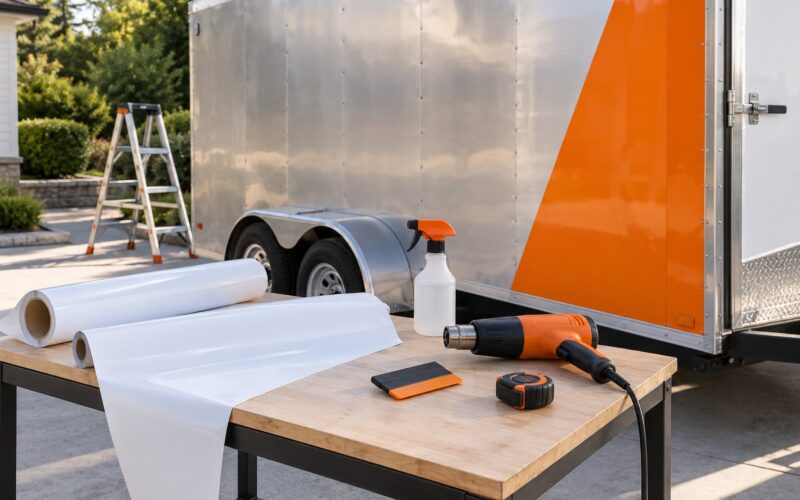
You can, and plenty of people do on flat panels. You will need a clean workspace, a proper squeegee, an adhesion check, controlled temperature, and a heat gun for edges. Compound curves, deep recesses, and model lines are where first attempts fail, and edges are the first place a wrap shows it. For a vehicle that earns money, professional installation usually pays for itself.
Conclusion
Laminate is the layer nobody plans and everybody notices. Pick the finish first, match the film construction to the curves on the vehicle, then confirm compatibility with the printed film and give it the cure time the supplier specifies.
Get those three things right and the wrap looks better, cleans easier, and can be refreshed panel by panel later. Treat caliper as one detail among many, not the decision, and the vehicle you drive every day will look right for longer.