Asking a customer for a review stops feeling pushy when you make exactly one easy request: ask at the moment they are happiest, use conditional wording that gives them permission to say no, send a direct link so there is nothing to look up, and never chase a second time. That combination — right timing, low-pressure wording, no work for the customer — is what turns a favour into a habit.
The awkwardness is mostly social, not legal. Owners I have worked with tell me they feel needy when they ask, and front-line staff dread delivering the message because they sound like company mouthpieces. Reframing the ask as information they actually want, rather than a favour they are requesting, fixes most of that in a week. Updated for 2026.
Table of Contents
- What You Need
- Step-by-Step
- Choose the right moment to ask
- Make the request personal
- Give customers an easy next step
- Use a polite follow-up
- Respond and close the loop
- Common Mistakes
- Frequently Asked Questions
- When is the best time to ask a customer for a review?
- Should I offer a discount or incentive in exchange for a review?
- What should I do if a customer leaves a negative review?
- How do I follow up if the customer does not leave a review?
- Can I ask every customer for a review?
- Should I send the same review request to everyone?
What You Need
Before you send anything, four pieces of preparation do most of the work. You need less than you think: a list of who just had a good experience, one link, one short message, and a plan for responding when the review arrives.
- A list of recent customers. Name them. The 20 jobs or visits finished in the last 30 days is a better starting pool than a mailing list of everyone you have ever served.
- One direct review link. A single short URL that opens the review form straight away, not your homepage where the customer has to hunt for the business.
- One short message in two or three sentences. Personalised, specific to the job, and under about 80 words. Long messages read as effort you are imposing on them.
- A quiet window to reply. Decide who answers reviews and when. A fast, plain response matters as much as the request itself.
Skip the review platform shopping for now. Google Business Profile is where most local businesses get their volume, so build that link first and add others later if you need them.
Step-by-Step
Choose the right moment to ask
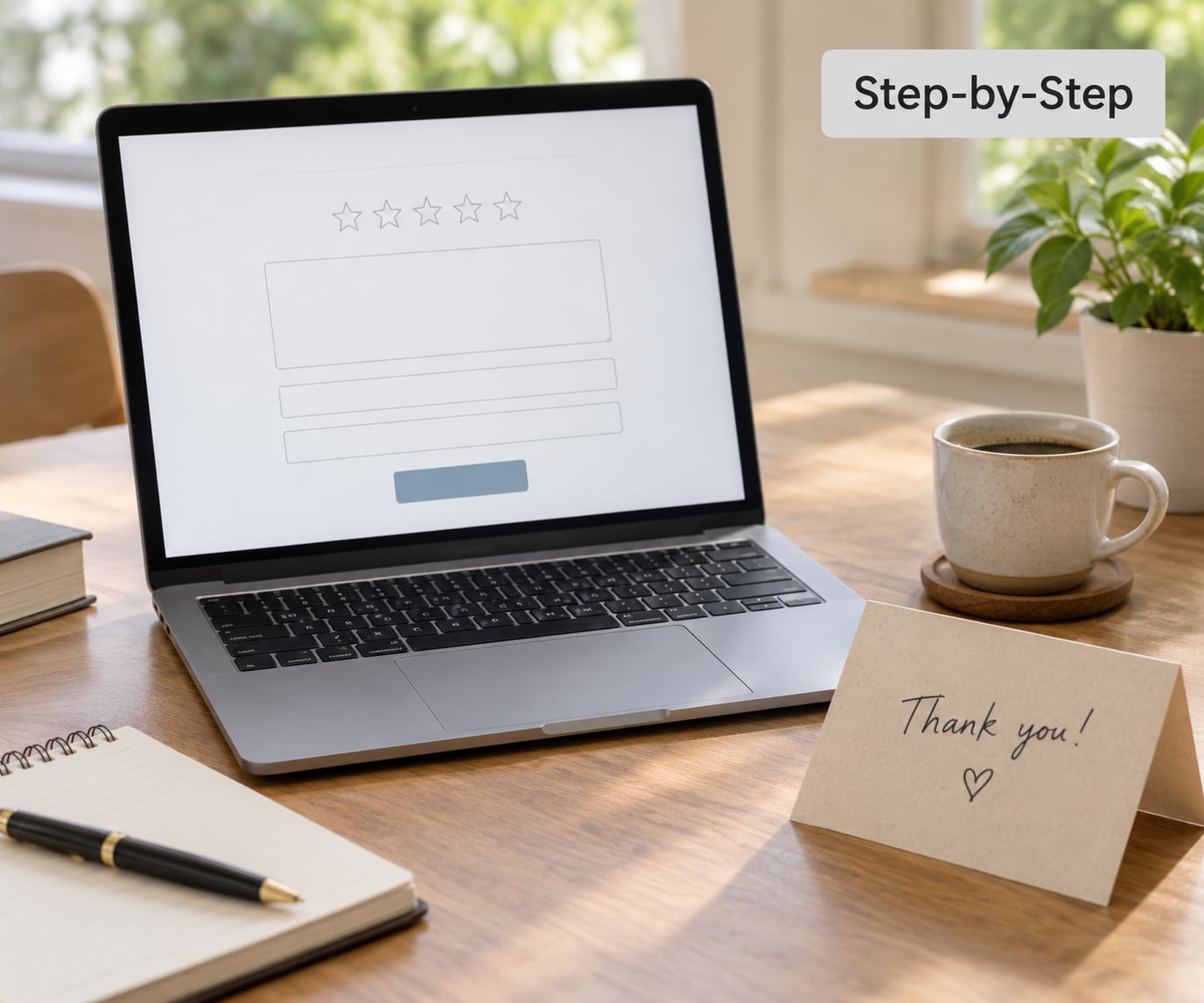
The best time to ask is right after the customer signals satisfaction, and before they leave the moment behind. For a service call, that is at the walkthrough, once you have shown them the finished work. For a restaurant or shop, it is as they are paying. For anything with a delivery delay, wait until the product is in their hands and a few days have passed.
Two moments to avoid: while the customer is mid-complaint, and before the job is genuinely finished. An ask that lands during a problem reads as an attempt to distract from it, and it usually produces a one-star review instead of none.
Timing by channel, roughly:
- In person, at the end of the job: same visit, while they are still pleased.
- In person, in a shop or restaurant: at the moment of paying or handover.
- Email: within 24 to 48 hours of the job or purchase.
- Text message: same day or the next morning, for short service businesses.
- Printed card or insert: handed over with the invoice, receipt or delivery.
Make the request personal
One specific sentence does all the work: mention the actual job, the actual outcome, or the detail they mentioned on arrival. “Thanks for getting the upstairs bathroom sorted in one visit” lands. “We hope you enjoyed our service” reads like it was sent to everyone, because it was.
The other half of making it non-pushy is conditional phrasing. “If you had a good experience, would you mind…” gives the customer a door to walk through. You are not assuming satisfaction, and you are not demanding anything. Customers in the trades forums I read agree this single device is what removes the awkwardness for them.
Avoid guilt language entirely. No “it would mean the world”, no “we’re a small business and this would help so much”. Guilt transfers the effort of your marketing onto the person who just paid you, and it is the fastest way to make an ask feel like pressure.
Give customers an easy next step
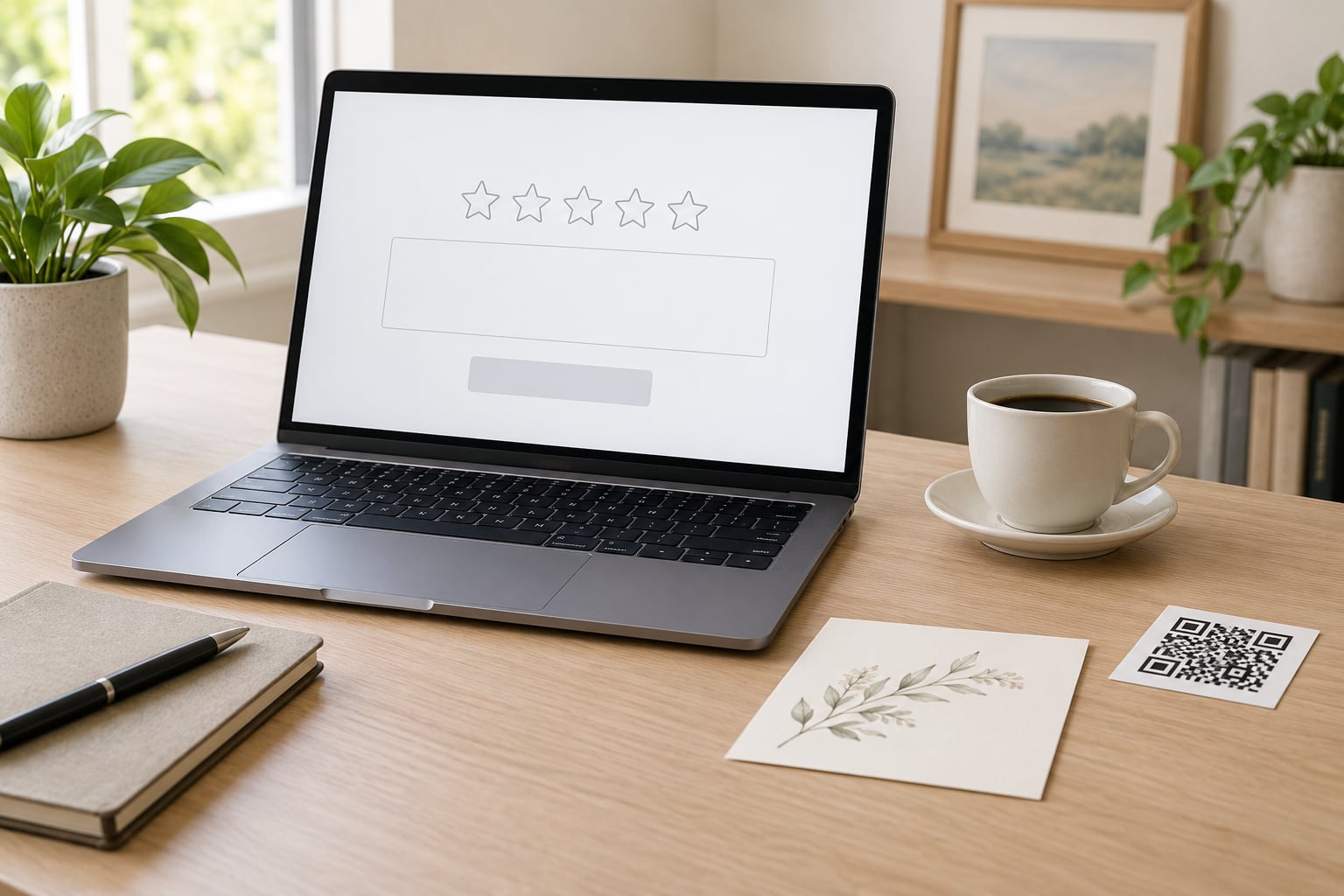
Make the next step one click. Pull the direct Google review link from your Business Profile rather than sending people to your website, and shorten it with a simple URL shortener if the raw link is long and ugly. A QR code on an invoice, a counter card, or a van door covers the customers you will never see face to face.
Tell them what kind of feedback helps, in one short clause: a sentence about the job, the timing, or how the crew communicated is genuinely useful to you. People hesitate most when they cannot tell whether you want five stars or the truth. Saying “honest feedback, good or bad” is fine here, as long as you then honour it.
Check the link yourself before you send anything. Broken review links are the most common reason a warm customer gives up halfway through, and you will never hear about it.
Use a polite follow-up
One ask, one follow-up, then stop. That is the ceiling most customers are comfortable with, and it is where I have seen relationships stay intact. Send the reminder 48 to 72 hours later, keep it shorter than the first message, and never stack it with a phone call the same day.
If you get silence after the reminder, take it as a normal outcome. Most people genuinely intend to review and simply forget, which is why a single reminder converts real intent. It is not a personal rejection of you.
What people reply to, verbatim:
Subject: Quick favour, if you have a spare second?

Hi [First name],

Thanks again for the [job type] on [day/date] — glad we got [specific outcome] sorted.

If you had a good experience and you have two minutes, a short Google review would help a small shop like ours more than anything else we could do. Here's the link: [direct review link]

No worries at all if you'd rather not. Hope the [repair/visit/order] keeps working well.

[Your name]
[Business name]
Text message version, under 320 characters:
Hi [First name], it's [Your name] from [Business name]. Thanks for the [job type] on [date]. If it went well, would you leave a quick Google review? [link] Totally fine if not!In-person script for a trades visit or a counter:
"Glad that's sorted. If everything's gone well, I'd never ask you to type anything out — but if you have a spare second later, a Google review is the one thing that brings us work. Here's the link on this card. No pressure either way."Printed card or invoice footer:
Thank you for your business. If we did a good job, a short review at [short link] genuinely helps us — and if we didn't, please tell us first so we can put it right. [Business name], [phone number]Note what that card does. It invites criticism as loudly as praise, which is both honest and the thing that keeps your rating believable.
Respond and close the loop
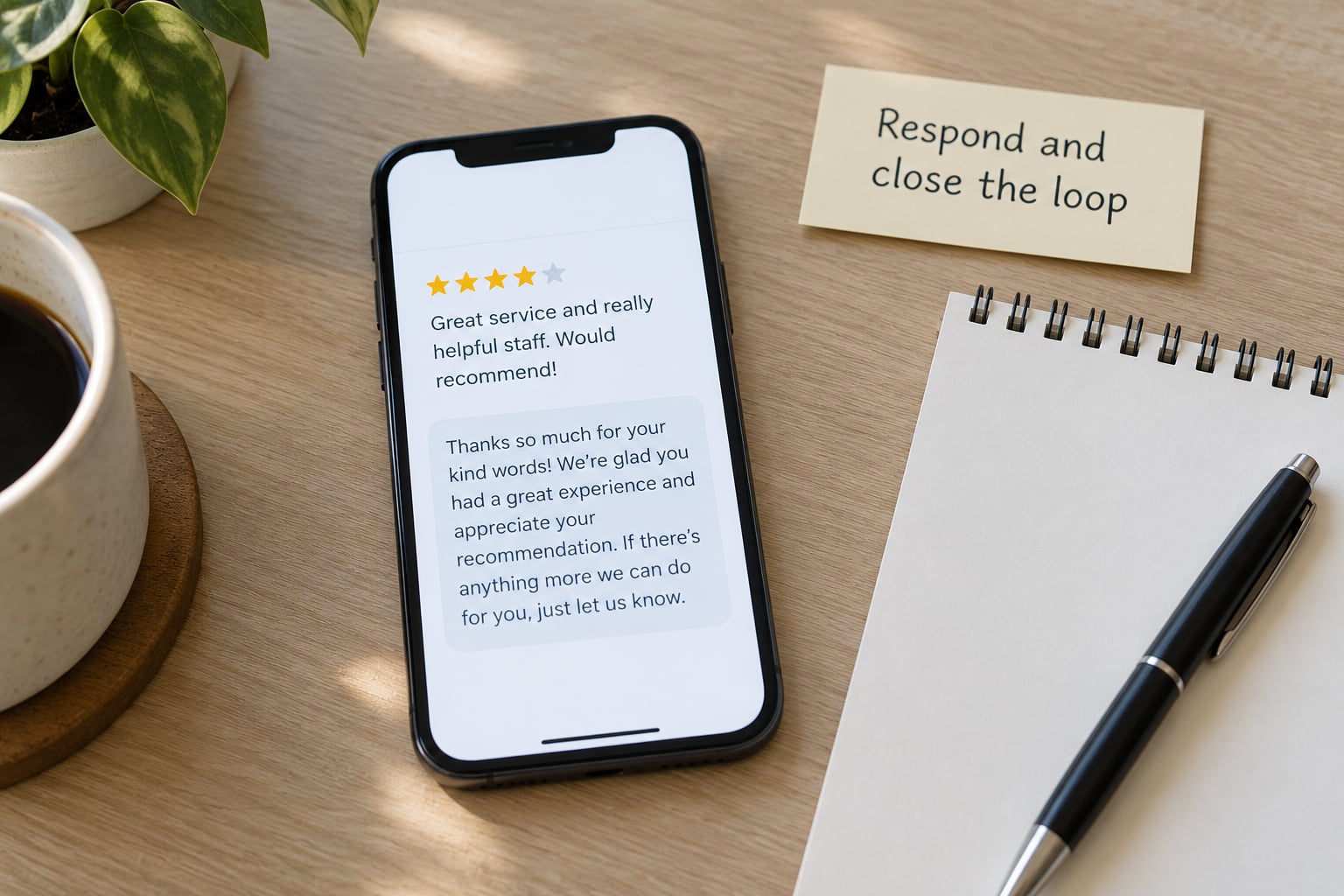
Ask one more thing of your team: read every review, including the bad ones, and reply in plain language within a few days. A short, specific response shows prospects that complaints get handled, which matters more to a potential customer than it feels like it does to you.
When a customer says no, or hesitates in a way you can see, do not push. “Completely fine — thanks for letting me know” ends it. Trying to rescue the moment with a second argument is what creates the awkwardness people remember. Owners running one-to-one services say the same thing: the customers who decline are rarely lost, and a clean “no thanks” keeps the relationship intact for the next job.
On a critical review, acknowledge the specific problem, say what you will change or have changed, and move the conversation to a private channel without asking them to take anything down. A one-star review answered well reads better than a silent five-star one.
Common Mistakes
Most damaged review habits come down to four mistakes, and each has a straightforward replacement.
- Asking only the happy customers. This is review gating, and it is exactly what platform policies prohibit. It also skews your ratings in a way regular customers notice. Ask everyone, and let the conditional phrase do the filtering.
- Offering a discount, gift card or free service in exchange for a review. Incentives for reviews violate the FTC Endorsement Guides. You are welcome to run a separate promotion for referrals, but tying it to a review is the part that gets businesses in trouble.
- Nagging across email, text and phone. Two channels and two messages is already too much. Pick one channel for the ask and one for the reminder.
- Asking during a complaint or before the work is done. Wait until the job is finished and the customer has stopped being annoyed.
Buying reviews and writing them on customers’ behalf belong on the same list of things not to do, and platform removals for that behaviour can be harder to undo than a slow month of review volume.
One platform deserves a specific note: Yelp’s own guidance discourages soliciting reviews directly, so ask there only when a customer volunteers it. Google behaves the opposite way and welcomes genuine requests from customers who had a real experience.
To keep it consistent, put the ask in the process rather than in someone’s memory. New staff should be given the link, the timing rule and the script so they are not inventing it on the spot at a kitchen table with a customer watching. The crew who did the job is also the crew who can tell whether the customer actually seemed happy, so let them make the call.
Frequently Asked Questions
When is the best time to ask a customer for a review?
Ask at the moment of demonstrated satisfaction: at the job walkthrough, as they pay, or within 24 to 48 hours of a purchase. Never ask mid-complaint or before the work is finished. For anything with a delay, wait until the customer has had the product for a few days and can speak from experience rather than from the box.
Should I offer a discount or incentive in exchange for a review?
No. Incentives offered in exchange for a review violate the FTC Endorsement Guidelines and platform policies, and they attract reviews that say nothing useful. If you want to reward people for spreading the word, run a separate referral promotion that has nothing to do with the review form, and let the review request stand on its own.
What should I do if a customer leaves a negative review?
Reply within a few days, name the specific problem without arguing, and say what you changed or will change. Invite them to contact you directly so details stay private, but never ask them to remove the review. A calm, specific reply often reassures future customers more than a five-star review with no response at all.
How do I follow up if the customer does not leave a review?
Send one short reminder 48 to 72 hours after the first request, on the same channel you used before, then stop permanently. Keep it shorter than the original and make declining easy: most silence is someone who meant to review and forgot. A second nudge across a second channel is the point where the relationship starts to feel strained.
Can I ask every customer for a review?
Yes, and you should. Asking only satisfied customers is review gating, which platform policies prohibit, and it also skews your ratings. Use conditional wording such as if you had a good experience, then let customers decide. In small businesses I have seen, roughly one in five genuine requests turns into a posted review, which is a healthy rate.
Should I send the same review request to everyone?
The structure can be identical, but the first line should not be. Mentioning the specific job, product or outcome takes five seconds and is the difference between a message that reads personal and one that reads automated. Customers notice the template, and so do the platforms that filter for it.
Start with one thing this week: pick your last 20 customers, write a direct review link next to a two-sentence message that mentions the actual job, and send it. Then add a single reminder to the ones who go quiet, reply to whatever comes back, and stop there. One ask, one follow-up, one link — how to ask customers for reviews without being pushy comes down to restraint, not cleverness.