Most home business owners hope their homeowners policy covers them. It usually does not: a standard policy caps business property at roughly 2,500 dollars and excludes liability arising from business activity outright. To insure a home based business you buy commercial coverage, normally general liability plus business property and often lost income, with you or your LLC named as the insured.
What follows is the practical path. Gather your records first, work through the steps in order, then set a renewal reminder so the policy keeps pace with the business. Rules, requirements and rates vary by state and change over time, so treat every figure here as a typical US starting point rather than a quote.
Table of Contents
- What You Need to Insure a Home Based Business
- Step-by-Step: How to Insure a Home Based Business
- Step 1: Determine What Needs Coverage
- Step 2: Choose the Right Policy Types
- Step 3: Compare Quotes and Policy Exclusions
- Step 4: Document the Business and Review the Policy
- Step 5: Set Up an Annual Coverage Review
- Common Mistakes
- Frequently Asked Questions
- Is homeowners insurance enough for a home business?
- How much coverage does a home-based business need?
- Do I need separate insurance to sell products online?
- How does business interruption insurance work for a home business?
- Can an LLC have a homeowners policy?
- Will a homeowners carrier cancel my policy if it finds my side business?
What You Need to Insure a Home Based Business

Insurers underwrite on facts, and every fact you leave out becomes a question you answer during a claim instead of a number on a quote form. Ten minutes of preparation saves an unpleasant phone call later.
- A description of the activity. What you sell or do, from which room, and how often.
- Gross annual revenue and payroll, if you have staff. Revenue drives liability limits and pricing.
- Equipment and inventory with values. Computers, tools, cameras, packaging machines, resale stock, plus receipts or invoices where you have them.
- People details. Employees, contractors, and anyone who works in your home, including unpaid family members.
- Customer traffic. How often clients or the public come to the property and whether anyone works with children, pets or food.
- Condition of the space. Fire separation, exit routes, alarms, and how the business area is arranged.
- Your current declarations pages. Homeowners, renters, auto, umbrella. Limits carry over in places, and gaps show up fast.
- Client data details. Where customer records, payment details and passwords live, and whether you store them on your home network.
- Paperwork demands. Marketplaces, venues, landlords and clients often want a certificate of insurance before you trade.
- Zoning, HOA or landlord consent. A business you are not permitted to run can be a coverage problem before it is a legal one.
If you rent, or live under an HOA, check the lease or covenants before you buy anything. Several owners have insured a business that the lease quietly prohibited.
Step-by-Step: How to Insure a Home Based Business

Step 1: Determine What Needs Coverage
Start by writing down everything the business owns and everything it risks. Your home qualifies as a business location once you earn income from activity conducted there, hold inventory on site, receive customers, or have someone work for you in the space.
Then separate business property from personal property, on paper and in the room. A dedicated shelf, a labeled bin, and a dated photograph of each item at time of purchase makes an adjuster’s job easy. Mixed inventory is the single most common reason a home business claim gets shorted.
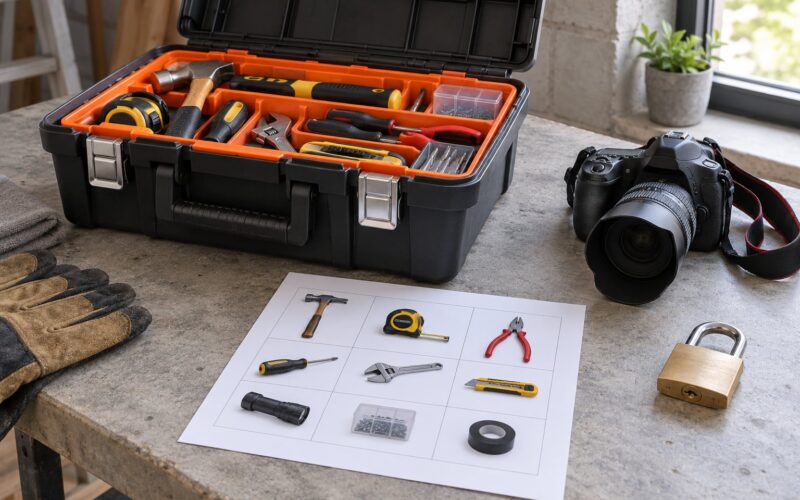
Tool and equipment policies exist for a reason. If a single machine exceeds what a standard business property limit would pay, ask about inland marine or scheduled equipment coverage, where that item is listed by name with an agreed value.
Step 2: Choose the Right Policy Types
Three policy tiers cover most home businesses, and they differ mainly in how much they bundle and how much paper they involve. Pick the tier that matches your revenue, your equipment value and how many people work for you.
| Policy | What it is | Best fit |
|---|---|---|
| Homeowners endorsement | An add-on to a personal policy that raises the business property sublimit modestly | A consultant or writer with a laptop and no inventory or client visits |
| Home business policy | A small standalone commercial package: general liability plus business property | Sole proprietors, resellers, tutors, cottage food producers |
| Business owners policy (BOP) | A fuller package adding property, general and professional liability, business income and equipment breakdown | Businesses with revenue in the six figures, staff, or regular client traffic |
On top of the tier, add coverages by what you actually do. General liability pays for injury, property damage or advertising injury suffered by a third party. Business property covers your stock, equipment and, often, the cost to bring that equipment back online. Business income coverage replaces lost earnings when a covered loss stops you working.
Professional liability, sold as errors and omissions or E&O, covers the cost of defending a claim that your advice or work was wrong. Product liability applies if you sell physical goods you made or resell. Cyber liability matters once client records and payment data sit on a network in your house. Commercial auto covers the vehicle you drive for work, and workers compensation becomes compulsory in nearly every state the moment you hire anyone, including part-time helpers.
Users on small business forums repeat the same starting point: get general liability in place first, at one million dollars per occurrence and two million in aggregate, then add coverages as revenue grows. That sequencing keeps early premiums manageable without leaving the most common exposure uncovered.
Step 3: Compare Quotes and Policy Exclusions
Compare policies line by line, not by premium. Two quotes at similar prices can differ enormously in deductible, limits and the paragraphs that decide what happens to your business.
- Limits. Check the per-occurrence limit and the general aggregate limit separately. Two million in aggregate spread across claims is not two million for any single claim.
- Deductible. A higher deductible lowers the premium. Choose one you could actually pay on a bad week.
- Valuation. Replacement cost pays for a new item; actual cash value pays current worth minus depreciation. The gap matters on equipment.
- Business income waiting period. Often 24 to 72 hours, and the coverage then runs for a set number of months. Short sales and seasonal businesses need a shorter wait.
- Claims-made versus occurrence. Claims-made professional liability only covers claims made while the policy is active and reported, unless you buy a tail.
- Covered premises. Some home business policies only respond to business property kept at the address listed on the declarations page.
- Exclusions. Read the fine print for what is carved out: certain perils, unattended premises, or business types the carrier will not write at a residence.
On cost, solo operators with a few thousand dollars of equipment usually see annual premiums in the few-hundred-dollar range for general liability plus business property, while a packaged business owners policy often runs into the low thousands. Revenue, payroll, the class code for your trade, your claims history and where you live all move that number. A captive agent writes for one carrier, an independent broker shops several, and online providers are quick for simple, clean risks. For anything with payroll, food, children or client visits, a broker earns their fee.
Ask for a certificate of insurance once coverage is bound. Venues, marketplaces and landlords want the certificate, not the policy, and that document is what unlocks the client relationship.
Step 4: Document the Business and Review the Policy
Documentation decides the payout. Keep receipts and invoices for equipment and inventory, dated photographs with serial numbers visible, a running inventory sheet, your operating procedures, signed client contracts, and a separate record of business income from personal income.
Then read the declarations page against reality. Confirm the named insured matches your legal entity, the address is your actual business address, the limits match what you insured, and every endorsement you paid for is listed. A missing endorsement is the same as no coverage.
Some carriers schedule an underwriting inspection, and unannounced ones happen, often tied to claim patterns or aerial review of the property. When one is coming, clear access to the equipment area, remove floor clutter near exits, keep fire extinguishers visible and current, and be ready to explain how the space is used.
Ask what happens if a claim is disputed. Get the adjuster’s name and the claim timeline in writing, keep copies of every estimate and receipt, and follow up in writing until payment clears. Owners who track their own claim file tend to get a faster resolution than those who wait for the phone to ring.
Step 5: Set Up an Annual Coverage Review
Put a renewal reminder in your calendar for 30 days before the policy date, then review coverage whenever one of these happens: you buy significant equipment, move operations, add an employee working in your home, cross a revenue threshold, buy a work vehicle, start storing customer payment data, or change what the business does.
You also need a disclosure plan for your homeowners carrier. Owners on forums describe being told mid-term that a side business was excluded, or that the policy would be re-rated. The workable route is to contact the homeowners carrier, ask in writing whether an endorsement is available, and take the business policy separately if it is not. Undisclosed business activity is what leads to denied claims and non-renewal.
Common Mistakes
Six errors account for most unhappy home business claims, and each has a straightforward fix.
- Assuming homeowners covers the business. The policy excludes business activity and caps business property near 2,500 dollars. Fix: buy a commercial policy naming you or your LLC.
- Undervaluing equipment and stock. Owners quote what they paid years ago. Fix: total the current replacement value of every item and insure to that number.
- Skipping business income coverage. Liability pays third parties, not your own lost revenue. Fix: add it and set a waiting period that suits your cash flow.
- Failing to disclose home office use. An undisclosed side business can trigger cancellation. Fix: ask your homeowners carrier in writing before renewal.
- Buying liability only. Liability is the cheapest half of the problem. Fix: pair it with business property and income coverage from day one.
- Mixing business and personal records. Mixed inventory slows and reduces claims. Fix: separate storage, separate bookkeeping, dated photographs of each item.
Frequently Asked Questions
Is homeowners insurance enough for a home business?
No, not on its own. A standard homeowners policy excludes liability arising from business activity and caps business property at roughly 2,500 dollars. It works as a companion for a laptop and a home office, but it will not cover client injuries, product claims or lost income. Buy a home business policy or business owners policy and tell your homeowners carrier, so neither policy is issued on a wrong assumption.
How much coverage does a home-based business need?
Start with general liability at one million dollars per occurrence and two million in aggregate, then insure business property to the current replacement value of your equipment and inventory. Add business income coverage if a covered loss would stop you earning. You can insure a single expensive machine on its own through a scheduled equipment or inland marine policy rather than rebuilding a whole package around it.
Do I need separate insurance to sell products online?
Selling online counts as business activity, so yes, treat it the same way. General liability and product liability both matter, because a customer who is hurt by something you sold will not care how the order was placed. Add product liability if you make or resell physical goods, and consider inland marine coverage for stock stored at home. Marketplaces usually ask for a certificate of insurance before the account opens.
How does business interruption insurance work for a home business?
Business income coverage, also called business interruption, replaces the income you would have earned during a covered loss, usually after a waiting period of 24 to 72 hours, and for a set number of months. Your insurer needs records to calculate it, so keep monthly revenue, expense and payroll figures separate from personal finances. Short sales and seasonal work call for a shorter waiting period than the standard one.
Can an LLC have a homeowners policy?
The homeowners policy still insures the building and your personal belongings, so keep it for that. What changes is the business side: the LLC should be named as the insured on the commercial policy covering equipment, inventory and liability. Tell your homeowners carrier in writing that an LLC operates from the property and ask whether an endorsement is needed, so nobody is later told the disclosure was missing.
Will a homeowners carrier cancel my policy if it finds my side business?
It can happen, and many owners on small business forums have been re-rated or told the activity was excluded after the fact. Carriers notice home-based operations through inspections, aerial imagery and claim inquiries. Ask your homeowners carrier in writing before your renewal, get the answer on file, and place business coverage with a separate carrier. Disclosure in advance is far easier to sort out than a surprise at claim time.
Start with the inventory, not the quotes. List every machine, tool and box of stock, total its current replacement value, and separate that property physically and on paper from your personal belongings.
Then ask for three quotes on identical coverage, general liability at one million per occurrence plus business property at that same value, and compare the exclusions rather than the premium. Finally, tell your homeowners carrier what you are doing in writing and put the renewal date in your calendar. If you get that sequence right, insuring a home based business becomes a yearly review instead of a scramble after a loss.