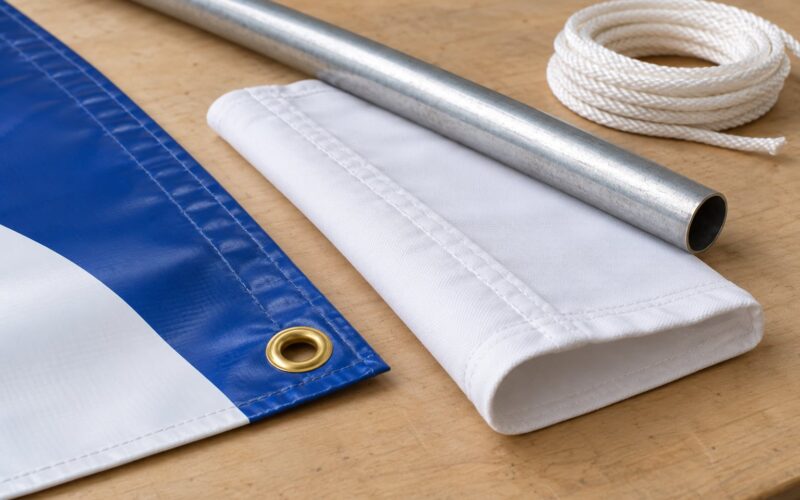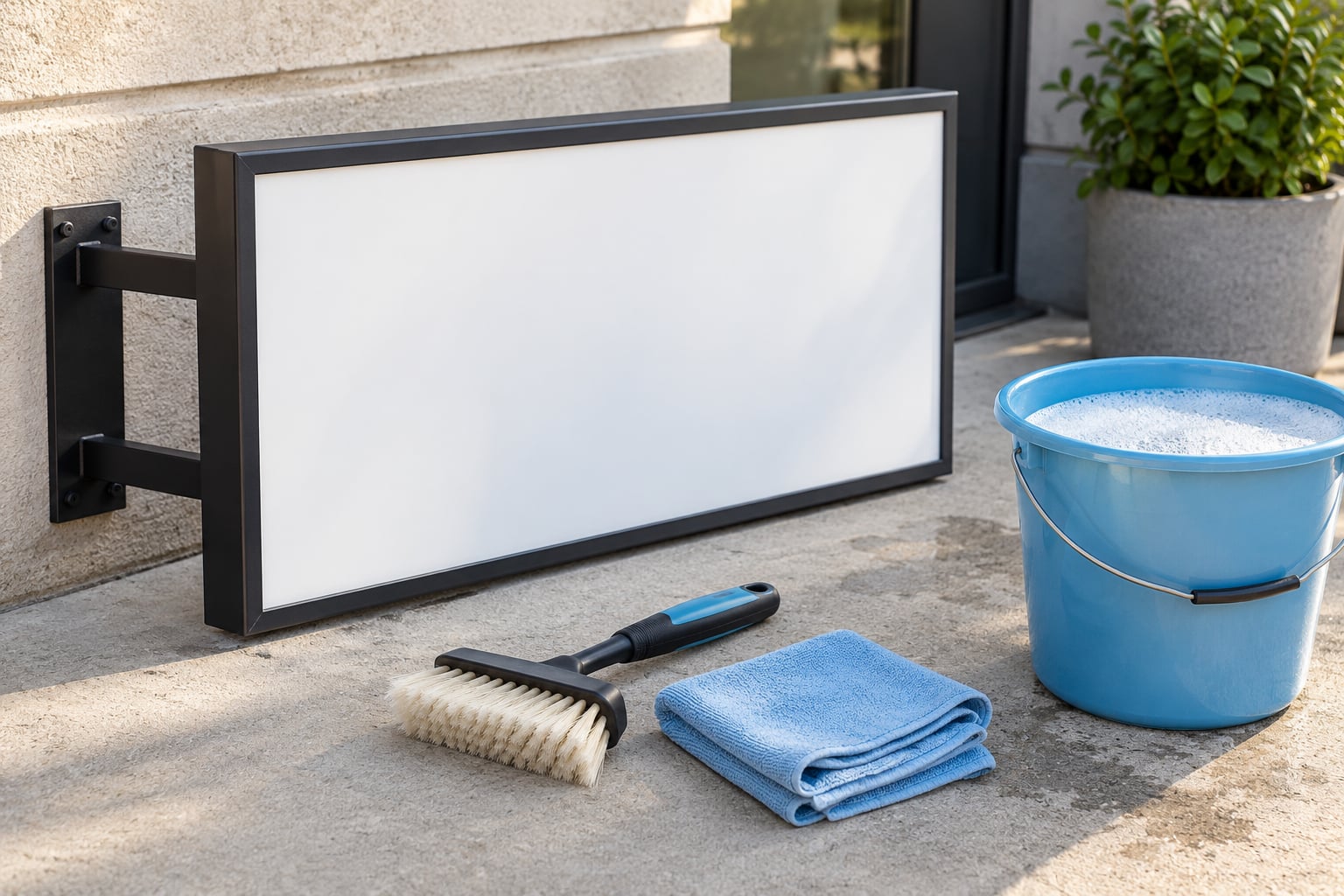
How to clean an outdoor business sign is mostly about restraint: lukewarm water, a pH-neutral ammonia-free soap, and a non-abrasive microfiber cloth, applied after you have switched off the power and checked what the face is actually made of. Most signs need ten minutes of work and no equipment beyond a bucket, a soft brush and a hose.
The reason to be careful is that the same cleaner that lifts road grime off aluminum will cloud acrylic in seconds, and water pushed into an illuminated channel letter is a real hazard. Take the material first, the product second.
Table of Contents
- What You Need
- How to Clean an Outdoor Business Sign Step by Step
- Step 1: Identify the Sign Material
- Step 2: Check the Area and Disconnect Power
- Step 3: Remove Loose Dirt and Test the Cleaner
- Step 4: Wash Without Scratching or Saturating
- Step 5: Rinse, Dry, and Inspect
- Common Mistakes
- Tips for Keeping Outdoor Business Signs Clean
- Frequently Asked Questions
- How do I clean acrylic signs without scratching them?
- How do I clean vinyl signs and window graphics?
- How do I clean a metal or aluminum business sign?
- Can I use a pressure washer on my business sign?
- What is the safest way to clean an illuminated or neon sign?
- How often should I clean an outdoor business sign?
- Conclusion
What You Need
Most of the kit is cheap and most of it is optional. Gather it before you climb anything, because a missing item mid-wash is how people end up using the wrong rag.
- A soft-bristled brush — a clean toothbrush for seams and edges, a larger brush for textured or fabric faces.
- Microfiber cloths — never paper towels. They scratch acrylic, polycarbonate and glossy paint, and they leave lint.
- A soft sponge for awning fabric and vinyl graphics, where a cloth alone will not shift embedded grime.
- A gentle detergent — dish soap, a pH-neutral soap or a cleaner labelled ammonia-free. Nothing with alcohol, bleach or solvent.
- Two buckets — one for your solution, one for clean rinse water. Mixing them is how grit gets dragged back across the face.
- A soft hose or damp cloth for rinsing, plus a ladder or step stool that sits level.
- Non-slip gloves and a stable platform if the sign sits above head height. Reaching up is where most injuries happen on this job.
Before you mix anything, find out what you are dealing with. Look for a material stamp on the back of the panel, an installation tag, or the original paperwork from your sign company. If you cannot identify it, tap the face gently with a knuckle: hollow means acrylic or polycarbonate, solid and slightly dull means metal, warm and hollow means molded plastic.
Two restrictions matter more than the supplies. If the sign carries a manufacturer warranty, read the cleaning instructions first, because solvents and pressure washing can void it. And if the sign is mounted on a street, a parking lot or a busy sidewalk, the rules about ladders and drop zones are not optional — hire a company with proper equipment rather than improvising.
How to Clean an Outdoor Business Sign Step by Step
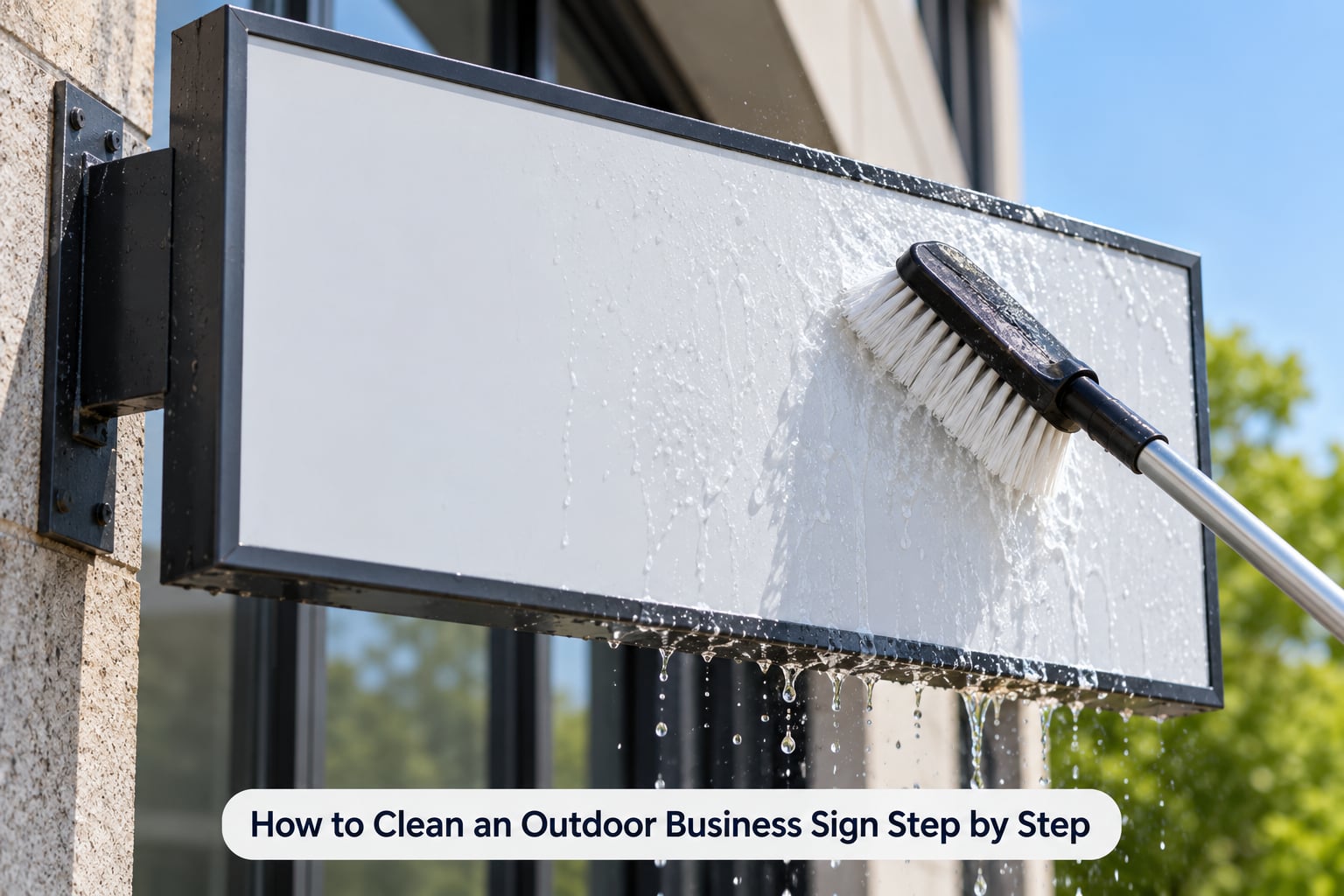
Step 1: Identify the Sign Material
Match the face to a cleaning method before you touch it.
- Acrylic and polycarbonate: pH-neutral soap only, lukewarm water, cloth or soft sponge. No ammonia window cleaner, ever.
- Painted or powder-coated aluminum: mild detergent and a microfiber cloth. Skip anything abrasive.
- Bare or brushed aluminum: mild detergent, and a plastic or wool pad for light oxidation, never steel wool.
- Vinyl, PVC and applied graphics: soft sponge and mild soap, water kept out of seams and edges.
- Wood: mild detergent, gentle brushing, and nothing that soaks the grain.
- Fabric awnings and canvas: soft sponge or soft brush with diluted soap, tested for colorfastness first.
Step 2: Check the Area and Disconnect Power
If the sign is illuminated, open the breaker feeding it and confirm the lights are dead before your hand or cloth gets near it. For flush-mounted or soffit-mounted signs, you also need to release the mounting clips so water does not get trapped behind the panel.
Pull vehicles out of the drop zone, put up a cone or two if the sign is above a walkway, and keep pedestrians out of the area while the face is wet and soapy. Slipping on a wet step is the most common accident in this job, and it has nothing to do with ladders.
Step 3: Remove Loose Dirt and Test the Cleaner
Brush off dry debris first with a clean soft-bristled brush. Dust and grit act like sandpaper, so loosening it before it gets wet is half the work.
Mix your detergent at roughly a tablespoon per bucket of lukewarm water, then test it in a hidden corner or on the back of the panel. Wait a minute and look for clouding, dulling, softening at the edges or a color shift. Vinyl and fabric can bleed, and acrylic can haze, and neither will tell you at first.
Step 4: Wash Without Scratching or Saturating
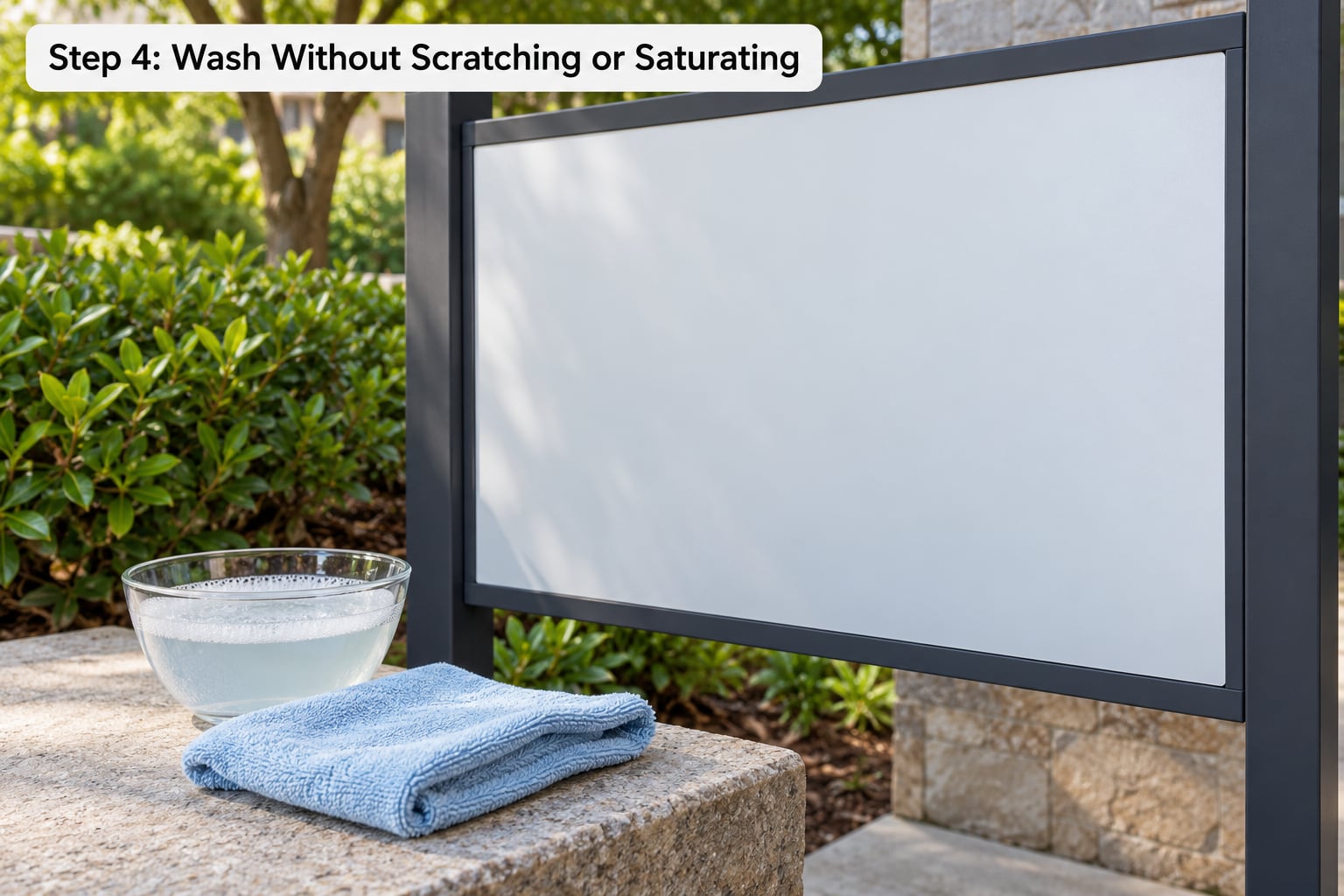
Work in small sections with a soaked — not dripping — microfiber cloth. Wipe rather than scrub, using the flat of the cloth rather than its edge, and change sections as soon as the cloth picks up grit.
For seams, returns and routed edges, use the soft brush dipped in the same solution and keep the water thin. Lettering and trim caps get the same treatment as the face, because people read the letters before they read the panel.
Keep water out of electrical housings, raceway mounts and drilled fixings. If you cannot see how the sign is sealed, treat every edge as a no-entry zone and clean with a damp cloth rather than a wet one.
Step 5: Rinse, Dry, and Inspect
Rinse only where a hose reaches the surface comfortably, and always rinse top down so dirt runs off the letters rather than across them. Wipe with a clean damp microfiber straight away, and buff acrylic dry with a second dry cloth to avoid water spots.
Then inspect in good light: look for remaining film, lifting vinyl edges, chalking on metal, cracked or flickering LEDs, water inside the housing, and rust at fixings. Photograph anything that has genuinely deteriorated before you clean it next time — dated before-and-after photos are the strongest thing you have if you file a warranty claim.
Call a professional if the sign is above roughly 10 feet, if it needs scaffold or roof access, if it is an illuminated sign and you are not certain how to isolate it, or if you find structural damage rather than surface dirt.
Common Mistakes
- Ammonia-based glass cleaner on acrylic or polycarbonate. It crazes and clouds the surface, and the damage is permanent. This is the single most common mistake people make.
- Pressure washing. A pressure washer forces water behind trim caps and into electrical housings, strips vinyl graphics off their adhesive, and can force water through a seam into a sign cabinet. Hand washing is nearly always enough.
- Steel wool or scouring pads on aluminum. You will scratch the finish permanently and can cut through a powder coat down to bare metal.
- Paper towels and dry wiping. They shed lint and act as abrasive on glossy and clear faces.
- Over-soaking awning fabric, wood or vinyl graphics. Water at edges and seams leads to lifting, swelling or mildew inside the sign.
- Ignoring the manufacturer instructions. If your sign company gave you a care sheet, that is the answer, and deviating from it can void the warranty.
- Cleaning in full sun on a hot day. Solutions dry too fast and leave a film. Work in shade or in the early morning.
Tips for Keeping Outdoor Business Signs Clean
Most signs do not need deep cleaning. A monthly wipe-down with a damp microfiber cloth and a light monthly wash of the face keeps grime from ever building into a film, and it takes a fraction of the time.
A few habits pay off more than any single deep clean:
- Clean twice a year at minimum — once after winter and once before autumn leaf fall, which is when organic debris stains most.
- Trim back branches and irrigation heads that drip or spray onto the face. Constant wetting causes staining faster than weather does.
- Wash off bird droppings quickly. They are acidic and etch acrylic and coated metal within hours. A damp cloth and a little soap is all it takes.
- Apply a UV-protective or anti-graffiti coating to acrylic and coated panels every few years, following the coating maker’s guidance.
- Keep a quarterly photo record of the sign from the same angle. Change is obvious on paper and invisible in memory.
- Know your sign type — fascia, monument, pylon, awning, channel letters and window graphics each age differently, and a cabinet sign that fogs inside is a seal failure, not dirt.
Frequently Asked Questions
How do I clean acrylic signs without scratching them?
Use lukewarm water with a pH-neutral, ammonia-free soap and a clean microfiber cloth. Never use window cleaner with ammonia, paper towels, alcohol-based products or abrasive pads, all of which haze or scratch the surface. Rinse with a damp cloth and buff dry with a second clean cloth so you do not leave water spots.
How do I clean vinyl signs and window graphics?
Wash with a soft sponge and mild soap in lukewarm water, then rinse with a damp cloth rather than a hose so water does not get under the edges. Scrubbing hard lifts the vinyl from its adhesive, and a lot of water seeps into seams and causes bubbles or mildew underneath. Clean vinyl graphics while they are still warm and flat if you can.
How do I clean a metal or aluminum business sign?
Wash painted or powder-coated aluminum with mild detergent and a microfiber cloth, then dry immediately. For light oxidation on bare or brushed aluminum, use a plastic or non-abrasive pad with a metal cleaner. Avoid steel wool, scouring powders and pressure washing, which scratch the finish and can force water behind the panel.
Can I use a pressure washer on my business sign?
In most cases, no. Pressure forces water into trim caps, electrical housings and drilled fixings, strips applied vinyl from its adhesive and can drive moisture inside a sign cabinet where it causes fogging or corrosion. Low-pressure rinsing is acceptable on ground-mounted metal signs only, after power is disconnected. Hand washing is the safer default.
What is the safest way to clean an illuminated or neon sign?
Switch off the breaker feeding the sign and confirm the lights are out before you start. Clean only the face and accessible returns, keep water out of housings and raceway mounts, and never clean neon tubing while it is powered or hot. For a sign above head height or one with a hardwired cabinet, have a licensed sign company do it.
How often should I clean an outdoor business sign?
Give most exterior signs a light wipe-down monthly and a proper wash twice a year, ideally after winter and before autumn leaf fall. Signs near roads, coastal salt air, heavy tree cover or strong sprinkler spray need more frequent cleaning. Clean any bird dropping immediately, and inspect quarterly for lifting edges, chalking, rust or dead LEDs.
Conclusion
Start with the four things that prevent almost every sign disaster: switch off the power, identify the face material, test the cleaner in a hidden corner, and keep the water thin. Work in shade with two buckets, a microfiber cloth and a soft brush, and you will have the sign done in under half an hour.
Book a professional instead when the sign is high, hard-wired, weathered past the point of surface dirt, or showing lifting vinyl, chalking or structural damage. Learning how to clean an outdoor business sign is cheap insurance against an early replacement.