Yes, car wraps fade in the sun. Ultraviolet radiation breaks down the pigments suspended in the vinyl and weakens the film’s chemical bonds, so the color shifts, the surface chalks, and eventually the wrap cracks or lifts at the edges. A quality cast film in a moderate climate keeps its color for five to seven years. A cheap film parked outdoors in Phoenix or Miami can look tired in three.
That range is not fixed. Where you park, which film you bought, what color you chose, and how you wash the car all move the number up or down. Here is what actually happens, and what you can do about it.
Table of Contents
- What Causes Car Wraps to Fade in the Sun?
- How UV damage differs from ordinary wear
- How Long Do Car Wraps Last in Direct Sunlight?
- Which Wrap Colors and Materials Fade Fastest?
- How Sun Exposure Changes by Location and Parking Style
- How to Protect Car Wraps from Fading
- What to Do When a Wrap Starts to Look Faded
- Frequently Asked Questions
- Do all car wraps fade in the sun?
- How many years does a car wrap last in a sunny climate?
- Is there a warranty against sun fading?
- Can I park a wrapped car in the sun every day?
- Does window tint protect the wrap underneath?
- How can I tell if a wrap is fading or just dirty?
- Conclusion
What Causes Car Wraps to Fade in the Sun?
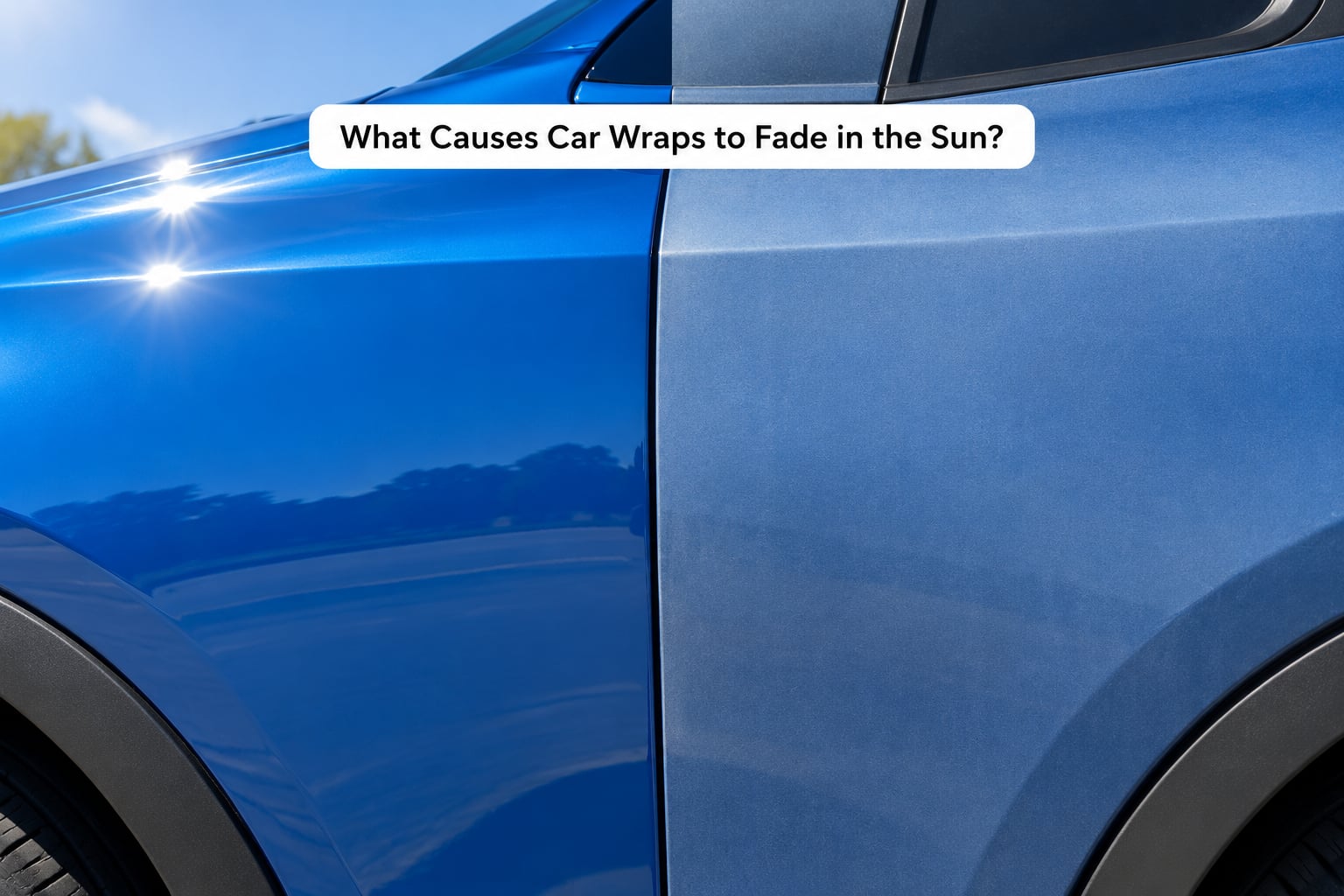
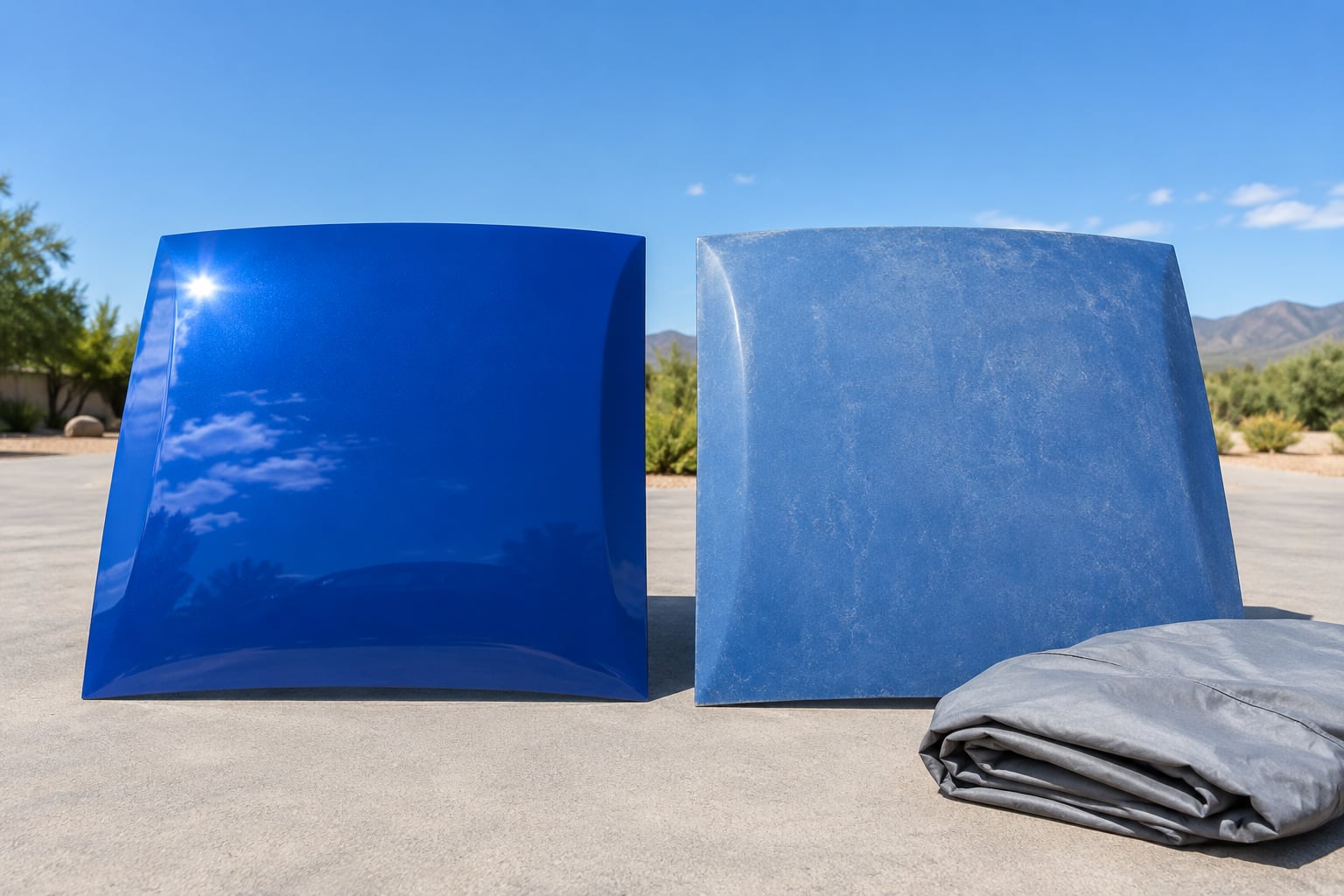
The short answer to do car wraps fade in the sun is yes, always to some degree. Nothing in the film blocks ultraviolet light permanently. The pigments that give the vinyl its color are organic molecules, and UV photons break those molecules apart. The result is not a clean lightening. It is a shift in tone, sometimes toward yellow or gray, often uneven from panel to panel.
How UV damage differs from ordinary wear
Fading is one failure mode, and it is easily confused with three others. Dirt and road film sit on the surface and wash off. Adhesive failure shows up as lifting edges, bubbles, or a wrinkled corner. Oxidized film looks chalky and hazy but still wipes clean. Real UV fade does not come off with a wash, and it does not lift on its own until it is well advanced.
Heat accelerates everything. Vinyl expands in the sun and contracts at night, and that repeated cycle loosens adhesive over the bond line. Coastal salt air adds a second chemical load, and acidic rain leaves etching on glossy finishes that reads as dullness but is really surface damage.
How Long Do Car Wraps Last in Direct Sunlight?
Manufacturers quote lifespan in years, but those numbers assume moderate exposure. Real timelines split by where the vehicle spends its life.
| Film type | Garage-kept or shaded | Outdoor parking in full sun |
|---|---|---|
| Premium cast vinyl | 7 to 10 years | 4 to 6 years |
| Mid-range cast vinyl | 5 to 7 years | 3 to 5 years |
| Budget calendered vinyl | 3 to 5 years | 18 to 36 months |
| Printed or graphic film | 4 to 6 years | 2 to 4 years |
| Chrome or specialty finish | 3 to 5 years | 1 to 3 years |
Orientation matters more than most owners expect. The roof and hood face the midday sun straight on, so they take roughly the harshest exposure a vehicle gets. Doors and rear quarters sit closer to vertical and see the sun at a glancing angle. Owners on wrapping forums consistently report roofs and bonnets going dull and crackly first while the sides still look fresh.
Specialty finishes give up earlier. Chrome and mirror films are thin metallized layers, and the reflective coating is the first thing UV degrades. Matte and satin finishes hide micro-scratching well, but their flat surface shows uneven fade badly, because any panel that ages faster than its neighbor becomes obvious.
Which Wrap Colors and Materials Fade Fastest?
Color is a pigment chemistry question. Some hues simply hold their bond to the vinyl longer than others.
- Whites, creams, and pastels fade fastest. Light colors carry the least pigment, so any loss is immediately visible against the original shade.
- Reds and yellows are next. Red pigments are notoriously lightfast-poor, and a deep candy red that reads rich on day one turns orange or pink within a few sun-heavy years.
- Blues and greens hold reasonably well, though navy and teal shift toward purple faster than most people expect.
- Blacks and dark solids absorb heat rather than light, so they fade less in color but cook the adhesive underneath. Charcoal fades less visibly than true black.
- Metallic and flake finishes lose their sparkle before they lose their base color, because the aluminum flake layer sits at the surface.
Material choice matters at least as much. Cast vinyl is poured into a thin liquid film and stretched, which produces a dense, dimensionally stable sheet with a higher pigment load. Calendered vinyl is rolled and pressed, making it cheaper and less consistent. Premium brands like 3M, Avery Dennison, Suntek, and XPEL publish longevity data and back it with warranties. Bonded two-layer films hold color better than single-layer ones because the pigment sits deeper in the laminate.
How Sun Exposure Changes by Location and Parking Style
The same film behaves very differently across the country. Florida, Texas, Arizona, and Southern California owners routinely report shorter timelines than northern-state owners using identical material.
Orientation in the parking spot matters nearly as much as the city. A west-facing driveway gets the entire afternoon. A car parked nose-out on the street takes midday sun on the hood and windshield. A garage, carport, or covered parking spot removes most of the exposure and is the single biggest lever you control.
Reflected light sneaks in too. Light-colored concrete, pale asphalt, and building walls bounce UV back onto lower panels, which is why rocker panels and door bottoms fade on cars parked in open lots even when the roof is fine. Salt air along the coast attacks the finish chemically on top of the UV load.
How to Protect Car Wraps from Fading
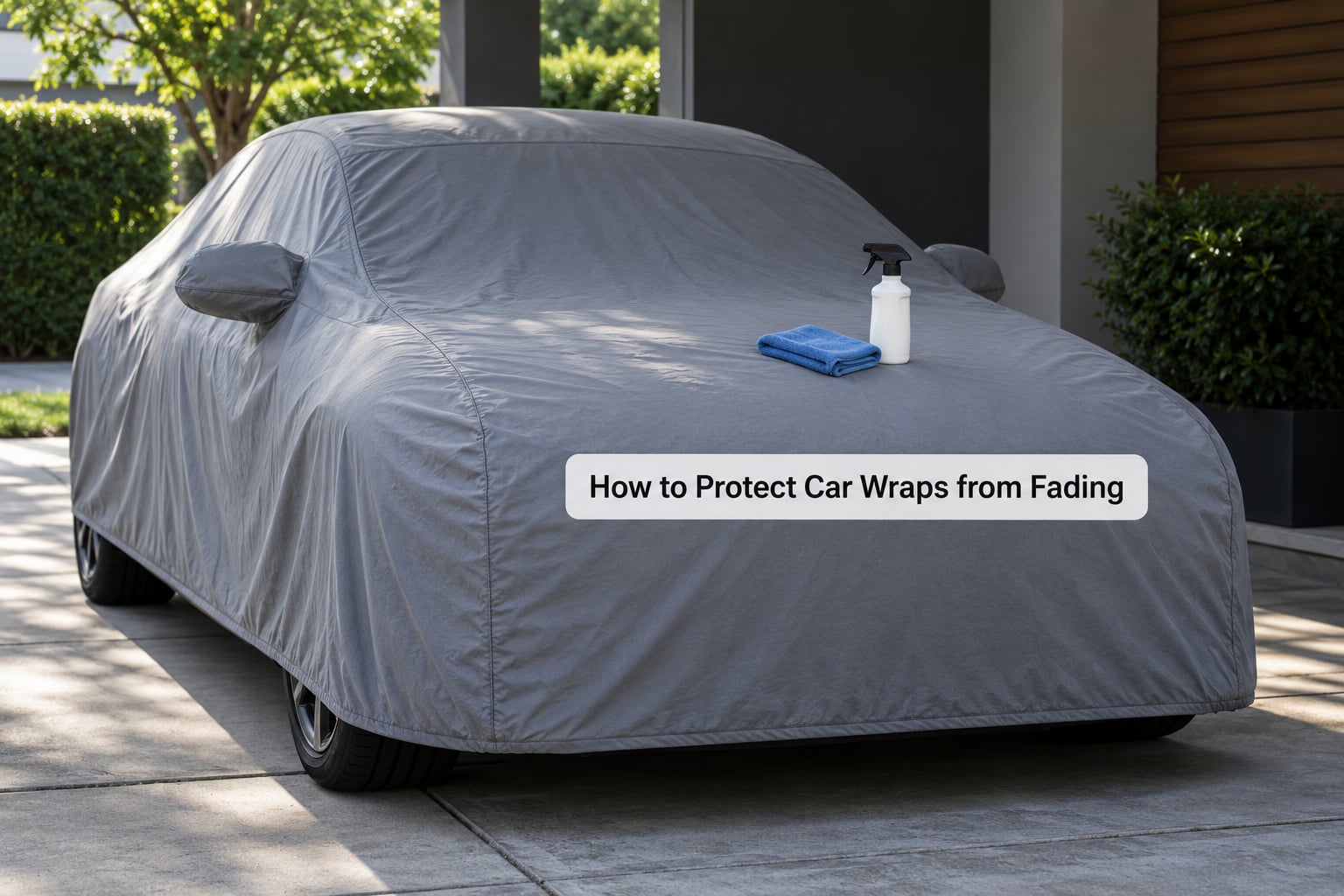
You cannot stop UV, but you can slow it down and stop the damage that makes faded film look worse than it is.
- Wash gently and often. Use a wrap-safe, pH-neutral cleaner, a clean microfiber mitt, and cool water. Rinse thoroughly to avoid mineral spotting that reads as permanent haze.
- Dry with microfiber towels. Let the film dry in shade when you can, since water spots baked in hot sun become part of the finish.
- Skip the automatic car wash brush cycle. Spinning bristles create micro-scratches that dull gloss and make fading visible years earlier than it would otherwise appear.
- Stay out of the sun when parked. Garage, carport, or a breathable car cover. Never park a freshly wrapped car in direct sun while the adhesive is still setting.
- Use a wrap-safe sealant or UV protectant. Silica and quartz sprays give a real barrier layer. Follow the product directions and avoid traditional waxes and polishes, which can leave residue that attracts dirt.
- Clean off contaminants fast. Bird droppings, tree sap, and fuel spills etch vinyl fast when they sit in heat. Carry a wrap-safe detailer in the car.
- Avoid harsh chemicals. No bleach, no ammonia, no degreasers, no abrasive polishes, and no pressure washing aimed directly at seams or edges.
For fleet and business vehicles where the look matters daily, coating at install time and refreshing it twice a year is the routine most shops land on.
What to Do When a Wrap Starts to Look Faded
Start by ruling out dirt. Wash the panel with a wrap-safe cleaner and dry it. If the color is still flat and dull, it is fade or oxidation, not grime.
Then check the horizontal surfaces first. Compare the hood and roof against a door under the same light. If the roof is noticeably lighter or chalkier, the wrap has UV damage you cannot clean away.
Next, inspect the edges and seams. Lifting corners, bubbling, or adhesive softening mean the film has lost its bond, and that is a different problem from fading. Small lifting edges can sometimes be heat-refreshed by an installer. Wrinkles and delamination are not repairable in the field.
Ask the installer about the warranty before you start buying product. Most manufacturers cover defects such as delamination and adhesive failure, while even fading and chalking count as normal wear and sit outside the claim. If the wrap is under a year old and you see uneven panel-to-panel color, have the shop inspect it, because that usually points to material or application rather than sun.
Once the color is genuinely gone, restoration is not realistic. There is no process that puts original pigment back into vinyl. Your real options are a wrap-safe sealant to improve gloss, patching the damaged panel in the same film, or a full rewrap.
Frequently Asked Questions
Do all car wraps fade in the sun?
Every film fades to some degree, because no wrap pigment is fully UV stable. Budget calendered vinyl in full sun can show color shift within two years, while premium cast vinyl in a shaded or garage-kept spot often holds its color for seven years or more. The rate depends on pigment, laminate structure, and how many hours the car spends in direct sunlight.
How many years does a car wrap last in a sunny climate?
In hot, high-UV states, expect three to five years on mid-range cast vinyl and four to six on premium cast film when the car is parked outside regularly. Garage-kept or shaded parking can extend that by several years. Chrome and specialty finishes are the exception, often lasting only one to three years in full sun because the reflective layer degrades first.
Is there a warranty against sun fading?
Usually not. Manufacturer and installer warranties cover defects such as delamination, adhesive failure, and installation errors, while fading, chalking, and UV degradation are treated as normal wear. Read the fine print on the film warranty and ask the shop in writing what counts as a covered defect before you sign off on the job.
Can I park a wrapped car in the sun every day?
Yes, and most people have to. Just know the clock runs faster. Daily sun exposure shortens the realistic lifespan by a few years compared with garage or covered parking, and the roof and hood will show it first. Parking under cover when it is convenient, keeping a breathable car cover on hand, and refreshing a UV sealant twice a year all slow the damage down.
Does window tint protect the wrap underneath?
Window tint shades the cabin, not the body panels. The film on your roof, hood, doors, and quarter panels still takes full ultraviolet exposure no matter how dark the glass is. Tint helps only where it actually covers wrapped surfaces, such as behind a sun visor or inside a garage door opening, which is rarely where fading shows up first.
How can I tell if a wrap is fading or just dirty?
Wash the panel with a wrap-safe, pH-neutral cleaner and dry it with microfiber. Dirt comes off. Fading does not, because the pigment itself has broken down, and chalky film may wipe clean but stay flat and dull. Compare a horizontal panel like the hood against a vertical door in the same light. A clear difference means UV damage rather than grime.
Conclusion
Do car wraps fade in the sun? Yes, and no film escapes it. The difference between a wrap that still looks sharp at year five and one that looks abandoned at year three comes down to material quality, parking habits, and how gently it gets washed.
Your first steps are simple. Choose cast vinyl from a brand that publishes longevity data and warranty terms. Park under cover or use a breathable car cover whenever the day allows it. Wash with a wrap-safe cleaner and skip the brush tunnels. Refresh a sealant or UV protectant twice a year. And check the roof and hood each spring, since those panels tell you first when the sun is winning.