Coffee is a low-consideration purchase, which means people choose where to get it before they ever leave the house. If your shop is not visible when that decision gets made, the good espresso, the comfortable chairs, and the friendly barista never get a chance.
These are the local marketing ideas for a coffee shop I would work through in order, from the ones that cost nothing and start showing up in a few weeks to the ones that need real budget and a delivery route. Each one lists what it is good for, what it costs in time, and the customer action it is meant to trigger, so you can pick two or three rather than all twelve.
Table of Contents
- Local Marketing Ideas for a Coffee Shop at a Glance
- 1. Optimize Your Google Business Profile
- 2. Build Partnerships With Nearby Businesses
- 3. Improve Exterior Signage and Window Messaging
- 4. Host a Small Community Event
- 5. Encourage Customer-Generated Social Content
- 6. Launch a Loyalty and Referral Program
- 7. Promote Drinks During Slow Periods
- 8. Make the Coffee Shop Easy to Find Locally
- 9. Use Email and Text to Bring Customers Back
- 10. Add Branded Delivery Vehicles or Wraps
- 11. Plan Seasonal Campaigns and Limited-Time Drinks
- 12. Track Results and Improve the Best Ideas
- How to Track Local Marketing Ideas for a Coffee Shop
- Frequently Asked Questions
- What is the best low-cost local marketing idea for a small coffee shop?
- How do I choose which local promotion to try first?
- How often should a coffee shop update its Google Business Profile?
- Are social media posts necessary if a coffee shop has a strong walk-in customer base?
- How can a coffee shop encourage customers to return without using constant discounts?
- What to Do First
Local Marketing Ideas for a Coffee Shop at a Glance
| Idea | Best used for | Typical effort | Likely cost | Customer action it encourages |
|---|---|---|---|---|
| 1. Google Business Profile | Being found for coffee near me | 2 hours to set up, then 30 minutes a month | None | Directions, a call, or an online order |
| 2. Nearby business partnerships | Borrowing another shop’s audience | 3 hours a month | Low, mostly free samples | A trial visit with a new reason to come |
| 3. Exterior signage and window messaging | Converting pedestrians | One afternoon, then monthly checks | Low to moderate, one-time | Walking through the door |
| 4. Community events | Building a reason to return weekly | 4 hours per event | Low | Regular attendance on a fixed day |
| 5. Customer-generated content | Social proof from real faces | 1 hour a week | Almost none | Sharing a photo and tagging you |
| 6. Loyalty and referral program | Repeat visits and word of mouth | 3 hours to launch | Low, built into margin | Buying sooner and bringing a friend |
| 7. Slow-period drink promotions | Filling quiet hours | 1 hour a week | Low, drink cost only | Arriving at an off-peak hour |
| 8. Local discoverability basics | Consistent details everywhere | 2 hours, then quarterly | None | Trusting the listing and walking over |
| 9. Email and text outreach | Bringing past customers back | 2 hours a month | Under a small monthly fee | A return visit within two weeks |
| 10. Branded delivery wraps | Turning deliveries into billboards | One-time setup, then delivery runs | Moderate, one-time | Ordering in because they saw the van |
| 11. Seasonal campaigns | Urgency around a real product change | 2 days per campaign | Low to moderate | Visiting this month instead of next |
| 12. Measurement and pruning | Knowing what earned its budget | 2 hours a month | None | Nothing, it protects the rest |
1. Optimize Your Google Business Profile
A complete Google Business Profile is the cheapest and highest-return local marketing a coffee shop has, and an incomplete one is the single most cited reason a cafe cannot be found. Owners on local SEO forums describe exactly this: good coffee, steady morning regulars, and no new faces showing up because the listing is missing its hours, its menu, or its photos.
Complete every field. Primary and secondary categories, hours for every day including the odd holiday you close, a description that names what you actually serve, attributes like WiFi and outdoor seating, a booking or online-ordering link, and at least ten photos of the real interior, the real drinks, and the real counter. Update it whenever something changes rather than in a yearly sweep.
Ask a customer for a review at the moment of satisfaction, right as they take the cup. Owners running this tactic report that volume matters more than polish, because a steady trickle of new reviews moves the listing more than three perfect ones added once.
2. Build Partnerships With Nearby Businesses
The most useful partners are the businesses that share your customer but not your product: a bookshop, a bike repair shop, a hairdresser, a yoga studio, an office manager, a dog groomer. Send over a card with one specific offer rather than a vague invitation to collaborate.
Make the offer trackable. Hand out a card or a code that says the same thing at the counter, ask the partner to mention one thing only, and count how many redemptions land in a week. Keep the agreement informal and small: a dozen cards exchanged, a mention in their newsletter, and a monthly check-in is plenty. Overcomplicating it kills the arrangement within a month.
3. Improve Exterior Signage and Window Messaging
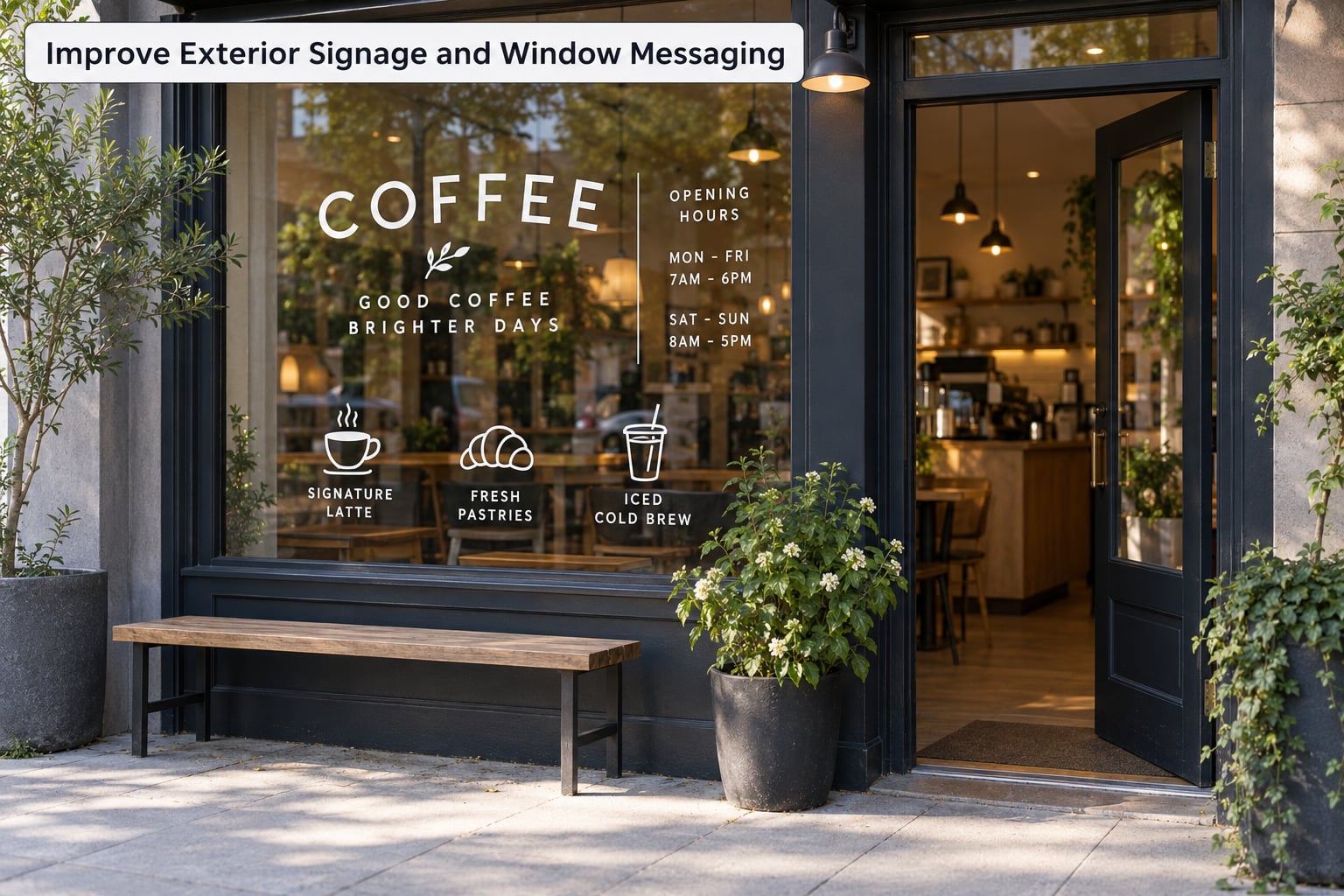
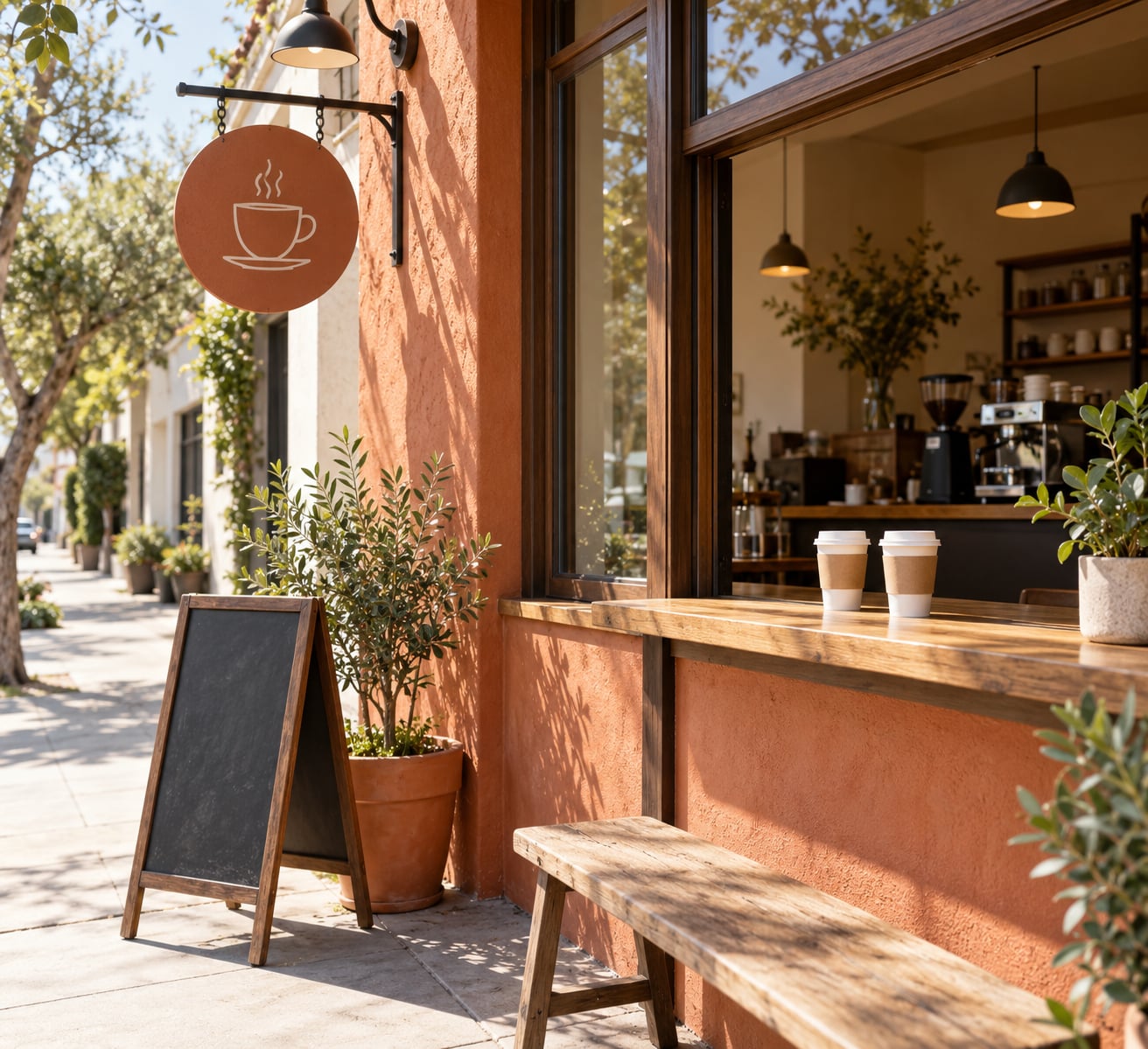
People walking past read three things on a coffee shop: is it open, what do they sell, and can I get in right now. Most street-facing signs answer none of those at a distance of thirty feet.
Keep the main sign high contrast and readable from the sidewalk, put the hours where a person actually looks, and choose one message for eye level rather than three competing ones. Menu highlights on the window should be your best three sellers with a short reason to try them today. If you also run pickup orders, say so in plain words.
4. Host a Small Community Event
Pick a recurring format small enough to run alone: a book exchange on the first Saturday, an open mic on a Thursday evening, a local artist display with a rotating artist, a Saturday tasting club, or a weekday study hour during the afternoon lull. Regulars turn into regulars because the format repeats, so pick something you can run eight weeks in a row.
Count heads and count cups. Attendance tells you whether the room filled, and drinks per attendee tells you whether it was worth the labor. An event that draws fifteen people and sells nine drinks twice a month is doing more for you than a crowded one that sells nothing.
5. Encourage Customer-Generated Social Content
Customers post about the places that look good in a photo. Give them a reason to frame a specific shot, whether that is a small corner with good light, a chalkboard listing the current single origin, or a seasonal drink that only appears for six weeks.
Set up one branded hashtag and put it on the window, the counter card, and the receipt sleeve so people can find it without asking. Repost customer photos only after asking, and answer every comment with a thank-you and a reply, since the comment thread is often the part new visitors read first.
6. Launch a Loyalty and Referral Program
There are three workable formats. A punch card is the cheapest to launch and the easiest to understand. A points system ties spending to rewards and works better when your average ticket varies. A digital rewards app handles punch cards and referrals in one place and costs a small monthly fee, which pays off once you have several hundred regulars.
Design one benefit that pulls people back sooner than habit would: a free drink after three visits in one month rather than ten visits spread over a year. Whatever you choose, write the reward value in drink terms and keep it under a third of what you earn on a typical visit. Confusing rules kill more loyalty programs than expensive ones.
Local marketing ideas for a coffee shop work best in pairs, so pair this with idea number nine. A loyalty app tells you who came back, and an email or text list tells you who went quiet.
7. Promote Drinks During Slow Periods
Find your quiet hours from transaction data, not from memory. Most shops have three: the stretch before the breakfast rush, the mid-afternoon gap, and weekday evenings after the office crowd leaves.
Match the offer to the gap. A brewed coffee and pastry bundle priced for the 6 to 10 a.m. weekday morning competes on speed. A double-size iced drink for a few afternoon hours uses the cold brew you have to sell anyway. A two-person shareable drink for Monday evenings targets groups who would otherwise cook at home.
Run the offer on its own, not layered on top of loyalty, and note the hours in the offer name so you can read redemption counts later. Stacked discounts hide which promotion actually worked.
8. Make the Coffee Shop Easy to Find Locally
This is the broader layer underneath the profile: the online details a customer might check after they see you on a map. Your name, address, and phone number need to be identical on your website, your menu page, your social profiles, your email footer, and every directory listing. One variation, like a suite number missing from half the listings, sends people to the wrong door.
Add map citations for the directories you can maintain, mention the neighborhood and nearby landmarks in your website copy, and write directions that describe the real walk, including which side of the street and where to park. For voice and conversational search, phrases like a coffee shop near me with outdoor seating or a cafe open early near the park are what people actually say.
9. Use Email and Text to Bring Customers Back
Permission is the whole game, and most coffee shops already have permission without realizing it. Ask at the register when someone signs up for the WiFi, put a QR code on the receipt sleeve and the cup holder, and offer a small welcome drink for the first signup. Do not gate the WiFi behind a wall of questions.
Split the list into three groups. New customers get a short welcome with the one thing you would like them to try. Subscribers get a monthly note about what changed on the menu. Customers who have not come in for six weeks get a warm check-in with a small credit attached, because that is the group most likely to have found somewhere else.
Sample text for the lapsed group: Hey Maria, it has been a while. We put a new washed Ethiopia on the bar this week and your usual is still there too. Here is a small credit on your next drink whenever you are ready.
Send useful information most of the time and discount occasionally. A list that only ever hears about sales gets unsubscribed within two months.
10. Add Branded Delivery Vehicles or Wraps
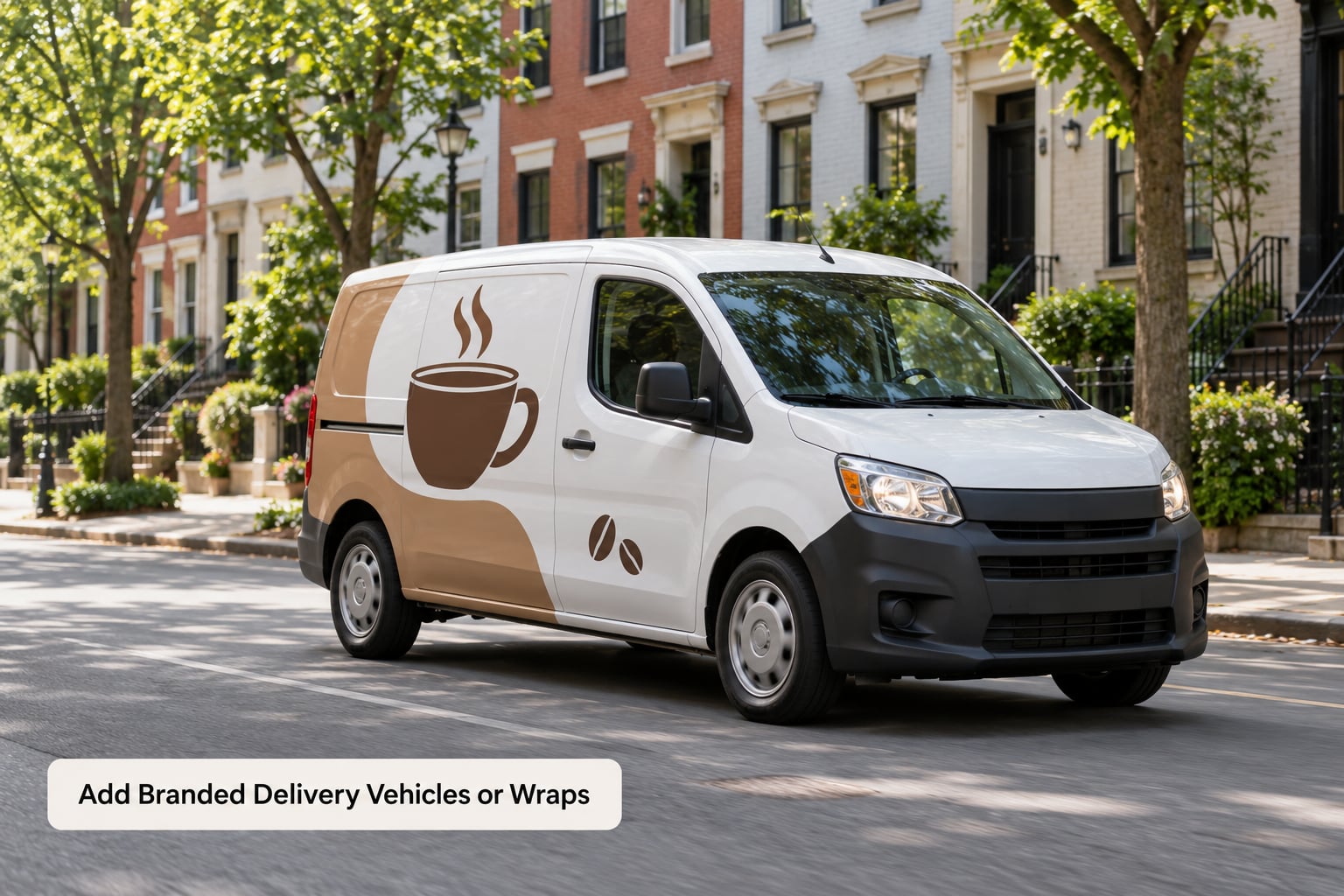
A delivery vehicle becomes advertising only when it is seen repeatedly on the same few streets. If you already run deliveries within a two-mile radius, a wrap pays for itself in exposure. If you do not deliver yet, the wrap is premature; start with a smaller cart or a cargo bike on one fixed route first.
Keep the wrap readable in one glance: the logo, the cup shape, and the neighborhood name. Add an order link and the ordering address. Vans parked at the curb with the rear doors open are the highest-value placement, so schedule long enough for someone to read it. Skipping the vehicle wrap, plenty of shops put the same line on cup sleeves instead, which reaches people already inside.
11. Plan Seasonal Campaigns and Limited-Time Drinks
Build a lightweight calendar four to six weeks ahead around what actually changes: the beans you are about to switch to, a holiday weekend, a local street fair, a heat wave, or a bakery partnership. Write each campaign as one sentence naming the date window, the drink, and the channel.
Urgency works when the product genuinely ends. A spring floral latte that retires when the ingredients do is a reason to visit now. A drink that stays on the menu for a year is just another option. Keep ingredient-driven limits in the plan so you can forecast how much to make and avoid a limited-time drink that turns into a regular, which only muddies your numbers.
12. Track Results and Improve the Best Ideas
Track the handful of numbers that connect marketing to money: transactions per day and per hour, average ticket, first-time versus returning visits if your system separates them, offer redemptions by code, and email and text signups. Walk-in counts and page views are supporting numbers. Likes are not a business metric.
Run a four-week test. Pick one promotion, keep everything else steady, record a baseline week first, and compare the promotion weeks against it. Promotion over, write two lines: what to repeat, what to drop.
How to Track Local Marketing Ideas for a Coffee Shop
A weekly review sheet with five columns is enough: date, transactions, redemptions by code, new email or text signups, and one note about what changed that week. Most shops already have the transaction count in their point-of-sale system, so the sheet adds minutes rather than hours.
Ask one short question at the register for a fortnight: how did you hear about us today. Two weeks of twenty answers per day beats a survey sent once a year, and it tells you which of these local marketing ideas for a coffee shop produced the faces you actually see. Bring the sheet to a four-week review and cut anything that produced no measurable change.
Frequently Asked Questions
What is the best low-cost local marketing idea for a small coffee shop?
Completing your Google Business Profile and asking every satisfied customer for a review. Both are free, take a few hours to set up, and affect the searches that matter most: coffee near me. Most owners already post on Instagram and still cannot be found on the map, so fix the listing before spending anything on ads. Once the listing is complete, the next cheapest win is a slow-period drink offer.
How do I choose which local promotion to try first?
Pick the promotion that matches the gap you actually have. If mornings are strong and afternoons are dead, run a mid-afternoon offer. If you get plenty of passersby but few second visits, work on loyalty and email instead. Choose one tactic, run it for four weeks against a baseline week, and read the redemption numbers before adding a second.
How often should a coffee shop update its Google Business Profile?
Check it monthly and update it the day anything changes: new hours, a holiday closure, a menu item, or a price range change. Post roughly one update a week so the listing looks active, and add fresh photos whenever you change the display or introduce a seasonal drink. Reviews should arrive steadily rather than in batches.
Are social media posts necessary if a coffee shop has a strong walk-in customer base?
Not urgently, and posting daily will not fix a weak offering. Walk-ins come from location, signage, and the map listing, so spend your effort there first. Social still earns its place when you use customer photos and seasonal drinks, because people check an account before visiting a shop they have not been to. Consistency matters more than volume.
How can a coffee shop encourage customers to return without using constant discounts?
Reward frequency instead of price. A free drink after three visits in one month pulls someone back sooner than a permanent discount ever will, and it costs you only the drink. Pair it with permission-based email that shares something useful, like a new single origin, and with one recurring weekly habit such as a study hour. Regulars come back for the routine, not the coupon.
What to Do First
Choose one measurable outcome, such as thirty new transactions in a weekday morning, and write it down. Finish the Google Business Profile this week, including hours, categories, photos, and an ordering link, then ask for reviews at the register.
Next, pick one time-based offer for your quietest hours and one nearby business to partner with, and run both for four weeks. Track transactions, redemptions, and new email signups on a single sheet, and at the end keep what moved a number and drop what did not. These local marketing ideas for a coffee shop compound quietly, and most of them cost nothing but attention.