A car loan does not change your state’s insurance minimums, but it adds a second and stricter set of rules written into your loan contract. Because the car is collateral until you pay it off, that contract almost always requires liability coverage plus collision and comprehensive for the whole life of the loan. In practice, most borrowers buy coverage before they sign, not after.
The part people get wrong is timing. You need an insurance binder in hand before the dealer or lender will release the money, not after you drive the car home. This guide walks through what lenders actually ask for, how the lienholder finds out about policy changes, and what happens if coverage lapses in the middle of the loan.
Table of Contents
- Key Takeaways
- Do I Need Insurance Before Getting a Car Loan?
- Who needs proof of insurance for a car loan?
- What Insurance Requirements Does a Car Lender Have?
- What does full coverage actually mean?
- How a Car Loan Affects Insurance Requirements
- Collision vs comprehensive: what each one pays for
- Does the Lender Have to Be Listed as a Loss Payee?
- Can I Choose the Insurance Company My Lender Accepts?
- What Happens If I Let My Auto Insurance Lapse?
- Can I get liability only on a car loan?
- Does Car Insurance Cost More Because I Have a Loan?
- How to lower the cost without breaking the loan terms
- Financed vs leased vs owned outright
- What Should I Do Before the Loan Closes?
- Frequently Asked Questions
- Can I get car insurance with a loan?
- How much insurance does a car lender require?
- Is full coverage required for every car loan?
- Can I cancel insurance after paying off my car loan?
- Does refinancing a car loan change my insurance requirements?
- What happens if I do not have insurance when a car loan closes?
- Conclusion
Key Takeaways
- Two rulebooks apply, not one. State law sets the floor for liability. Your loan contract sets the actual requirement, and it is usually higher.
- Coverage must be active before funding. Dealers and lenders want a binder showing the vehicle, the lienholder, and the effective date ahead of delivery.
- Liability is the constant. Collision and comprehensive are contract requirements on most financed vehicles, often with a deductible cap of 500 dollars or less.
- You usually pick the insurer. The lender sets the standards and gets named on the policy, but rarely dictates the company.
- A lapse is a loan default. The lender can force-place a policy, add the cost to your balance, and treat continued non-payment as default.
- Payoff is the release point. Once the loan is cleared, the lienholder comes off and you can re-shop coverage on your own terms.
Do I Need Insurance Before Getting a Car Loan?
Yes, you need insurance in place before the loan closes. Almost no lender or dealer will fund a vehicle without evidence of active coverage on that specific car.
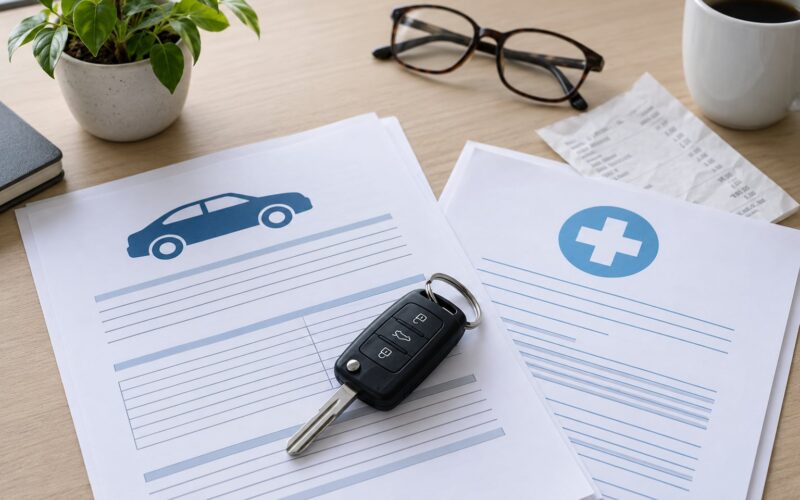
What you normally hand over is an insurance binder, which is a one-page summary an agent or insurer prints showing the policy number, the covered vehicle, the liability and physical damage limits, the deductibles, and the named lienholder. Some dealers accept a digital insurance card pulled up on your phone. Others call your agent directly during the closing appointment to confirm you have the coverage they require.
Start the process a few days before you go to sign. Buying a policy the afternoon of pickup is where deals get delayed, and a rushed purchase rarely saves any real money.
Who needs proof of insurance for a car loan?
The borrower does. If you are co-borrowing or the loan is in a business name, whoever signed the credit agreement is the one who shows proof. Dealerships and lenders want the binder before the keys change hands, and they will also want a copy of your driver’s license and the final buyer’s order showing the vehicle you are financing.
What Insurance Requirements Does a Car Lender Have?
Every lender requires active liability coverage on the financed vehicle. On top of that, most require collision and comprehensive, and many set a ceiling on how high your deductible can be.
Liability is the one non-negotiable piece. It pays for damage you cause to other people, and no state lets you skip it. Collision covers crashes with objects or other cars. Comprehensive covers theft, hail, glass, animal strikes, and other non-collision events. No state requires you to carry either of those, but a lender almost always does, because the car is its collateral.
Common lender deductibles sit at 250 or 500 dollars. Some lenders, particularly subprime and captive finance companies, ask for 100 or 250. Requirements differ by lender, dealer, and state, so read the insurance section of your loan agreement rather than assuming every lender wants the same thing.
What does full coverage actually mean?
Full coverage is a sales phrase, not a legal category. It usually means liability plus collision plus comprehensive, sometimes with uninsured motorist, rental reimbursement, and towing. Ask for the limits and deductibles in writing instead of the phrase, because two policies sold as full coverage can be very different contracts.
How a Car Loan Affects Insurance Requirements
The mechanism is collateral. Until the balance reaches zero, the lender has a financial claim on the vehicle, so the loan agreement makes you promise to keep it insured against loss or damage. That promise covers the entire loan term, not just the first thirty days.
Here is how the four coverages a lender cares about fit together.
- Liability pays third-party injury and property damage. Required by state law and by the loan.
- Collision pays to repair or replace the financed car after a crash you are responsible for.
- Comprehensive pays after theft or non-collision damage like hail, falling objects, or broken glass.
- GAP pays the difference between what the insurer values the car at and what you still owe. This is not part of your policy; it is a separate product you buy once you know the payoff amount.
Collision vs comprehensive: what each one pays for
| Coverage | Typical incidents it pays for | Common deductible |
|---|---|---|
| Collision | Another driver rear-ends you, you hit a parked car, a hail-driven rollover where you are at fault, a car-versus-tree crash | 250 to 1000 dollars, lender-capped |
| Comprehensive | Theft, hail, flood, fire, falling tree, animal strike, broken windshield | 250 to 500 dollars |
Insurers pay the actual cash value, not the price you paid. A three-year-old car has already depreciated, which is exactly why GAP exists: if the car is totaled and your payoff exceeds the payout, you still owe the difference.
Does the Lender Have to Be Listed as a Loss Payee?
Usually yes, and the mechanism is more specific than most buyers realize. The lender appears on your policy in one of two ways.
A loss-payable clause names the lender as the payee for physical damage claims. An additional-interest endorsement does the same and adds a notice period, so the insurer must tell the lender before cancelling a policy that the lender has an interest in. For a financed vehicle, lenders generally require the second one, because the first does not reliably alert them to a cancellation.
The practical result: on a totaled car, the check goes to the lender first, not to your driveway. The lender applies it to the balance and sends you the remainder. If the payout is less than the balance, the check stops there. Drivers posting in r/Car_Insurance_Help and r/personalfinance describe this clearly enough that it is rarely the part that surprises them after a loss; the surprise is how much was left owing.
Can I Choose the Insurance Company My Lender Accepts?
You can, in almost every case. Lenders publish acceptable-coverage standards, not a required carrier list. The insurer has to meet those standards, and your choice has to cover the vehicle with the required limits and deductibles for the loan’s full term.
What the lender may ask for is information: your policy number, effective date, carrier name, limits, deductibles, and proof the lienholder is named. Some lenders ask for the insurer’s phone number so their loss department can reach your adjuster directly. None of that gives them a say over which company you buy from.
Financing approval can still hinge on it. If the coverage you bring does not meet the contract standard, the lender can decline to fund until it does. That is why getting a quote before the closing date, not after, matters.
What Happens If I Let My Auto Insurance Lapse?
A lapse while you still owe money is a breach of the loan contract, not just an insurance problem. The chain usually runs like this.
- The insurer notifies the lienholder. The additional-interest endorsement requires it, and states also share policy data through insurance databases that lenders can check.
- The lender demands proof of reinstatement. You get a short window to show current coverage.
- If you do not fix it, the lender force-places a policy. This is also called vehicle service insurance. The lender buys it on your behalf and adds the premium to your balance.
- Force-placed coverage is expensive. It is priced for the lender’s risk, not yours, and commonly carries higher deductibles than what you had before.
- Continued non-payment becomes default. Default on the insurance requirement is default on the loan, which can lead to repossession and credit reporting.
You can also lose your license for driving uninsured in many states. If a force-placed policy lands on you, contact both the lender and the insurer right away: cancellation usually requires the lender’s written release, and refunds on a cancelled force-placed policy can take weeks rather than days.
Can I get liability only on a car loan?
Rarely, and you need the lender’s written agreement before you sign. Some credit unions and lenders will accept liability plus comprehensive alone on an older vehicle. Most will not, and a dealer will not let you drive the car off the lot without meeting the contract terms.
Does Car Insurance Cost More Because I Have a Loan?
The loan itself is not a rating factor. Insurers price on the vehicle, the driver, where you live, your driving record, your coverage choices, and your deductible. What the loan changes is how much coverage you are forced to buy, which lands on the same bill.
There is a second, subtler effect. Financed drivers carry collision and comprehensive, and both are claims-only coverages that sit unused until something happens. Insurers have observed a correlation between financed vehicles and claim frequency, so some carriers look at whether a car is paid off when they rate the next term. It is not automatic, and it is not something a lender controls, but it is worth asking about.
How to lower the cost without breaking the loan terms
- Raise the collision and comprehensive deductibles to whatever ceiling your lender allows. This is the single biggest lever.
- Bundle with an existing auto, home, or renters policy.
- Drop coverage you never use, such as rental reimbursement, but never collision or comprehensive while the loan is open.
- Ask about low-mileage and telematics programs before you start the loan.
- Get three quotes on the same coverage levels and deductibles. Identical limits make the comparison fair.
Financed vs leased vs owned outright
| Situation | Liability | Collision and comprehensive | Lienholder named | Who sets the bar |
|---|---|---|---|---|
| Financed | Required | Required by contract, with deductible caps | Yes, via loss payable or additional interest | State law plus the loan contract |
| Leased | Required | Required, often with tighter deductibles and a higher liability floor | Yes, the leasing company | State law plus the lease contract |
| Owned outright | Required | Optional | No | State law and your own judgment |
That last row is the whole point. Once there is no balance, nobody is making you carry physical damage coverage.
What Should I Do Before the Loan Closes?
Run through this list a few days before the signing appointment and the closing will be boring.
- Get the lender’s requirements in writing from the dealer or credit office: required limits, maximum deductibles, and whether they want an additional-interest endorsement or accept a loss-payable clause.
- Quote the exact vehicle, including the VIN, before you commit. Coverage follows the vehicle, not the person.
- Compare three quotes on identical limits and deductibles, and confirm the collision deductible is within your lender’s cap.
- Schedule the policy to start on or before the delivery date. Same-day or next-day binders are common.
- Add the lienholder to the declarations page with the exact legal name and address the lender gave you. A misspelled lienholder name is a common reason a claim gets delayed.
- Send the documents early through whatever portal the lender uses, rather than handing over paper at the desk.
- Keep the payoff amount handy. That number, minus the insurance payout, is what a GAP quote is built on, so get it early if you are considering GAP.
One more thing worth knowing: dealer add-ons and GAP are different products. Loan protection, sometimes sold as credit life or debt protection, covers a missed payment if you die or become disabled. GAP covers the shortfall if the car is totaled. Neither is compulsory. Decline both freely, and read any add-on you do sign, because these are the products buyers most often regret.
Frequently Asked Questions
Can I get car insurance with a loan?
Yes, in fact insurers expect it. Most borrowers arrange coverage before they visit the dealer and present an insurance binder at signing showing the financed vehicle, the required limits, and the lienholder. Policy numbers and VINs are easy to add later, so buying online a few days ahead is usually faster and cheaper than buying at the closing desk.
How much insurance does a car lender require?
Liability at or above your state minimum, plus collision and comprehensive on the financed vehicle. Many lenders cap deductibles at 250 or 500 dollars and ask for an additional-interest endorsement naming them as payee. Requirements vary by lender and state, so get the specific limits in writing from the dealer or credit office before you sign.
Is full coverage required for every car loan?
Not literally, because full coverage is a sales phrase rather than a legal category. What lenders require is named: active liability limits, collision, and comprehensive, usually with a deductible ceiling. Some lenders accept liability plus comprehensive alone on older or high-mileage vehicles. Ask before you buy, and get the answer in writing.
Can I cancel insurance after paying off my car loan?
You can remove collision and comprehensive once the loan is paid off, since the lender no longer has an interest. Liability stays, because state law requires it. Before dropping anything, compare the premium against the car’s value: if the car is worth less than your deductible, coverage is paying for very little. Remove the lienholder from the policy at the same time.
Does refinancing a car loan change my insurance requirements?
Sometimes. A new lender sets its own standards, so the coverage you carried with the previous lender may not meet the new deductible cap or endorsement requirement. Refinancing also restarts verification: expect to send a current binder before funds are released. Compare the new loan’s insurance requirements to your existing policy before you sign.
What happens if I do not have insurance when a car loan closes?
The closing usually stalls. Dealers and lenders want active coverage on the vehicle before they release funds or hand over keys, and many will not fund without a binder showing the lienholder. If you drive the car home uninsured, you risk a claim, license suspension for driving uninsured, and a breach of contract the moment you sign.
Conclusion
Arrange the insurance before you sign, not after. Get the lender’s required limits and deductible cap in writing, quote the exact vehicle, start the policy a day or two before delivery, and make sure the lienholder is named correctly on the declarations page. That one hour of setup is what keeps a financed car from turning into a force-placed insurance bill or a repossession call.
Insurance rules and requirements vary by state and lender and change over time, so treat this as a general explanation rather than advice about your specific loan. Your loan agreement is the authority on what your lender requires.