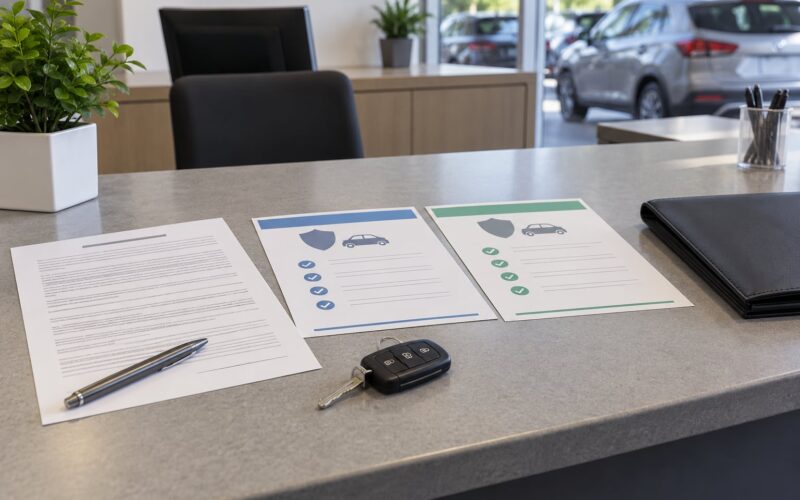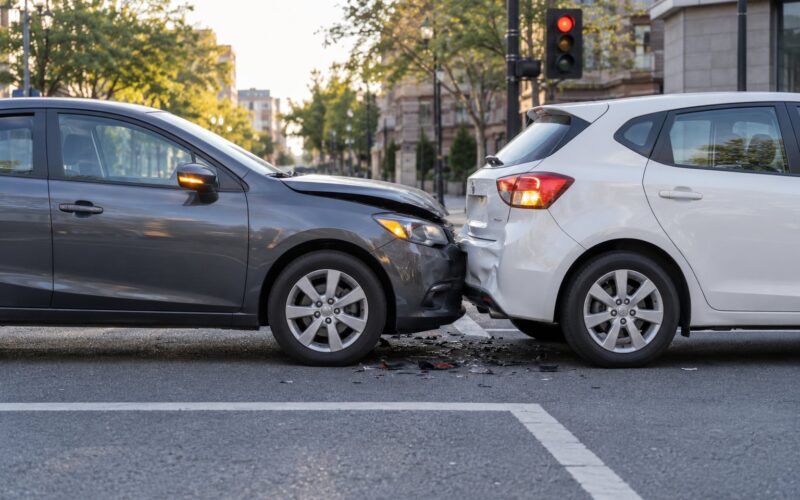
To add a teen driver to a policy, call your current insurer or agent the day your child gets a learner’s permit and list them as a non-driver, then re-rate the policy the day they pass the road test and hold a license. Between those two calls your teen should not drive, because coverage is confirmed only when it appears in writing on your declarations page. The whole process takes one phone call and a few documents, usually under an hour, and it works in every state — the details differ, but the sequence does not.
Getting this wrong is expensive. On r/Car_Insurance_Help, parents describe premium jumps in the hundreds of dollars the moment a permit holder is added, with the figure climbing again once the teen is licensed and has a car at college. Other threads on r/Insurance describe family policies rising by half or more — occasionally doubling — once a sixteen-year-old joined the household.
Those are reported from real households, and they are why the order of operations matters more than anything you negotiate. Insurance prices risk statistically, and drivers aged 16 to 19 are roughly three times as likely per mile driven to die in a crash as drivers 20 and older, according to the Insurance Institute for Highway Safety. An unlisted teenager means the carrier is pricing your household without the single biggest risk in it.
Table of Contents
- What You Need
- Step-by-Step: How to Add a Teen Driver to a Policy
- How to Add a Teen Driver to a Policy: Confirm the Timing
- Gather the Information Before You Call
- Compare Adding to Your Policy vs. a Separate One
- Submit an Accurate Application
- Review the Restrictions That Come With It
- Verify the Coverage Is Active
- Know the Terms You Will See on the Declarations Page
- Common Mistakes
- Frequently Asked Questions
- Do I have to add my teen to my car insurance policy before they drive?
- Is it cheaper for a teenager to have a separate auto insurance policy?
- Can a learner permit driver be added to a family auto policy?
- Will adding a teenager with a claim or traffic violation raise the premium?
- What information changes should I report after adding a teen driver?
- Conclusion: Confirm the Policy Is Active
What You Need

Gather this before you make the call, and the conversation takes minutes instead of weeks.
- Your policy number and the declarations page from the last renewal, so the agent can see current drivers, limits, deductibles and vehicles.
- The teen’s learner’s permit or driver’s license — permit number or license number, issue date and expiration date.
- Date of birth and legal name exactly as the DMV has it. A mismatch between the two records is a common reason a quote stalls.
- The vehicle’s VIN, plus whether it is titled and registered to you or to the teen. Registration changes what the carrier will rate.
- Driver’s education or driver’s ed completion documentation, and school records if you want to claim a good student discount later.
- Every licensed household member’s details and every teen who holds a permit, whether or not they drive a lot.
- Driving history: any moving violations, at-fault accidents, permit restrictions, or learner-permit conditions imposed by your state.
Two questions are worth writing down before the call: whether your carrier will add a permit holder at all right now, and what your state requires. Some insurers will not rate a permit holder until the road test is passed, which means the first call may only get you listed as a non-driver. Others add the permit stage immediately at no charge. Ask which applies to you, so you know whether to expect a rating change today or in six months.
Step-by-Step: How to Add a Teen Driver to a Policy
How to Add a Teen Driver to a Policy: Confirm the Timing
Most parents add at the permit stage, and most insurers support that. The permit tells the carrier a licensed driver is coming within roughly a year, and they would rather adjust the rating now than discover an unlisted driver after a crash.
What matters most is that nobody drives until the carrier confirms coverage in writing. Waiting-period rules, permit conditions and graduated licensing steps all vary by state, and your teen’s permit may legally require a supervising adult in the front seat during certain hours. Your policy can be stricter than the law, not looser.
Gather the Information Before You Call
Everything listed in the section above goes into the application, and the order you supply it in does not matter. What does matter is accuracy: the name and date of birth must match the DMV record, the VIN must be the one on the vehicle, and the household roster must include every licensed driver plus every permit holder.
You will probably be asked for a Social Security number or an ITIN for the teen. Some carriers only request it at the licensing stage rather than the permit stage, and some states restrict how it can be used for underwriting, so ask before you type it into a web form.
Compare Adding to Your Policy vs. a Separate One
Most families add the teen to the existing policy. Here is where the two paths genuinely differ.
| Factor | Add to the family policy | Separate policy for the teen |
|---|---|---|
| Administration | One renewal, one payment, one agent | Second policy, second renewal, separate billing |
| Multi-policy and multi-vehicle discounts | Usually still apply | Often lost, since the policies sit apart |
| Vehicle separation | Easy to keep the teen off the family car if you want | Clean split, but also no shared history |
| Best fit | Teen sharing your vehicle or living at home | Teen leaving for college in another state, or owning an older car you want kept off the family rating |
| Weakness | The teen’s rating raises the whole household total | Usually costs more, and coordination between two carriers gets confusing |
A separate policy rarely beats adding, judging by how parents on these boards describe handling it. It makes sense in two situations: the teen is moving to another state for college with a car, or the teen owns an older vehicle you would rather not have factored into a family policy. Beyond that, users on r/Insurance consistently point to shopping the add across several carriers or through an independent broker, because teen pricing swings far more between insurers than adult pricing does.
Submit an Accurate Application
Contact your existing agent first, since they can amend the current policy without re-underwriting the whole household. If you are shopping instead, call or apply directly and expect the same application, plus questions about the vehicle and the teen’s driving record.
Every question gets answered truthfully, including the ones that feel embarrassing. Misstated answers come back as a claim denial, and the carrier will ask for the license, the permit log, and the police report. Underwriting may also pull motor vehicle records and driving history, so anything you leave out can surface later as material misrepresentation.
Review the Restrictions That Come With It
New drivers usually get a narrower policy, and the terms vary by insurer and state. Expect some combination of the following.
- Passenger limits: no passengers under a set age, or a passenger cap for teen drivers.
- Licensed adult required: nobody in the household over a certain age can ride alone with a newly licensed teen.
- Curfew hours: driving may be barred between set times, often overnight.
- Geographic limits: driving restricted to a radius around home or to named states.
- Permissible use: personal use only. Paid delivery driving and any wage-earning driving are typically excluded from a personal auto policy, so a teen with a food delivery job is usually uninsured unless you buy a commercial endorsement.
- Telematics conditions: a monitoring app or device may be required, with the discount tied to the household accepting the data terms.
Read the permissible-use clause carefully. That single line is what determines whether a claim is paid when a teen drives for work, borrows the car overnight, or drives a friend home from a late event.
Verify the Coverage Is Active
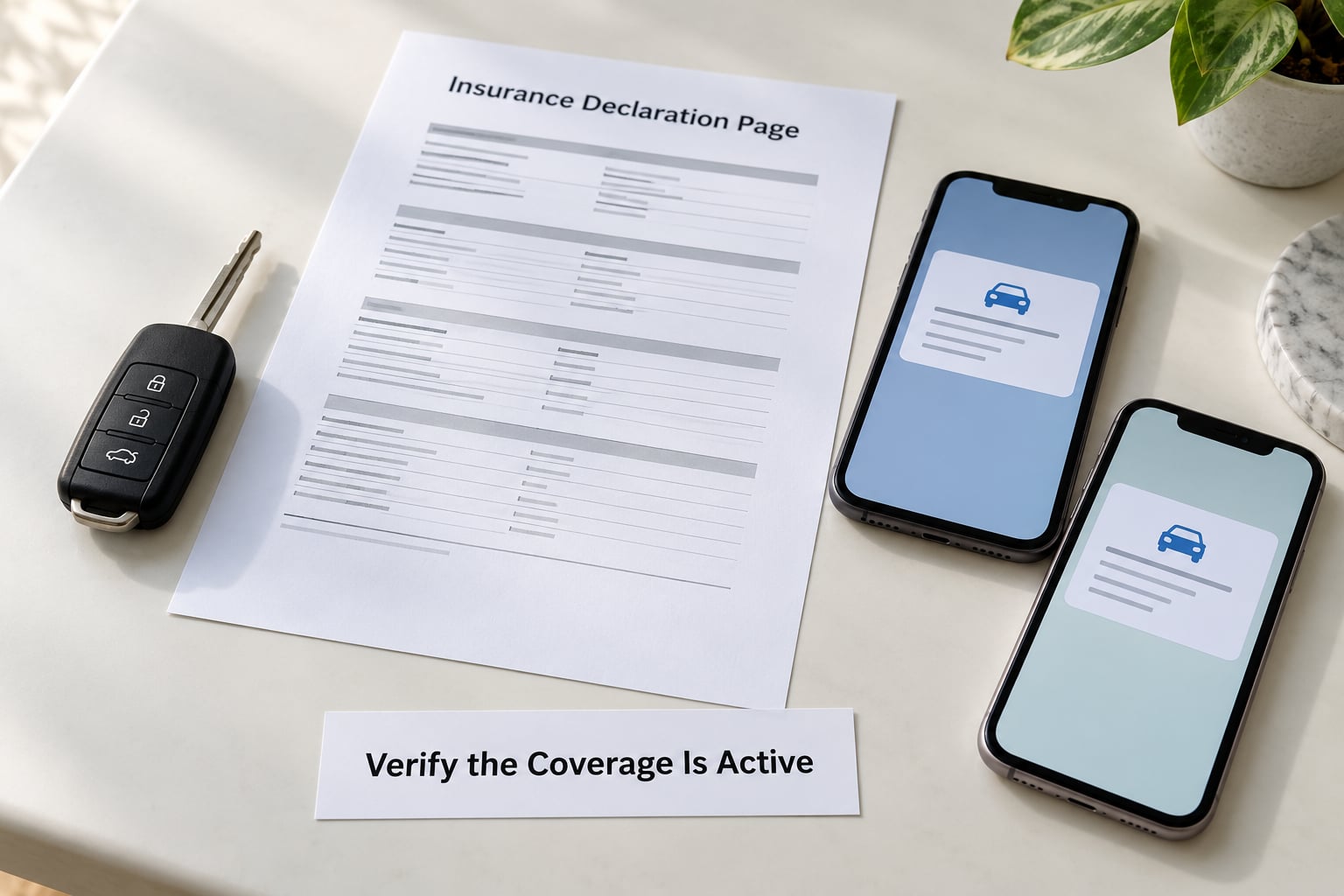
Do not take the agent’s word for it, and do not take a screenshot of a progress screen. Ask for the documents themselves, then check four things on them.
- The teen’s name appears on the declarations page as a driver or rated driver, with the status the carrier assigned.
- The effective date matches when the coverage actually starts, not when you called.
- The vehicle and VIN match the car the teen will actually drive.
- Limits and deductibles are still where you expect them, including liability, uninsured and underinsured motorist coverage, and comprehensive and collision.
Get a printed declarations page or a binder, plus new insurance cards for the household. Then check the carrier’s app or site and confirm the same information is showing there. Nothing else counts as proof.
Know the Terms You Will See on the Declarations Page
Five words show up on the declarations page and the policy itself, and parents routinely misread them.
| Term | What it means | When it applies |
|---|---|---|
| Named insured | The person or entity the policy is issued to | Usually the parent who owns the car |
| Listed driver | A driver shown on the policy, whether or not the rating uses them | Everyone who regularly drives |
| Rated driver | A listed driver whose record is priced into the premium | Once the teen holds a license |
| Non-driver | A household member listed without being priced in | Permit holders, usually no premium impact |
| Occasional driver | A driver permitted to drive occasionally rather than regularly | Rarely granted for a teen in daily use |
| Excluded driver | A household member deliberately barred from driving | No coverage at all for that person; a last resort |
Permissible use is the related concept that causes most disputes. It is not a driver category; it is a clause limiting what the policy covers, and it is the basis most carriers use to decline a claim after an unlisted teen drives.
Common Mistakes
Letting the teen drive before written confirmation. This is the expensive one. If a teen with no license drives a listed car and crashes, the carrier can deny the claim under the policy’s provisions on unlisted drivers, leaving you paying for the damage and anyone injured out of pocket. Uninsured motorist exposure makes it worse. The fix is simple and non-negotiable: declarations page or binder in hand before the keys move.
Waiting for a claim to surface the problem. A claim is the worst possible way to find out, and the denial does not erase the claim, it just shifts the bill to you.
Omitting a permit holder because they are not driving yet. Unlisted household drivers are under-rated risk by definition, and a carrier that discovers one later may re-rate or cancel.
Comparing policies on the headline premium only. Teen pricing varies more between carriers than adult pricing, so the cheapest quote on the first call is rarely the cheapest answer. Compare liability limits, the deductibles the teen would carry, and the restrictions attached to each quote.
Failing to report a change in use. A teen who starts a delivery job, drives to a school two states away, or regularly borrows the car has changed the risk, and the policy should say so. An occasional-driver rating is not a loophole for daily use.
Ignoring the discount paperwork. Good student and driver’s education discounts are not automatic. They usually require documentation at renewal, and a missed deadline can cost you a full year of the discount.
Frequently Asked Questions
Do I have to add my teen to my car insurance policy before they drive?
Yes. Any household member who holds a permit or license and may drive a covered vehicle should be disclosed to your insurer, and the policy must confirm coverage in writing before the teen turns the key. If a teen drives without being listed and a crash follows, the carrier can deny the claim and you become personally responsible for the damage and for anyone injured.
Is it cheaper for a teenager to have a separate auto insurance policy?
Usually not. Separate policies for a teen generally cost more and often lose the multi-policy and multi-vehicle discounts you get by keeping one household on one policy. A separate policy makes sense when the teen is moving to another state for college with a car, or owns an older vehicle you would rather keep off the family rating.
Can a learner permit driver be added to a family auto policy?
In most states, yes, and many carriers add a permit holder as a non-driver at no cost. Some insurers prefer to wait until the road test is passed, in which case the teen is listed as a non-driver now and rated later. Ask your agent which approach your carrier uses, and make sure the teen does not drive until the declarations page shows them.
Will adding a teenager with a claim or traffic violation raise the premium?
It will, and the increase applies to the whole household rating, not just the teen. One at-fault claim or moving violation stays on the record for several years and removes accident-free discounts at renewal. Answer every underwriting question truthfully, since a misstatement discovered later can void coverage. Clearing violations through the state court process is the one legitimate route to a better record.
What information changes should I report after adding a teen driver?
Report changes to the vehicle, the VIN, the driver’s address, the driving record, and how the car is used. A teen who starts paid delivery work, commutes to school in another state, or regularly borrows the vehicle has changed the risk profile. Updating the policy keeps the teen covered; leaving the insurer in the dark can trigger a claim dispute later.
Conclusion: Confirm the Policy Is Active
Start by calling your current insurer or a licensed agent with your teen’s permit or license, your declarations page and the VIN in hand. Ask two questions: can the teen be added now as a non-driver, and does the carrier re-rate the policy the moment the license arrives?
Then insist on the paper. A declarations page or binder, revised insurance cards, and a listed driver with a confirmed effective date, before your teen drives a single mile. Rates and rules vary by state and by insurer and change over time, so treat the specifics in this guide as how the process works rather than as your quote.
Updated for October 2026.