A car accident affects your insurance premium by adding a surcharge to your rate at your next renewal, usually by 20 to 50 percent for an at-fault crash, and that added charge stays on your record for roughly three to five years. The exact size depends on fault, how serious the damage was, whether anyone was hurt, and the rules where you live. Most people first notice it on the renewal bill rather than the day of the crash.
That delay is the confusing part. You handle the claim, the repairs, the paperwork, and weeks later a number appears on a document you may not read closely. Here’s how the increase actually gets calculated, what it looks like for different kinds of accidents, and what you can do about it.
Table of Contents
- How a Car Accident Affects Your Insurance Premium — What to Know
- What Determines the Size of a Premium Increase?
- How Different Types of Accidents Affect Rates
- Why a Not-at-Fault Accident Can Still Raise Your Rate
- Should You File a Claim or Pay Out of Pocket?
- How Long Does an Accident Stay on Your Insurance Record?
- What to Do in the First 30 Days After the Crash
- How to Find the Surcharge on Your Renewal Bill
- Can You Lower Your Premium After an Accident?
- Frequently Asked Questions
- Will my premium go up after any car accident?
- Does an accident increase my premium if I was not at fault?
- How long does a car accident stay on my insurance record?
- Should I file an insurance claim after a minor accident?
- Can I lower my car insurance premium after an accident?
How a Car Accident Affects Your Insurance Premium — What to Know
The short version: the accident itself does not change your premium mid-term. Your carrier re-rates you at renewal, using its own schedule for accidents and claims, and the increase shows up as a new annual total or a surcharge line.
Three things usually happen at once. The base rate moves because the carrier’s record now shows a loss, an accident-free or safe-driver discount disappears, and in some states the accident appears on your motor vehicle record too. The discount loss feels like a hidden second charge because it rarely gets called out separately.
Rates and rating rules vary by state and by carrier, and filing deadlines matter. If your renewal is weeks away when the crash happens, you may be able to make some choices before that date arrives.
What Determines the Size of a Premium Increase?
Fault is the biggest factor. An accident where the other driver was cited carries very little weight with your own carrier, while one where you were cited carries a lot. Severity comes next, followed by whether anyone filed a bodily injury claim.
Insurers also look at your violations, your total claim count over the look-back window, your deductible, your coverage limits, and how the loss compares to the value of the car. An old sedan with a 900-dollar repair produces a much smaller percentage hit than the same repair on a new SUV.
| Factor | What the carrier looks at | Typical effect on the premium |
|---|---|---|
| Fault | Police report, citation, claim liability determination | At-fault: large increase. Not at fault: small or none |
| Severity | Total paid on the claim | Under 500 dollars: modest. Thousands: severe |
| Claim type | Property damage, bodily injury, comprehensive | Injury claims rank longer than glass or dent claims |
| Prior violations | Moving violations, speeding, DUI | Compounds whatever the accident already did |
| Total claims | Count inside the look-back period | Two at-fault claims can cost more than double one |
| Discounts lost | Accident-free, safe driver, good student | Removed at the first renewal after the loss |
| Carrier and state | Rating schedule, filing rules, rate regulation | The same crash can produce very different numbers |
How Different Types of Accidents Affect Rates
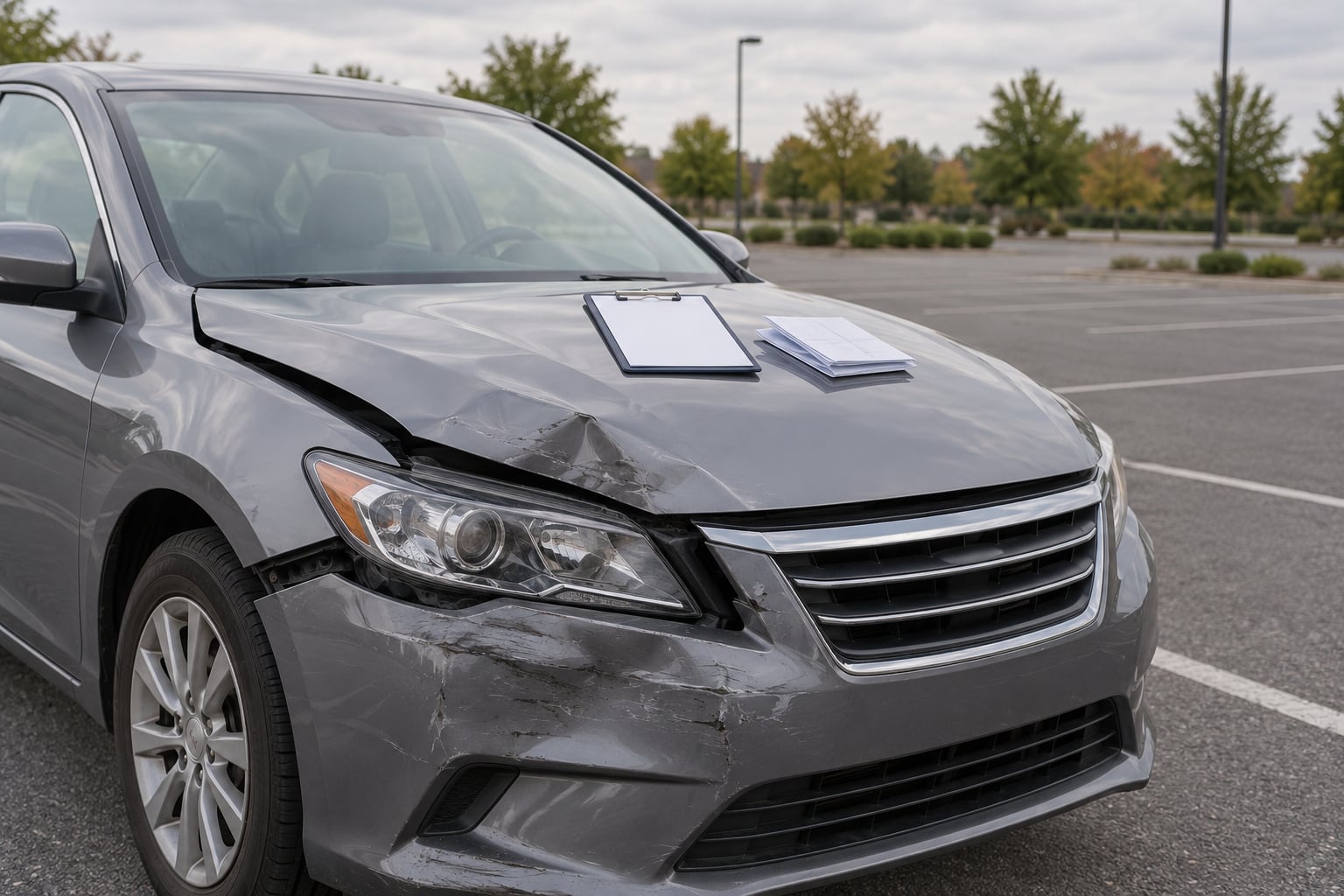
A minor fender-bender with no injuries and a repair under your deductible may not move your premium at all if you pay out of pocket and no claim is opened. The same damage handled through your collision coverage is a recorded claim, and a recorded claim is what the rating schedule reacts to.
Property-damage-only claims sit in the middle. Liability claims against another driver do not directly raise your premium, but claims you file on your own policy do. Uninsured and underinsured motorist claims, and any claim involving bodily injury, tend to stay on the record longest.
Comprehensive claims are the mildest. A deer strike, hail damage, or a fallen tree usually produces a very small surcharge because no other driver was involved.
Published surcharges give a reasonable sense of scale. One comprehensive claim lands near 3 percent, two near 8 percent, a single at-fault property-damage claim under 2,000 dollars around 26 percent, the same claim over 2,000 dollars near 31 percent, and two at-fault claims above that threshold can reach 110 percent. Treat these as reference points rather than promises, since every carrier’s schedule differs.
Why a Not-at-Fault Accident Can Still Raise Your Rate
It feels unfair, and in many cases it is, but there is logic underneath it. When your carrier pays out on a collision claim, it registers a loss no matter who caused it, and one claim does not tell them whether the next one will be minor or severe.
There is also a cost to handling the file: adjusting, paying the shop, defending the claim if the other party disputes it. On a small claim that handling cost is a large share of the payout, which is the argument insurers use to justify a higher rate.
The discount piece is real regardless. If you were on an accident-free discount, that discount is tied to having no losses, so it ends up switched off even when the crash was somebody else’s doing.
In no-fault states, personal injury protection pays regardless of fault, so claims there are frequent by design. Your state insurance department can tell you how your own rules handle this.
Should You File a Claim or Pay Out of Pocket?
File the claim when the repair or injury cost runs well past your deductible, when the other party is uninsured or disputing fault, or when you need the coverage to be on record for a dispute. Pay yourself when the damage is small, clearly cosmetic, and the fault is settled.
Here is the arithmetic people find surprising. With a 500-dollar deductible and a repair bill of 700 dollars, your insurer pays 200 dollars and you keep 500. If filing that claim adds 25 percent to your annual premium, the surcharge can cost several times what the coverage paid you.
Two more things belong in that calculation. A claim you make against the other driver is not a claim on your own record, so pursuing the at-fault party is usually free of premium consequences. And an accumulation of small claims matters: a driver with three tiny claims in three years can be surcharged harder than one with a single large claim.
Decide before the body shop starts work, and get the other driver’s insurance details while everyone is still on the scene.
How Long Does an Accident Stay on Your Insurance Record?
Most carriers look back three to five years. Once the accident falls outside that window, it stops affecting your rating, and the premium gradually returns toward what it would have been without the loss. Some states set their own shorter periods for a carrier to use, while serious violations and DUIs can stay on your motor vehicle record far longer, sometimes for decades.
Three different records are easy to confuse. Your motor vehicle record at the DMV tracks citations and reported crashes. Your carrier’s internal loss history tracks claims paid on your policies. The CLUE report, shared among insurers, tracks claims reported industry-wide for the same reason, so a claim you never filed with your own carrier may still appear there.
You can request your own CLUE report, and reviewing it after an accident is a reasonable check that nothing was recorded inaccurately.
What to Do in the First 30 Days After the Crash
Speed matters here because the paperwork you gather now shapes what the carrier and the other insurer record later.
- Get a police report if anyone was hurt, the cars are badly damaged, or the other driver is disputing what happened. Without it, fault often comes down to the other driver’s account.
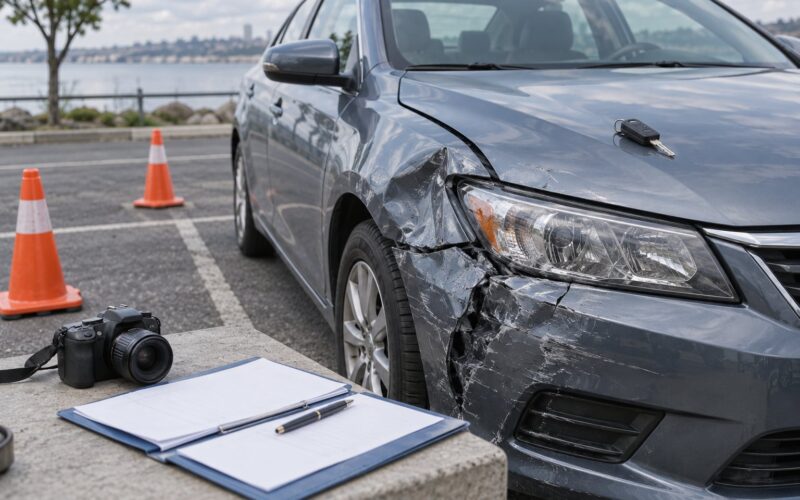
- Photograph every vehicle, the road, the damage and the license plates before anything is moved or repaired.
- Write down what happened while it is fresh, including time, place, lane position, and who was stopped at a red light.
- Notify your insurer, and stick to facts. Speculation about fault or cause is the part that causes problems later.
- Do not discuss fault, admit responsibility, or sign a release for the other driver’s insurer without reading it.
- Keep every repair estimate, receipt and medical bill. Unitemized invoices rarely survive a dispute.
- Ask the adjuster how the claim will be coded, since property damage, bodily injury and comprehensive are rated differently.
Forum threads on r/Insurance and r/Car_Insurance_Help repeat the same lesson: drivers who stopped at the scene, documented everything and kept their statements factual had far fewer problems at renewal than those who went quiet.
How to Find the Surcharge on Your Renewal Bill
The increase is usually printed, not hidden. Open the renewal declaration page and look for a section listing surcharges or accident-related charges next to your coverage lines, and compare the total against your expiring policy. If the line is missing entirely, your carrier folded the increase into the base rate, which is legal but much harder to see.
Ask the carrier directly for a rating breakdown in writing. A good agent can tell you which claim triggered what, and whether any discount was removed. Getting that in writing before you shop elsewhere makes comparison much easier.
If the increase looks wrong, check whether the fault determination matches the police report and whether an accident you were not involved in got attached to you. Errors happen, and they are correctable.
Can You Lower Your Premium After an Accident?
You can bring the number down over time, but you cannot erase a legitimate loss history. The realistic moves are these.
- Complete a defensive driving or driver safety course where your state or carrier allows the credit. Many carriers apply it at renewal rather than immediately.
- Ask about accident forgiveness. Some policies forgive the first at-fault collision, and adding the provision before it is used is often cheaper than the surcharge.
- Enroll in a telematics or usage-based program if you drive safely. Mileage-based pricing rewards exactly the behavior that lowers your risk.
- Keep the record clean afterward. A single accident and three clean years usually reads very differently from two accidents in two years.
- Raise your deductible before the next renewal if you can absorb it, since a higher deductible lowers the premium.
- Shop your renewal with a quote in hand. Drivers on the r/Insurance boards often find that carriers price a loss history very differently, and the gap between two quotes can exceed the surcharge.
- Request a rate review if your loss was minor and you have years of clean driving behind it, and escalate to your state insurance department if the carrier will not explain the increase.
Contesting is worth the effort in a few situations. It rarely is if a bodily injury claim went out with large payments, since that sits in the record the longest. Your state’s department of insurance handles complaints about rating practices that look unfair or inconsistent with how the carrier told you the rate was set.
Drivers who shop after an accident also find it useful to ask each carrier for the surcharge amount in dollars rather than a percentage, because the same percentage hits a large premium much harder.
Frequently Asked Questions
Will my premium go up after any car accident?
Not always. A crash where you were not at fault and where no claim is filed on your own policy may have little or no effect. A claim opened on your policy, even a small one, usually triggers some increase at renewal. The size depends on fault, claim amount, whether anyone was injured, and your carrier’s rating schedule.
Does an accident increase my premium if I was not at fault?
It can, and it does happen more often than drivers expect. Your carrier may register the loss, charge the handling cost, and end any accident-free discount you had. Because no-fault states treat injury claims without assigning fault, the effect varies considerably. Ask your carrier in writing whether a specific claim affected your rate.
How long does a car accident stay on my insurance record?
Most carriers look back three to five years, so the surcharge fades once the accident drops outside that window. Motor vehicle records at the DMV may keep crashes longer, and serious violations can remain for decades. Your state’s rules set the outer limits, and your carrier’s schedule decides how far back it looks.
Should I file an insurance claim after a minor accident?
Compare the repair cost to your deductible first. If the damage is small and fault is settled, paying out of pocket often costs less than the surcharge a claim triggers. File when the repair greatly exceeds your deductible, someone is injured, the other party is uninsured, or fault is disputed. Decide before repairs begin.
Can I lower my car insurance premium after an accident?
Partly. A defensive driving course, accident forgiveness on future policies, telematics programs, a higher deductible and shopping other carriers can all lower the number. None of them remove the loss itself. Your rate should return toward normal once the accident falls outside the look-back period, usually within three to five years.
The most useful thing you can do this week is pull up your renewal document and find the surcharge line, then compare it against your expiring premium. If it is missing, call your agent and ask for the rating breakdown in writing, then get one competing quote before you renew. Rules differ by state and by carrier, so treat every figure here as a starting point rather than a promise.