Learning how to file a car insurance claim step by step comes down to doing the right things in the right order: make the scene safe, document everything, notify your insurer promptly, cooperate with the adjuster, and read the settlement before you sign anything. Most straightforward claims run through that sequence in two to four weeks.
This guide is written for US drivers regardless of state. Deadlines, fault rules and no-fault requirements differ from state to state, so treat what follows as the general process and check your own policy language for the specifics that bind you.
Table of Contents
- What You Need
- How to File a Car Insurance Claim: Step by Step
- Step 1: Make the Scene Safe and Contact the Police
- Step 2: Document the Accident and Gather Evidence
- Step 3: How to File the Claim With Your Insurance Company Promptly
- Step 4: Complete the Claim and Cooperate With the Investigation
- Step 5: Review the Damage Valuation and Repair Estimates
- Step 6: Choose Repairs or a Settlement
- Step 7: Review Payment, Deductible, and Claim Records
- Common Mistakes
- Frequently Asked Questions
- Do I have to file a car insurance claim myself?
- How long do I have to file a car insurance claim?
- Should I file the claim with my insurer or the other driver’s insurer?
- Will my insurance cover a rental car while my vehicle is being repaired?
- What should I do if my insurance claim is denied?
What You Need
Gather these before you make the call, because the adjuster will ask for most of them and hunting for paperwork afterwards slows the claim down.
- Your policy documents. The declarations page, your policy number, the claims phone number or app, and the name of any other listed driver.
- Contact details for everyone involved. Drivers, passengers, witnesses with phone numbers, the other vehicle’s owner if the driver was not the owner, and any towing or roadside company you used.
- Evidence from the scene. Photos and video of all vehicles, license plates, injuries, debris, road conditions and the surrounding area, plus any dashcam footage.
- The police or state accident report number. Most carriers will not move far without it, and it takes days to arrive after the crash.
- Repair estimates and medical records. Written estimates from one or two shops, itemised medical bills, and proof of lost wages if you are missing work.
Before you file anything, do the deductible math. If the estimated damage sits below your collision deductible, the insurer pays nothing and you absorb the whole bill, so a claim buys you nothing except a rate review at renewal. Damage well above the deductible is a different story, and claims filed for substantial damage often go into your loss history for several years, which is why people compare the repair cost against a possible premium increase before deciding.
Users on insurance forums frequently describe noticing damage sitting under the deductible and choosing to pay out of pocket rather than open a file. That is usually the right call for a bumper scuff and the wrong call for a bent frame.
How to File a Car Insurance Claim: Step by Step
Seven steps cover the full car insurance claim process, from pulling over to closing the file. The order matters more than the paperwork itself.
Step 1: Make the Scene Safe and Contact the Police
Move your vehicle out of traffic if you can do so safely, turn on hazard lights and check everyone involved for injuries before anything else. Call emergency services whenever anyone is hurt, anyone is stuck, the vehicles are blocking a lane or the crash happened somewhere unsafe.
For damage-only wrecks, many states let you report the crash on a non-emergency line or online instead of dispatching an officer. Use the police report when there are injuries, significant damage, a dispute about fault, an uninsured or unidentified driver, or a state that requires a threshold filing. This is the first step of how to file a car insurance claim step by step, and skipping it tends to create problems later.
Leave the vehicles where they sit until police arrive so the positions can be photographed. Do not argue about fault at the scene, and do not say things like “I’m sorry, I ran into you.” An admission recorded by a witness can shape the fault determination for the entire claim.
Step 2: Document the Accident and Gather Evidence
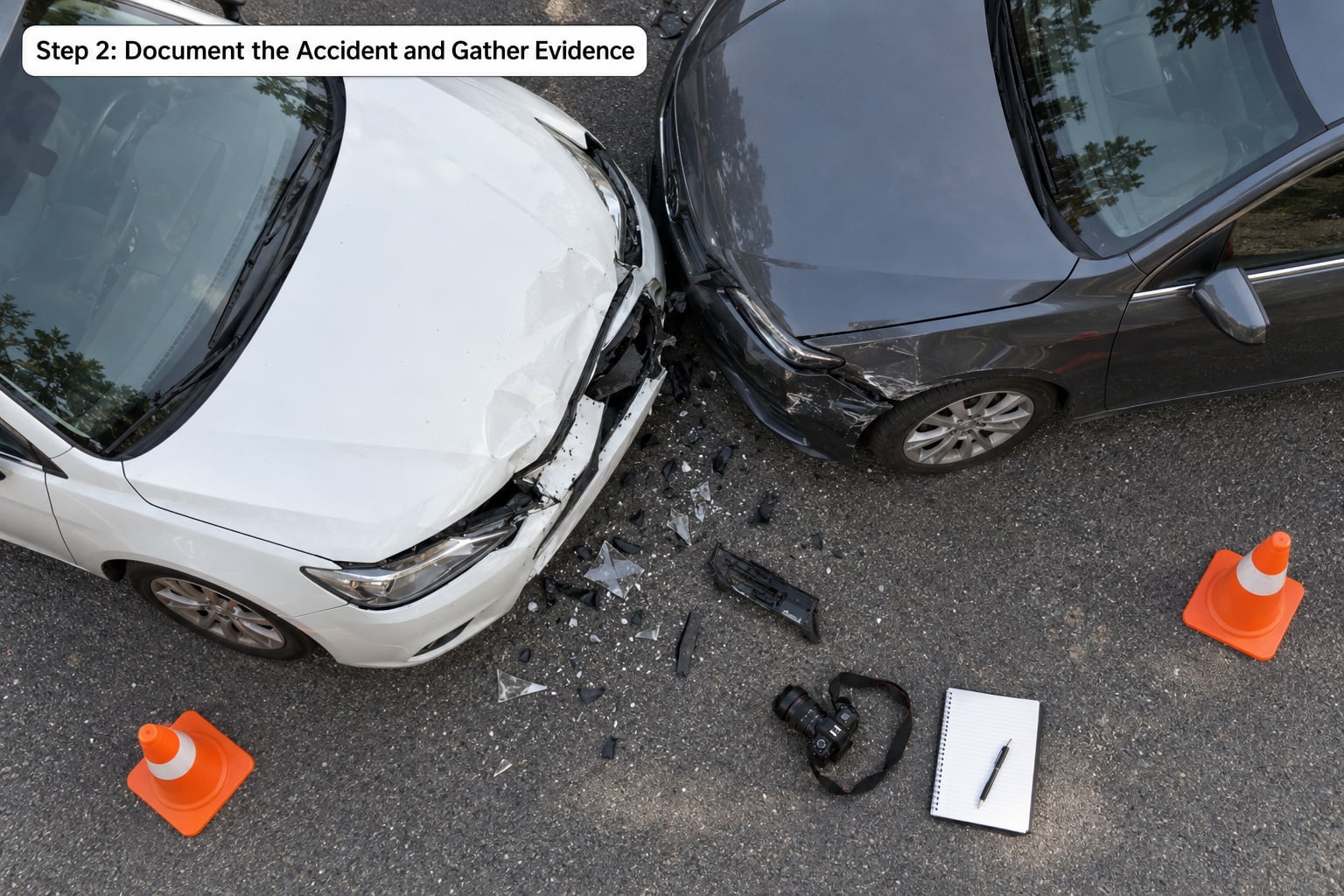
Photograph everything before anything moves: wide shots showing the position of each vehicle, then close-ups of each damaged panel, broken glass, tires and license plates, the other vehicle’s plate if it is present, and any visible injuries. Include street signs, lane markings, traffic lights and road debris in a wide frame, since those often explain the crash better than the cars do.
Take video too, walking slowly around each car in one continuous shot. Dashcam and security camera footage is often the single most useful piece of evidence in a disputed claim, so ask nearby businesses and your own insurer whether they can request it before it is overwritten.
Exchange information with the other driver in writing: names, addresses, phone numbers, email addresses, licence plate numbers, insurance company and policy number, driver licence numbers, and vehicle registration details. Write down what each person told you at the scene, and get a phone number from every witness. A written timeline you create the same evening is far more useful than your memory a month later.
Step 3: How to File the Claim With Your Insurance Company Promptly
Most carriers file claims through a 24-hour claims line, their website or their mobile app. Online and app filing is the fastest route because you can upload photos the same night; a phone call takes longer but gives you a chance to ask questions out loud and negotiate a rental directly with a person. Either way, you should receive a claim number, so write it down and save the confirmation email or screenshot.
Your first notice should cover the date, time and location of the incident, who was involved, whether anyone was injured or taken to hospital, the damage you can see, the police report number if you have one, and how to reach you. Keep it factual and short.
Know what not to say during that first call. Do not admit or deny fault, do not speculate about injuries you have not been checked for, do not estimate the value of your claim, and do not agree to a recorded statement on the spot. Do not sign any release that mentions future claims until you have read it and had time with it.
Filing deadlines come from two places: your policy’s own notice requirement, which often asks for prompt reporting, and the state’s statute of limitations, which in many states is measured in years rather than days. Missing the policy requirement can give a carrier a reason to resist even a claim that is still inside the legal window, so file early even when the damage looks minor.
Step 4: Complete the Claim and Cooperate With the Investigation
A claims adjuster is assigned to your file, either in person or remotely. Expect questions about the sequence of events, the road layout, weather, sight lines, whether anyone was hurt and whether anyone has had a repair estimate yet. Answer accurately and briefly, and correct yourself if you misspeak, because they will note inconsistencies.
You may be asked for medical records, employment details, vehicle registration, proof of ownership or a recorded statement. Provide what is covered by your policy and relevant to the loss. Refuse politely to hand over anything unrelated, and keep copies of everything you send.
If the adjuster cannot see the damage in person, ask how the inspection will happen, whether you can drop the car off at a shop of your choosing, and what happens if the estimate comes back higher than the valuation. A second opinion from an independent shop costs nothing but a phone call and gives you something to compare against.
Step 5: Review the Damage Valuation and Repair Estimates
The insurer’s valuation is the carrier’s assessment of what the damage is worth to them. It is not the same as a repair estimate, and the gap between the two is where most arguments happen.
Compare the valuation line by line against your shop’s written estimate and ask about every difference in writing. Pre-existing wear, aftermarket parts, upgraded glass and corrosion on an older vehicle are the usual explanations for a reduced figure. Cosmetic work such as a full repaint after a partial repair is often treated differently from structural work, so ask how paint blending was valued.
An estimate is a projection based on what a shop can see on day one. A final invoice can be higher once teardown reveals hidden damage, and that difference is normally handled through a supplement the shop submits to the carrier. Ask now how supplements work in your state so you are not surprised later.
Step 6: Choose Repairs or a Settlement
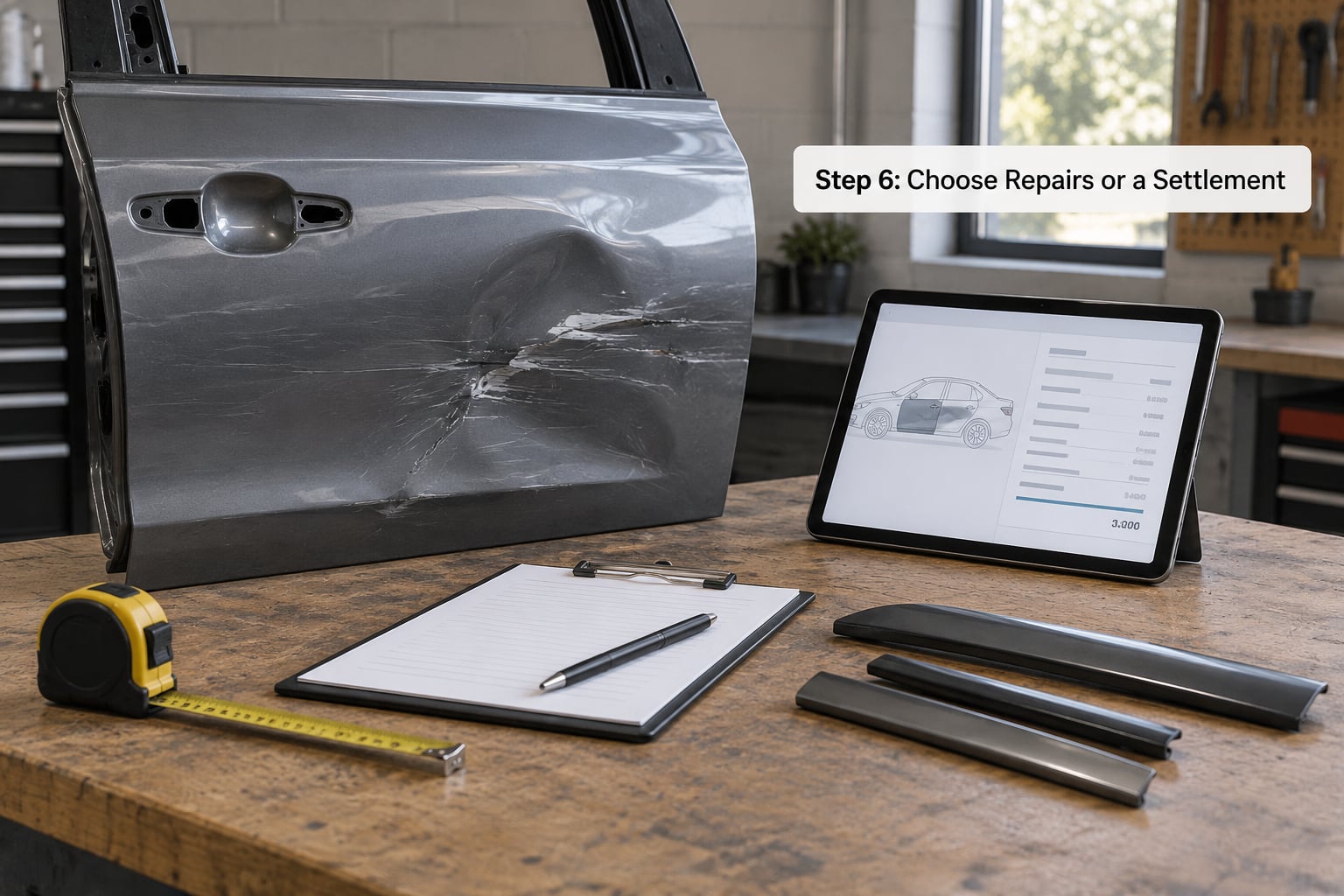
You usually get one of two paths. Repair the vehicle, which means approving a shop, signing a repair authorisation and later signing a payment authorisation once you are satisfied with the work, or accept a settlement and keep the vehicle or the payment.
Several things can ride along with that choice. Rental or alternate transportation coverage depends on your limits and on whether the carrier has set up a rental agreement, so request the rental in writing on day one rather than assuming it. Diminished value applies to a cleaner car that was repaired and now carries accident history on its record. If the vehicle is declared a total loss, gap insurance is what covers the difference between the settlement and what you still owe on the loan or lease. If a driver other than you was behind the wheel, the coverage that responds may be different from what you expect, so confirm that with your agent before filing.
Step 7: Review Payment, Deductible, and Claim Records
Your deductible comes off the top of most collision and comprehensive settlements, so a repair your shop billed at a higher price than the insurer valued may still leave you owing money. Policy limits cap what a liability or medical claim will pay, and some carriers depreciate parts on older vehicles. Know the three numbers in your file: the valuation, your deductible, and any per-day or per-claim rental limit.
Keep every receipt, invoice and email. If you are reimbursed for a repair you paid for yourself, the proof of loss is the itemised bill. When the payment arrives, read the final report and confirm the claim status is closed, then keep the whole file for a few years in case the other party reimburses your insurer later and the carrier comes back to you for a refund. Subrogation recoveries can happen months after a claim closes.
Common Mistakes
- Delaying the notice. Report the loss as soon as it is safe, even if you are still deciding whether to repair. Fix: make the call, then decide.
- Admitting fault at the scene. Sorry can sound like fault to an adjuster reading a transcript later. Fix: stay polite, stay factual, describe what you saw.
- Discarding evidence. Repaired panels and thrown-away parts cannot be re-examined. Fix: photograph everything and hold onto parts if the adjuster has not inspected yet.
- Missing the policy’s notice deadline. The legal filing window and the policy requirement are different clocks. Fix: read the notice provision in your declarations page today.
- Signing broad releases. Language about unknown future injuries is common and easy to skim past. Fix: read releases slowly and get advice if one covers injuries you have not been evaluated for.
- Choosing a shop without asking. Some carriers work from estimates supplied by specific networks and may not pay shop labor rates above their model. Fix: get the shop’s rates confirmed in writing before authorisation.
- Accepting an unexplained deduction. Valued lower than the estimate and no one tells you why. Fix: request the line-by-line explanation in writing before you sign.
Two habits make the rest easier. Keep one folder for every claim, photographed receipts and written records in one place, and check on the claim every week, because insurers move slowly when a claimant goes quiet. If the other driver’s insurer stops responding, your own carrier can often handle the property damage under collision coverage and then pursue recovery itself, which is why people use their own policy even when fault looks obvious.
Frequently Asked Questions
Do I have to file a car insurance claim myself?
Usually you handle the first notice, but a few situations change that. A family member, mechanic or repair shop can report the loss on your behalf once you authorise it. If someone else was driving your vehicle, ask your agent first, because the responding coverage may sit under a permissive or non-permissive use clause rather than your standard policy. Agents and attorneys can also file on your behalf.
How long do I have to file a car insurance claim?
Two clocks run at once. Your policy usually requires prompt notice, and many carriers treat a delay of days or weeks as grounds to reduce or deny a claim. Separately, each state sets a statute of limitations measured in years, but that is a deadline for a lawsuit, not a reason to sit on a claim. If any deadline worries you, file the notice now and keep working from there.
Should I file the claim with my insurer or the other driver’s insurer?
If the other driver is clearly at fault and responsive, their liability insurer pays your property damage directly. If fault is unclear, the other side is slow to respond, or they have little coverage, filing with your own carrier under collision coverage usually gets you moving faster. Your insurer may then pursue the other party for recovery. The catch is that a claim on your own policy can affect your renewal rate.
Will my insurance cover a rental car while my vehicle is being repaired?
It depends on your policy. Many carriers provide rental reimbursement only for cars driven under collision or comprehensive coverage, not for claims paid by the other driver’s insurer, and the other carrier may offer its own rental arrangement at a lower rate or a daily cap. Ask for the rental in writing at the time you file, so the answer arrives in the claim record rather than in a conversation you forget.
What should I do if my insurance claim is denied?
Ask for the denial in writing with the specific policy provision cited, then read that provision. Most denials trace back to a coverage exclusion, a missed notice deadline, damage that existed before the loss, or a repair cost above the valuation. Send a short appeal letter with your evidence attached and a clear request, and keep copies of everything. If the carrier ignores the policy language, your state insurance department handles complaints and attorneys handle the rest.
Start with the scene, not the phone call. Document the damage, write down who was there, and notify your insurer as soon as you are home, because how to file a car insurance claim step by step is mostly a matter of doing those early things properly and then keeping up with the file.
Know your three numbers before you call: your collision deductible, your liability limits, and the rental coverage limit. Everything that follows gets easier when you know what your policy actually pays.