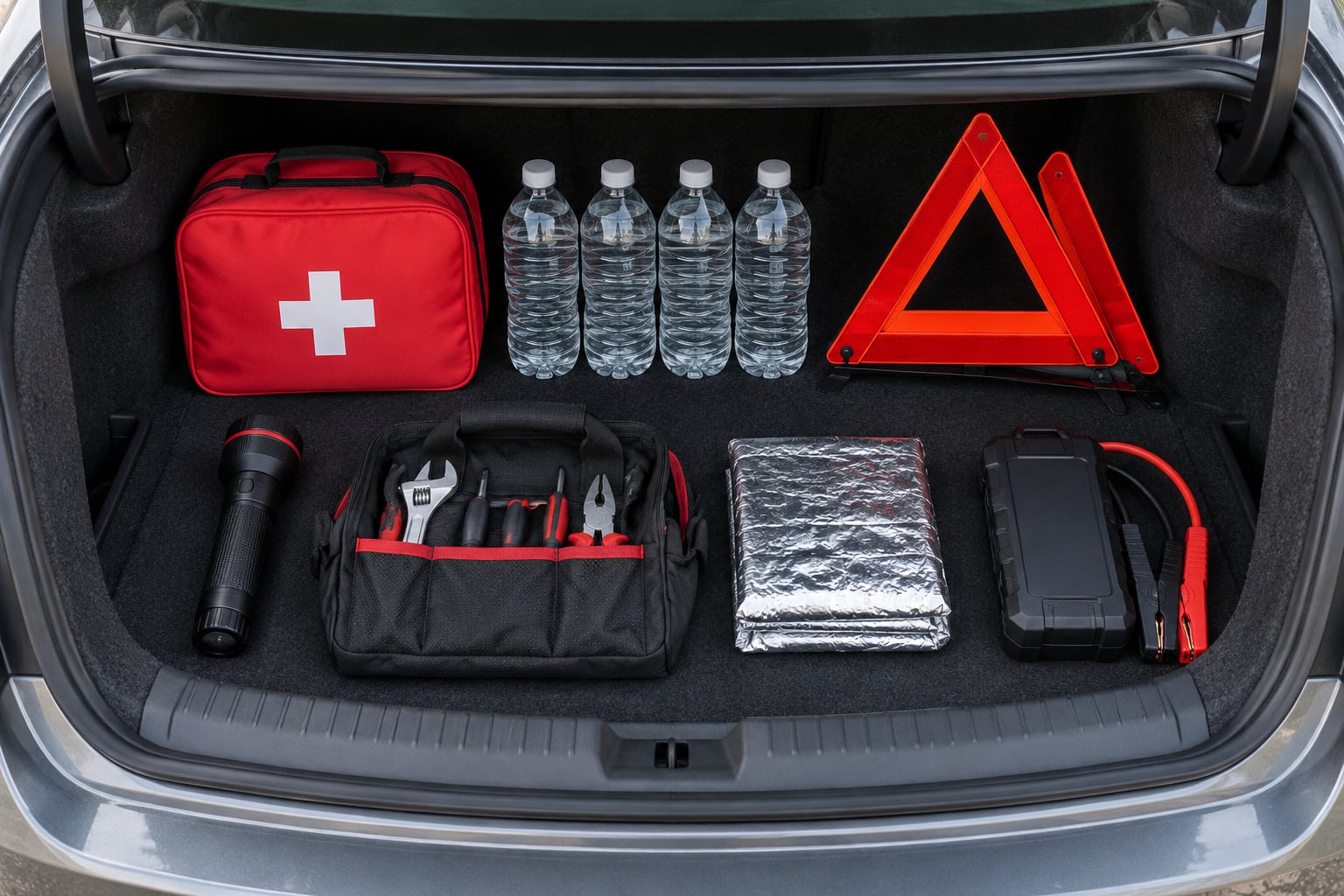
Every car should carry a small go-bag that handles the four things most likely to happen on a road trip: a flat tire, a dead battery, a crash or medical event, and bad weather that turns a drive into a wait. Knowing what to keep in your car for emergencies is not preppy nonsense. It is the difference between a five-minute roadside fix and an expensive tow at 11 p.m.
Most drivers carry three things: a phone charger, some old CDs, and a bottle of water that has been in the cup holder for years. I have been that driver. The list below is what actually earns its space, organized by job, plus where to store each item and when to replace it.
Table of Contents
- What to Keep in Your Car for Emergencies at a Glance
- 1. First-Aid Kit
- 2. Bottled Water
- 3. Flashlight
- 4. Tire Inflator and Puncture Repair Kit
- 5. Portable Jump Starter
- 6. Warning Triangles or LED Roadside Flares
- 7. Reflective Safety Vest
- 8. Basic Tool Kit
- 9. Power Bank and Charging Cable
- 10. Emergency Blanket and Weather Protection
- 11. Shelf-Stable Emergency Food
- 12. Roadside Assistance Information
- Frequently Asked Questions
- What should I keep in my car in case of an emergency?
- Where should I store an emergency kit in my car?
- How often should I check my car emergency kit?
- Do I need water and food in my car?
- What emergency supplies should I keep during winter or extreme heat?
- Are roadside flares or reflective triangles required?
- Conclusion
What to Keep in Your Car for Emergencies at a Glance
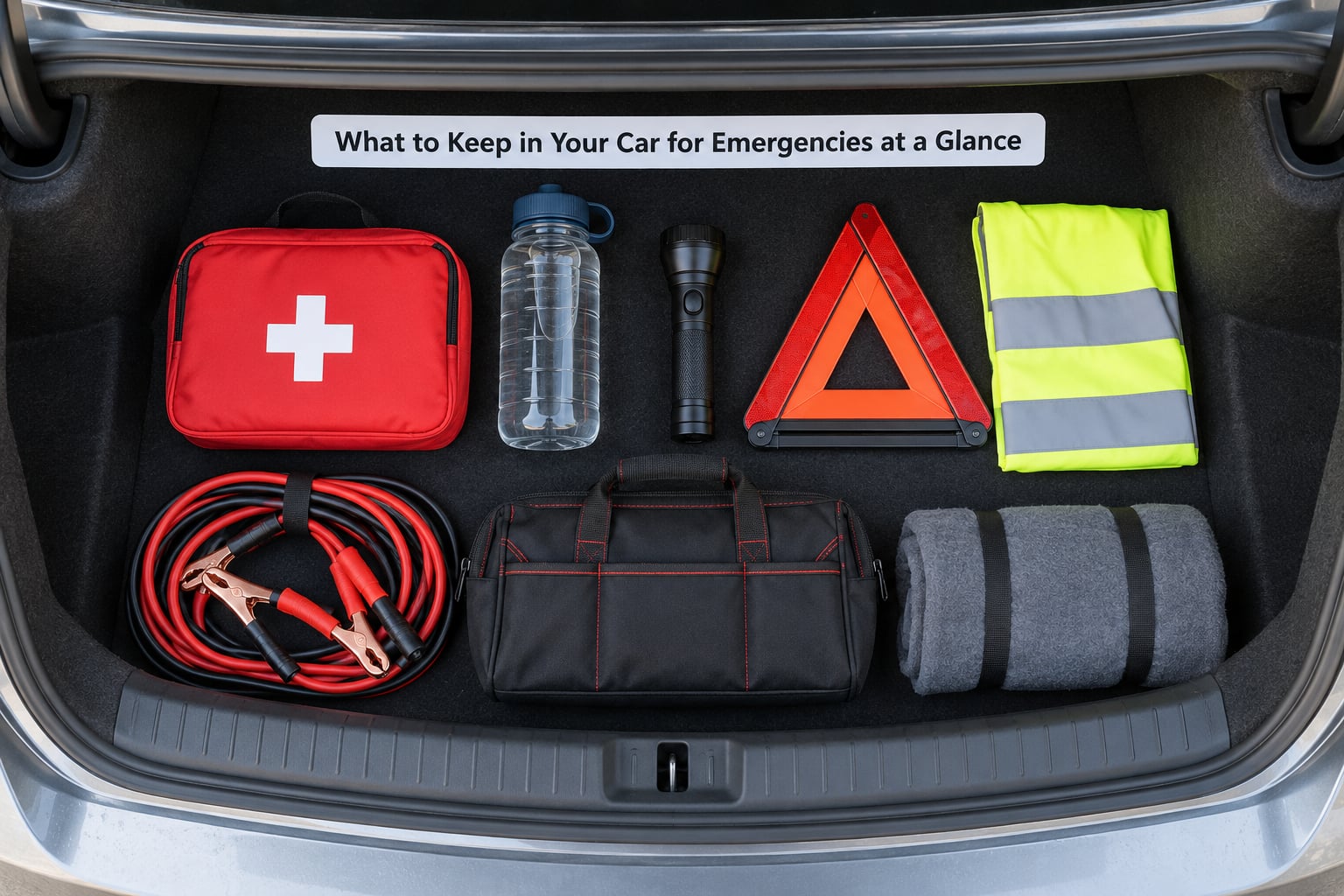
Pack one labeled bag with these 12 items: a first-aid kit, bottled water, a flashlight, a tire inflator and puncture repair kit, a portable jump starter, warning triangles or LED flares, a reflective safety vest, a compact tool kit, a power bank with cable, an emergency blanket, shelf-stable food, and paper copies of your insurance, registration and roadside assistance number.
| Essential | What it handles | Where it belongs |
|---|---|---|
| First-aid kit | Cuts, burns, minor crashes | Cabin, within reach of the driver’s seat |
| Bottled water | Dehydration, medication, cooling a burn | Trunk or cargo area |
| Flashlight | Night repairs, signalling | Cabin, not buried in the trunk |
| Tire inflator and patch kit | Low or punctured tires | Trunk with the tire tools |
| Portable jump starter | Dead battery | Trunk, reachable without emptying the car |
| Triangles or LED flares | Warning traffic behind you | Trunk with the vest |
| Reflective vest | Being seen at night | Cabin, in the door pocket |
| Tool kit | Jacks, lug wrench, small repairs | Trunk, top of the pile |
| Power bank and cable | Calls and offline navigation | Cabin, kept out of heat |
| Emergency blanket | Cold, rain, heat exposure | Go-bag |
| Shelf-stable food | Waiting for help | Go-bag |
| Roadside documents | Tow authorization, insurance details | Go-bag wallet, plus a photo on your phone |
1. First-Aid Kit
A first-aid kit is the one item people buy and never open. The fix is simple: buy it, then immediately spread the contents across your counter so you know what is in there.
The American Red Cross lists a core set for a basic home kit, and that core works fine in a car: adhesive bandages, gauze pads, adhesive tape, sterile scissors, tweezers, disposable gloves, antiseptic wipes, an elastic wrap, a CPR breathing barrier and a small hand sanitizer. Add anything your household actually needs, such as an antihistamine for a bug bite or a pain reliever you are comfortable taking.
Check expiry dates twice a year. Medication expires, adhesive loses its tack, and the glue on bandages turns into a mess in summer heat. Restock the kit after every use, even if you only used one bandage. The habit matters more than the kit.
2. Bottled Water
Water is the item drivers skip and stranded people miss most. A breakdown in summer with no cell service turns a two-hour wait into a medical emergency faster than almost anything else.
Carry at least one gallon per person in the vehicle, stored in a sealed container or factory-sealed bottles. If you use your own jug, check that the cap threads properly and that the container is free of cracks, because a wet trunk floor means the kit gets damp and everything in it ages faster.
Do not store water in a glass container, and do not leave a partly full plastic bottle where it can tip on every turn. Cheap bottled water from the grocery shelf works perfectly well and it costs less than the headache it prevents.
3. Flashlight
A phone screen dies quickly in the cold, which is exactly when a roadside change happens at night. A dedicated flashlight is the cheapest insurance in this entire list.
Look for an aluminum or rubber-bodied light with a bright main beam and a low setting you can leave on for hours. A headlamp is even better, since it keeps both hands free while you work with the lug wrench in the dark. Red or low modes preserve night vision and keep you from being blinded by headlights when a state trooper stops behind you.
For the batteries, lithium cells hold their charge for years and tolerate cold far better than alkaline. If your light takes replaceable cells, carry a spare set in a separate bag so a leaked cell in the light does not take out the spares too. Rechargeable lights work well but need a regular top-up on mains power, which is one more thing to forget.
4. Tire Inflator and Puncture Repair Kit
A portable air compressor is for a tire that is low but still holding air. A patch and sealant kit is for a small puncture in the tread. Neither one replaces a full-size spare, and both have limits you should know before you need them.
Sealant is a temporary fix. It works well for a nail or screw in the tread area, not for a blowout, a sidewall tear, or a hole larger than roughly a quarter inch, and it will not save a tire that has been run nearly flat. Once the sealant is injected, drive to a tire shop. Do not inflate that tire again later expecting it to hold.
Follow your tire and vehicle manufacturer instructions for pressure limits, and check cold pressures with a gauge every few months, not after the drive when the tires are hot. A donut spare is genuinely limited: usually slower, smaller, and often rated for roughly 50 miles at reduced speed. Read the sidewall or your manual so you know the number before you find it at midnight.
5. Portable Jump Starter
A portable jump starter, also called a booster pack, is a lithium battery with heavy cables attached. It gets a car running again in a parking lot without a second vehicle and without a working outlet nearby.
When shopping, look at the cable gauge and the clamp design. Insulated clamps with a built-in reverse-polarity alarm are worth the small difference, because clipping the leads backward is the single most common way people damage a booster pack. Check that the case has a built-in flashlight, since you will need one to see the terminals at night anyway.
Charge it fully before you drive somewhere remote, then top it up every three or four months. Lithium cells left at zero for months may need several attempts before they hold a charge again. Jumper cables still earn their space as a backup, and unlike the booster, they never lose charge in storage.
6. Warning Triangles or LED Roadside Flares
Warning devices tell approaching drivers to slow down before they reach you. Without one, a stopped car at night is a genuinely dangerous object sitting in a traffic lane.
Which one you carry depends on your state. Many states require reflective triangles and some prohibit open-flame flares near a dry roadside. Flares are the most visible option for miles, but they burn, they expire, and the glow sticks sold as a cheaper substitute give you maybe half an hour in the dark. Triangles are legal nearly everywhere, work indefinitely, and only fail if a passing truck takes them out. If your state allows both, carrying a set of triangles plus LED flares covers you completely.
Set your devices out as soon as you stop, before you start on the tire. Place them far enough back that you have warning space, and then move yourself out of the lane entirely.
7. Reflective Safety Vest
A high-visibility vest is what makes the whole roadside scene work, because it turns you from an unlit shape into something drivers recognize early.
One reflective vest per adult, in fluorescent yellow-green or orange with reflective striping, costs very little and does more for your safety at night than any other small item in the bag. It only works if you wear it, so store one in the driver’s door pocket or clipped to the grab handle rather than at the bottom of the trunk. Keep it out of the passenger compartment in the way of an airbag, and replace it if it gets creased or grimy, since reflectivity drops with wear.
8. Basic Tool Kit
A compact tool kit is for small jobs, and it is worth setting expectations: it is not a substitute for a mechanic. Nothing in a car kit fixes a cracked engine block or a failing alternator.
The reliable core is a tire pressure gauge, a lug wrench or wheel key that fits your vehicle’s fasteners, the jack your car came with, a wheel chock, a multi-bit screwdriver, a small set of wrenches, a utility knife, duct tape, and a pair of nitrile gloves. Add a tow strap or ratchet straps if you drive off-road or tow anything, and a folding shovel if you see snow.
Keep it in a small tray or a rigid bin so you can find a single wrench instead of dumping the whole kit onto wet gravel. A square of cardboard on the ground keeps your clothes and your kit out of the muck while you work underneath, which sounds trivial until you are on a highway shoulder in the rain.
9. Power Bank and Charging Cable
A dead phone is a real emergency because it is the emergency number, your map, and your ability to tell someone where you are. A charged power bank with a cable you know fits is the simplest fix there is.
Carry a 10,000 mAh or larger pack and the specific cable your phone needs, since bundled cables are often charge-only. Keep the pack indoors when the car is parked for long periods, because heat and cold cycling degrades batteries far faster than normal use. Extreme heat can also damage a phone or tablet left on a dashboard, so take devices inside with you rather than leaving them in a hot car.
Download your offline maps before a trip. A power bank does not help if the phone cannot see a tower and the map was never downloaded.
10. Emergency Blanket and Weather Protection
Hypothermia and heat exhaustion kill in opposite directions, so your weather protection needs to work both ways.
A mylar emergency blanket reflects body heat and packs down to the size of a paperback, which makes it the most efficient item per ounce in the whole bag. It is a poor wind break, so pair it with a rain poncho or a heavy-duty tarp if you drive somewhere remote. In heat, a reflective blanket becomes a shade cloth over the windshield or a sunshade for an unconscious person. Add one warm layer per person, plus gloves and a hat, since wet clothing plus wind kills faster than cold alone.
11. Shelf-Stable Emergency Food
You are not storing a week’s worth of meals. You are storing enough for a few hours of waiting that runs long.
Choose food that needs no refrigeration, no water to prepare, and no cooking. Good picks are granola bars, nut and seed packs, energy bars, dried fruit, jerky, unsalted nuts, canned food you can eat cold with a pull tab, and a hard candy reserve. Dense calories matter more than variety here.
Skip anything that shares an expiry date with your enthusiasm for dusty granola. Check dates twice a year and replace them, and remember a power outage at home after a storm is a realistic scenario where the kit in the car beats anything in the pantry.
12. Roadside Assistance Information
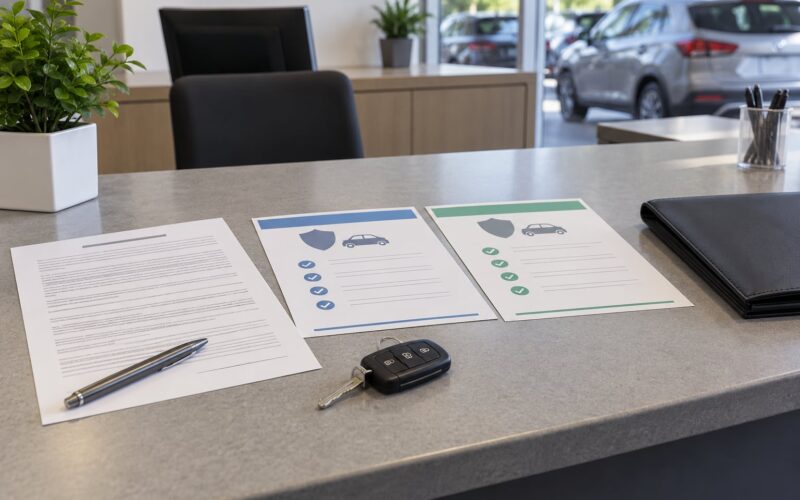
Without the right number, the rest of the kit might as well be at home. People often assume a full-coverage policy pays for a tow or a jump, and many do not, or only cover a limited number of miles.
Write these on paper and keep them in the same bag: your roadside assistance or motor club number, your insurance company’s claims line, your vehicle identification number and plate, the towing company your insurer uses, and a contact who can reach you. Do not rely on a phone photo alone. Screens crack, batteries die, and file attachments that live in a phone app are useless without signal.
Read your own policy once and find out exactly what roadside coverage you have, including limits, mileage caps, and whether your existing car covers towing a trailer or spare tire. It takes ten minutes and it removes the most expensive surprise in this entire list.
Frequently Asked Questions
What should I keep in my car in case of an emergency?
Keep the items that handle a roadside or weather emergency without leaving the vehicle: a first-aid kit, water, a flashlight, a portable jump starter, a tire inflator with patch kit, warning triangles or LED flares, a reflective vest, a compact tool kit, a power bank and cable, an emergency blanket, shelf-stable food, and paper copies of your insurance and roadside assistance details.
Where should I store an emergency kit in my car?
Store the kit in one labeled bag or rigid bin in the trunk or cargo area so it stays together and dry. Keep the flashlight, reflective vest, and paper documents inside the cabin where the driver can reach them without exiting, and keep heavy items low and secured so they cannot shift in a sudden stop or interfere with airbags.
How often should I check my car emergency kit?
Inspect the kit twice a year, in spring and again in early autumn, and always restock it after any use. Check expiration dates on first-aid supplies and food, verify spare batteries still hold a charge, and confirm tire sealant has not congealed or expired. Do the same quick check before a long road trip or before winter arrives.
Do I need water and food in my car?
Yes, especially if you drive alone, travel through desert or remote areas, or face winter conditions where a stranded driver can last far less time than expected. Carry at least one gallon of water per person in a sealed container or factory-sealed bottles, plus dense, shelf-stable food that needs no refrigeration or cooking.
What emergency supplies should I keep during winter or extreme heat?
In winter add a folding shovel, a bag of gravel or cat litter for traction, an ice scraper, a warm layer and gloves per person, and a blanket you can also wedge under a spinning tire. In extreme heat add extra water, a reflective tarp for shade over the vehicle, electrolyte packets, and a plan to stay with the vehicle rather than walking away from it.
Are roadside flares or reflective triangles required?
Requirements vary by state, and many states require reflective triangles while restricting or banning open-flame flares near a dry roadside. Reflective triangles work indefinitely and are legal nearly everywhere. Flares are visible from much farther away but expire and burn. Check your state vehicle code, and if both are allowed, carrying one set of each covers every case.
Conclusion
Start with your owner’s manual, because it tells you what your car came with and what the donut spare is actually rated for. Then gather the six items most likely to be used: the first-aid kit, flashlight, jump starter, tire inflator and patch kit, reflective vest with warning devices, and the water.
Put everything in one labeled bag you can reach, keep the documents on paper, and set two calendar reminders a year to check expiry dates and recharge the batteries. If you are still deciding where to begin, most people get the most value by filling one gap each month instead of buying everything at once.