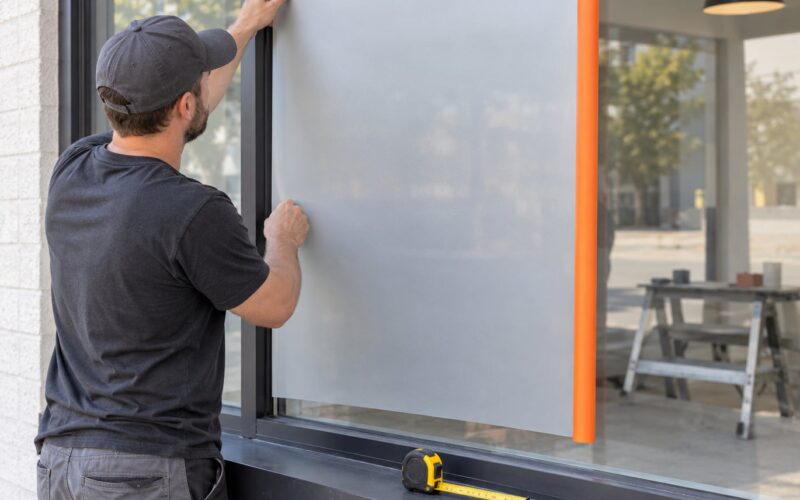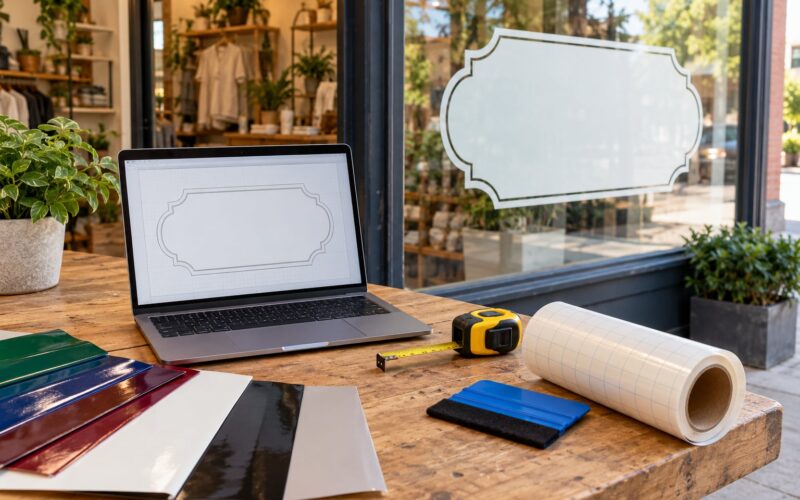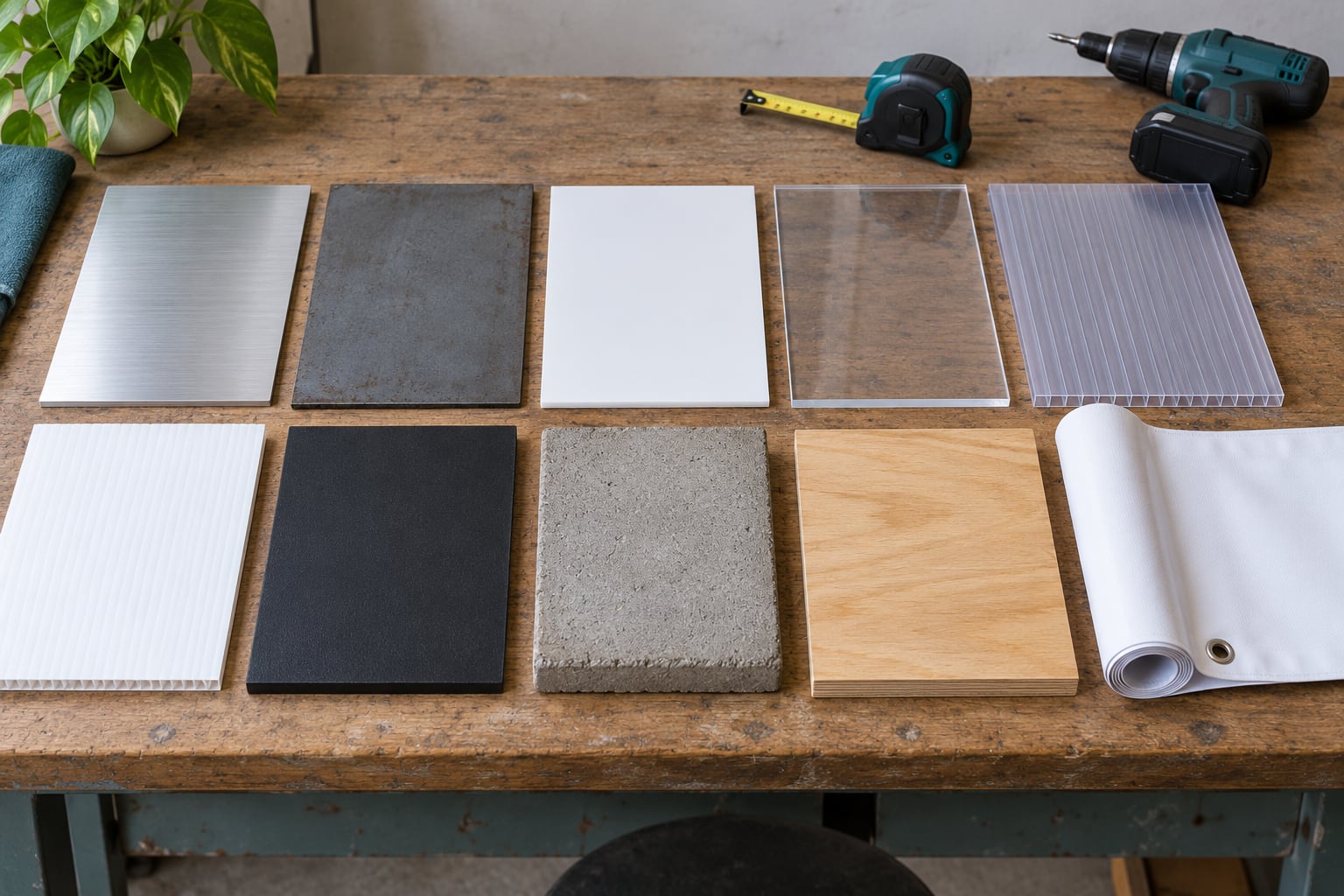
If you want one answer to the best sign materials for outdoor durability question: aluminum and aluminum composite panel (ACM) for permanent signs, PVC or HDPE for signs that need three to five years, and corrugated plastic for short-term notices. What extends any of them is the finish — overlamination or powder coating — not the substrate alone.
I have watched businesses replace the same yard sign three times in one summer, then spend more on a single ACM panel that is still readable a decade later. Material choice is where durability actually gets decided, and it is decided once.
This guide walks through ten outdoor sign materials with expected lifespan, weather resistance, maintenance burden and the jobs each one suits. It also covers the four stressors that destroy signage outdoors and the finishes that block them, because the substrate is only one layer of three: the panel, the ink, and the protective laminate on top.
Table of Contents
- Best Sign Materials for Outdoor Durability at a Glance
- 1. Aluminum
- How Aluminum Compares for Outdoor Signage
- 2. Stainless Steel
- 3. PVC
- 4. Acrylic
- 5. Polycarbonate
- 6. Corrugated Plastic
- 7. HDPE and Other Outdoor Plastics
- 8. Concrete
- 9. Engineered Wood
- 10. Vinyl Banner and Flexible Signage
- What Actually Destroys an Outdoor Sign
- How to Choose for Your Location and Lifespan
- Frequently Asked Questions
- What is the best material for outdoor signage?
- What is the best material to make an outdoor sign?
- How long do PVC signs last outdoors?
- What sign material lasts the longest outdoors?
- What sign material is best for coastal areas?
- How can I stop an outdoor sign from fading?
- Conclusion
Best Sign Materials for Outdoor Durability at a Glance
| Material | Best outdoor use | Weather resistance | Maintenance | Typical lifespan | Main drawback |
|---|---|---|---|---|---|
| Aluminum | Permanent storefront, address and directional signs | High; will not rust, fades evenly | Low; rinse annually | 7 to 15 years powder coated | Shows dents and scratches on soft alloys |
| Stainless steel | Monuments, premium plaques, architectural panels | Very high; corrosion and impact resistant | Very low | 20 years and up | Heaviest and most expensive option |
| PVC (Sintra) | Mid-term building signage, sale boards, reusable signs | Good with UV ink and laminate | Low; wash with soap and water | 3 to 7 years laminated | Softens and bows in sustained heat |
| Acrylic | Illuminated channel letters, dimensional letters, window graphics | Good; optical clarity, light transmission | Low but scratches easily | 5 to 10 years | Brittle at thin gauges, expands in heat |
| Polycarbonate | High-traffic, vandalism-prone and high-wind locations | Very high; shatter resistant | Low | 5 to 10 years | Costs more and scratches more than acrylic |
| Corrugated plastic | Yard signs, event notices, temporary promotions | Waterproof but weak in heat and wind | None; replace when bent | 2 to 6 months outdoors | Warps and becomes brittle fast |
| HDPE | Garden, construction and informational signs | Very high; chemical and moisture resistant | Low; hose it off | 5 to 10 years | Hard to print on without a primer or flame treatment |
| Concrete | Monuments, address markers, development and civic signs | Excellent; ignores weather entirely | Very low once installed | 25 years and up | Heavy, expensive, needs equipment to set |
| Engineered wood | Rustic, decorative and farm or ranch signage | Fair once sealed on all faces | High; reseal every 1 to 2 years | 3 to 8 years maintained | Rots, cracks and attracts insects if unsealed |
| Vinyl banner and mesh | Temporary outdoor advertising and event graphics | Fair; UV fades and wind tears it | None; replace each season | 1 to 3 years | Becomes a sail without wind slits or mesh |
1. Aluminum
Aluminum is the default answer for most permanent outdoor signs, and for good reason. It weighs a fraction of steel, never rusts, takes printed graphics or applied vinyl cleanly, and bends or cuts without breaking.
A powder-coated or laminated aluminum sign commonly lasts 7 to 15 years outdoors. It is the substrate behind street and address signs, storefront panels, real estate markers, parking signs and directional blades.
How Aluminum Compares for Outdoor Signage
Aluminum handles rain, sun and freeze-thaw cycles without absorbing water, so it will not swell or delaminate the way composite panels can. In coastal air it stays put where bare mild steel would pit and flake within a couple of seasons, provided the finish is intact.
The finish is what decides the outcome. Powder coating gives an even color and blocks UV, while an overlaminate protects a printed surface and adds gloss or matte. Tell a shop you want a UV-resistant laminate, or ask for a 5052 or 6061 alloy panel rather than the softest grades, which dent when a car door clips a post.
One more detail that gets missed: stainless steel fasteners. Aluminum touching untreated steel hardware causes galvanic corrosion around the mounting holes, and that rust streak will be visible long before the panel gives out.
2. Stainless Steel
Stainless steel is the most weatherproof option on this list, and it is usually the heaviest bill too. Grade 304 stainless resists rust and staining in ordinary conditions, and grade 316 adds molybdenum for salt-heavy coastal locations.
Choose it when the sign is permanent, architectural or a monument that has to look right for decades. Premium plaques, bank identification, building name panels and civic markers are typical stainless steel jobs. Impact resistance is another advantage: it shrugs off parking-lot knocks and vandalism.
The tradeoff is weight and fabrication cost. Stainless steel panels need professional welding, mounting engineering and often a concrete base. It is a poor choice for temporary signage, but it is hard to argue against for anything long-term.
3. PVC
Rigid PVC board, sold as Sintra by the best-known brand, is the workhorse for mid-term signs. It is moisture resistant, light, easy to cut, and takes vinyl graphics, screen printing or paint well. One person can mount a PVC panel with a drill and screws.
With UV-stable ink and an overlaminate, expect roughly 3 to 7 years outdoors. Unlaminated PVC in full sun is a different story: the face chalks, the edges yellow and the panel can bow between its fasteners. Heat is the real enemy, since PVC softens and expands in sustained high temperatures.
For a laminated panel, keep the sign slightly larger than the mounting area so thermal expansion has somewhere to go. People chasing cheap durable material for temporary outdoor signs often end up with thin-gauge PVC that curls after one hot week.
4. Acrylic
Acrylic is the material to pick when optical clarity matters. It transmits light cleanly, which is why it dominates illuminated channel letters, light boxes, dimensional letters and window graphics, where an LED or neon tube sits behind the face.
Outdoors, laminated acrylic signs hold up around 5 to 10 years. Two cautions come with it. Acrylic expands more per degree than aluminum or steel, so large panels need proper mounting clearance, and it scratches, showing haze that ruins light transmission over time.
Cleaning matters too. Skip ammonia-based glass cleaners and solvent wipes; soap and water plus a soft cloth keeps acrylic looking new. In wind-heavy spots, thicker gauge acrylic or a polycarbonate face will handle impact far better.
5. Polycarbonate
Polycarbonate is the shatter-resistant alternative to acrylic, and for a busy parking lot, a school entrance or a low-traffic roadside site it is the smarter pick. It takes roughly 10 times more impact without cracking.
Lifespan in outdoor use matches acrylic at roughly 5 to 10 years, with better resistance to hail, vandalism and freeze-thaw cracking. Many safety signs, machine guards and transit graphics use it for exactly that reason.
The two drawbacks are cost and surface. Polycarbonate costs more per square foot than acrylic and scratches more readily, so it usually makes sense only where impact is a genuine risk. It is also slightly hazy compared with optically clear acrylic, which matters less when the sign is not backlit.
6. Corrugated Plastic
Corrugated plastic, better known as Coroplast or Coroplast-type sheet, is the cheapest way to get ink onto a rigid board. It is waterproof, weighs almost nothing, and cuts with a utility knife, which is why every campaign, election and garage sale uses it.
Here is the honest part: it is a short-term material. Outdoors in full sun and wind, expect 2 to 6 months before the face fades and the corners start curling. Forum posts about warped Coroplast signs usually trace back to heat and thin gauge, not to the brand.
If you need it longer, use 10 mil sheet rather than 4 mil, mount it flat against a backing board rather than at the corners, and choose ink rated for exterior use. That can stretch its life, but it will never match a metal or ACM panel.
7. HDPE and Other Outdoor Plastics
HDPE is the plastic you should be thinking of when a sign lives near soil, fertilizer, grease or water. It is chemically resistant, flexible, corrosion proof and needs almost no upkeep. Garden markers, construction site notices, informational boards and utility markers are its natural homes.
Weathered HDPE signs commonly run 5 to 10 years. The material will not crack in cold weather the way rigid PVC does, and it is fully recyclable, which matters more than it sounds given how much signage ends up in landfill.
The catch is decoration. HDPE has a low surface energy, so inks and adhesives bead up unless the face is primed, flame-treated or laser-etched first. Ask for routed or engraved text rather than a printed graphic when you pick this material.
8. Concrete
When permanence is the goal and the sign is never moving, concrete has no competition. Precast or poured concrete address markers, development identification signs, monument bases and civic markers routinely last 25 years or more, because the material simply does not degrade in weather the way coated panels do.
It handles freeze-thaw, rain, salt and daily sun without a finish schedule. Colors can be pigmented through the mix or applied as stain and sealed, so a well-poured sign still looks intentional after a decade of hard winters.
What you give up is flexibility. Concrete is heavy, needs a proper footing and usually a crane or equipment to set, so it makes sense for a monument or a new development rather than a rebrand. Repainting lettering on a concrete monument is normal maintenance, and a surface-mounted sign is often the better call.
9. Engineered Wood
Engineered wood covers exterior-grade plywood, MDO plywood and treated lumber, and it suits rustic, farm, ranch and cabin branding where the material itself is part of the look. MDO is medium-density overlay, a sealed face that takes paint well.
Sealed on every face and edge, well-maintained wood signage can run 3 to 8 years. Unsealed, it rots, cracks along the grain and attracts insects within two seasons. Forum consensus is consistent on this point: a well-sealed plywood sign can last several years, while MDO, ACM or aluminum run considerably longer.
Seal all six faces, not just the front, and use exterior screws. Plan on resealing every one to two years, and check for swelling around fasteners each spring. In a wet or coastal climate, an overhanging cap on top of the sign prevents most of the water damage.
10. Vinyl Banner and Flexible Signage
Flexible media is where large-format outdoor advertising lives. 13 oz scrim vinyl banner is the standard for storefront events, construction wraps and short campaigns; mesh banner lets wind pass through for fences and long runs.
Expect 1 to 3 years depending on sun exposure. UV fades printed scrim vinyl from the front, and a solid banner without wind slits or mesh acts like a sail, which tears the grommets and the top hem first.
Mount with even tension across all edges, add wind slits or use mesh in exposed spots, and roll the banner on a tube rather than folding it, since creases crack the vinyl in cold weather. It is a rental-grade material, not a permanent one.
What Actually Destroys an Outdoor Sign
Four stressors cause almost every outdoor sign failure, and knowing them explains the lifespan numbers above.
- UV degradation breaks down pigments, weakens adhesives and chalks plastic surfaces. This is why an overlaminate matters more than most people expect.
- Moisture ingress at edges and mounting holes causes delamination, lifting print and rot in wood cores.
- Freeze-thaw cycling cracks concrete and wood, and opens seams where water gets in.
- Wind load flexes and tears flexible media and can pull fasteners out of hollow posts.
The durable approach is to treat the substrate, the ink and the overlaminate as three separate systems. Each one handles a different stressor, and a weak layer ruins the other two.
How to Choose for Your Location and Lifespan
Match the material to four things: how long the sign needs to read, what weather it stands in, how it will be mounted, and how far away people read it from.
Coastal and salt-air sites should rule out bare mild steel and favor powder-coated aluminum, 316 stainless or concrete. Desert and high-UV climates need an overlaminate on any printed surface, including aluminum. Freeze-thaw areas favor aluminum, HDPE and concrete over anything wood or paper-based. High-wind and vandalism-prone locations need polycarbonate faces, stainless fasteners and proper post depth.
Viewing distance also sets the substrate. A sign read from across a highway needs aluminum or reflective sheeting on rigid metal stock, while a directional sign read at arm’s length can be PVC or acrylic. Backlit faces need a translucent, stable material such as acrylic or a lightbox-grade panel.
Finishes deserve their own budget line. Gloss overlaminate saturates color and wipes clean, matte reduces glare and hides scuffs but mutes color. Anti-graffiti coatings make removal easier in parking lots. Ask specifically for an exterior overlaminate, because many standard laminates are indoor-only.
Frequently Asked Questions
What is the best material for outdoor signage?
Aluminum and aluminum composite panel are the best all-around choices for permanent outdoor signage. Powder-coated or laminated aluminum typically lasts 7 to 15 years, while ACM runs longer because it is a bonded composite with a rigid core. Use PVC or HDPE for signs that need three to seven years, and corrugated plastic only for short-term notices lasting weeks to a few months.
What is the best material to make an outdoor sign?
It depends on who fabricates it. Corrugated plastic and MDO plywood are friendly for DIY projects because they cut with hand tools and mount with screws. Aluminum, ACM, stainless steel and concrete are shop-only jobs that need professional cutting, welding, powder coating and mounting hardware. Always seal edges and edges of holes, since water entering there causes most early failures.
How long do PVC signs last outdoors?
A laminated rigid PVC sign usually lasts 3 to 7 years outdoors. Unlaminated PVC exposed to full sun is closer to 1 to 2 years, and the face chalks and yellows. Use UV-resistant ink plus an exterior overlaminate, mount with expansion clearance so the panel can flex in heat, and expect bowing in sustained high temperatures.
What sign material lasts the longest outdoors?
Concrete and stainless steel last longest. Precast or poured concrete monuments and address markers routinely run 25 years or more, and stainless steel panels commonly exceed 20 years. Among lighter substrates, powder-coated aluminum is the strongest performer at 7 to 15 years. Reflective sheeting supplied on rigid metal sign stock carries a service life of roughly 10 to 12 years.
What sign material is best for coastal areas?
Salt air rules out bare mild steel and untreated aluminum hardware. Use powder-coated aluminum, grade 316 stainless steel, HDPE or concrete, and specify stainless fasteners so galvanic corrosion does not streak the panel. Rinse salt off with fresh water on a schedule, twice a year at minimum near the shore, and inspect mounting points for early rust staining.
How can I stop an outdoor sign from fading?
The substrate resists water and weather; the ink resists light. To stop fading, specify UV-resistant ink and an exterior overlaminate, which is the single most effective step. For aluminum, powder coating blocks UV on painted panels. On printed faces, add wind slits or mesh for banners, mount with expansion clearance, and clean gently twice a year so dirt does not hold heat against the surface.
Conclusion
Start by naming how long the sign has to read, then pick a material that suits the weather and the mounting. Aluminum and ACM for permanent work, PVC or HDPE for mid-term needs, corrugated plastic or banner for short-term promotions.
Budget for the finish as well as the panel. A UV-resistant overlaminate, powder coating and stainless fasteners do more for real lifespan than upgrading to the next material up. If you are weighing substrates for a specific site, work through the exposure, the lifespan and the install method before you order.