To increase foot traffic to a strip mall store, you need three things working together: a storefront a driver can read from the road in two seconds, one clear reason to walk in this week, and a way to count who came. Fix visibility first, then run a single specific offer, then measure. This guide walks through all eight steps in that order.
Strip mall tenants have a different problem than enclosed-mall stores. Nobody is funnelled past your door, so nobody arrives by accident. What attracts people to malls in general is convenience, variety and a reason to linger, and in a strip center the only two you control are your own storefront and your own offer.
Table of Contents
- What You Need
- Step-by-Step: How to Increase Foot Traffic to a Strip Mall Store
- Step 1: Make the Store Easy to Notice
- Step 2: Give Shoppers a Reason to Enter Today
- Step 3: Use Window and Sidewalk Displays
- Step 4: Promote the Store Locally
- Step 5: Build Partnerships With Nearby Businesses
- Step 6: Host a Reason to Visit
- Step 7: Make the In-store Experience Worth Sharing
- Step 8: Know Whether the Plan Brought People In
- Step-by-Step Summary
- Common Mistakes
- Frequently Asked Questions
- What is the fastest way to increase foot traffic to a strip mall store?
- How often should a strip mall store change its window display?
- Do community events actually bring more customers to small stores?
- What kind of signage is most visible to people driving through a strip mall?
- How can a strip mall business measure whether local marketing works?
- How do I encourage customers to come back after their first visit?
- Conclusion
What You Need
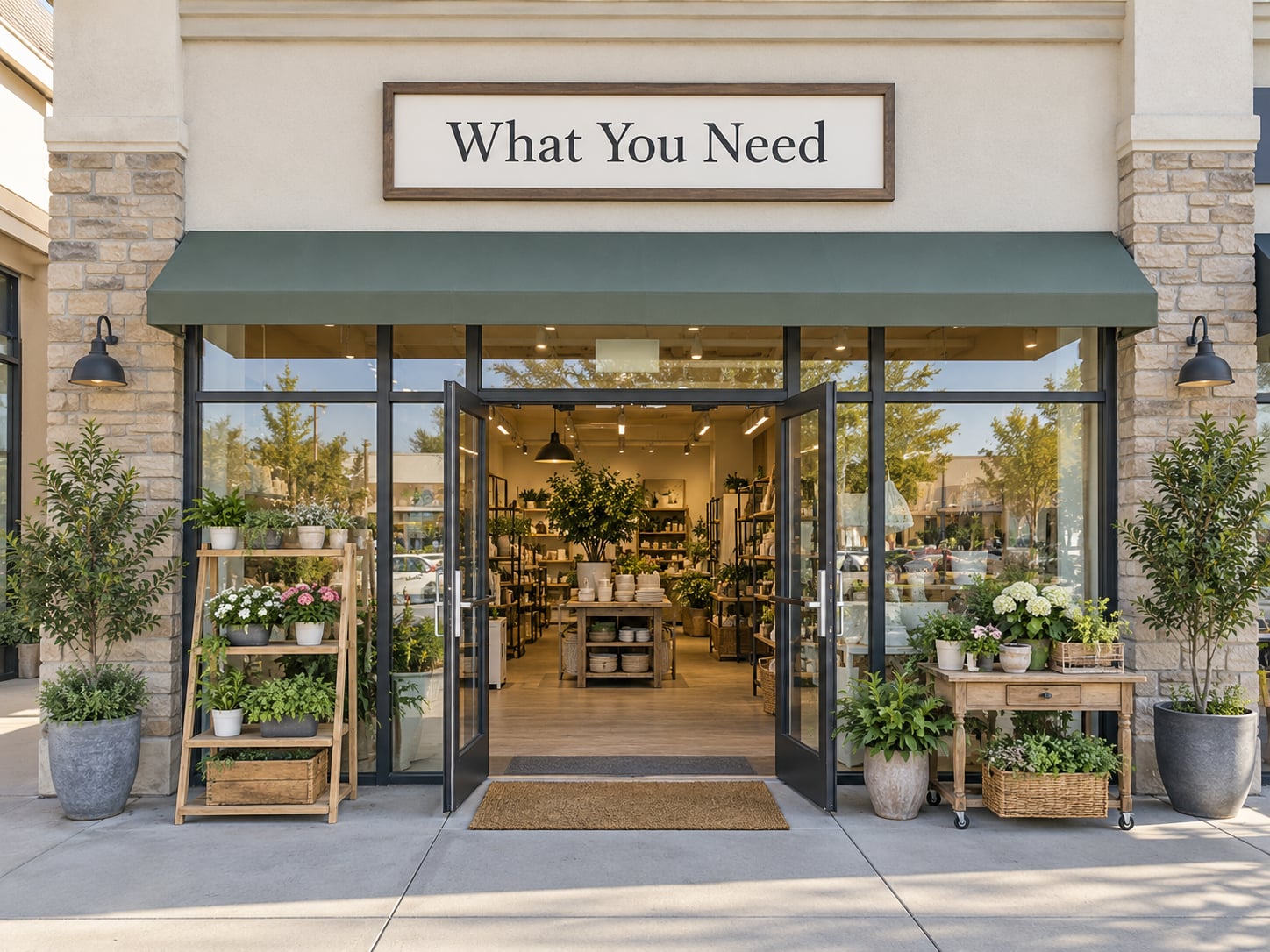
Most failed traffic plans start because the owner began with tactics instead of prerequisites. Spend an hour on these six items first, and the rest of the work gets much cheaper.
- A defined target audience. Who lives or works within a 10-minute drive, and what do they need? A gift shop and a phone repair shop need completely different messages.
- A baseline count. Two weeks of manual counts plus your transaction numbers, so you can tell whether anything changed.
- A monthly promotional budget. Pick the tier you can sustain for six months, not one you can afford once.
- Signage you control. Window graphics, an A-frame or sidewalk sign, and anything mounted on your own storefront.
- A named owner per task. Someone has to change the window every two weeks and answer the listing reviews.
- One measurement method. Pick it now. Manual door counts plus unique offer codes cost almost nothing and are good enough.
That last item matters more than owners expect. Without a baseline, every campaign is a guess, and the guess usually goes the wrong way: more of what already worked, less of what did not.
Step-by-Step: How to Increase Foot Traffic to a Strip Mall Store
Step 1: Make the Store Easy to Notice
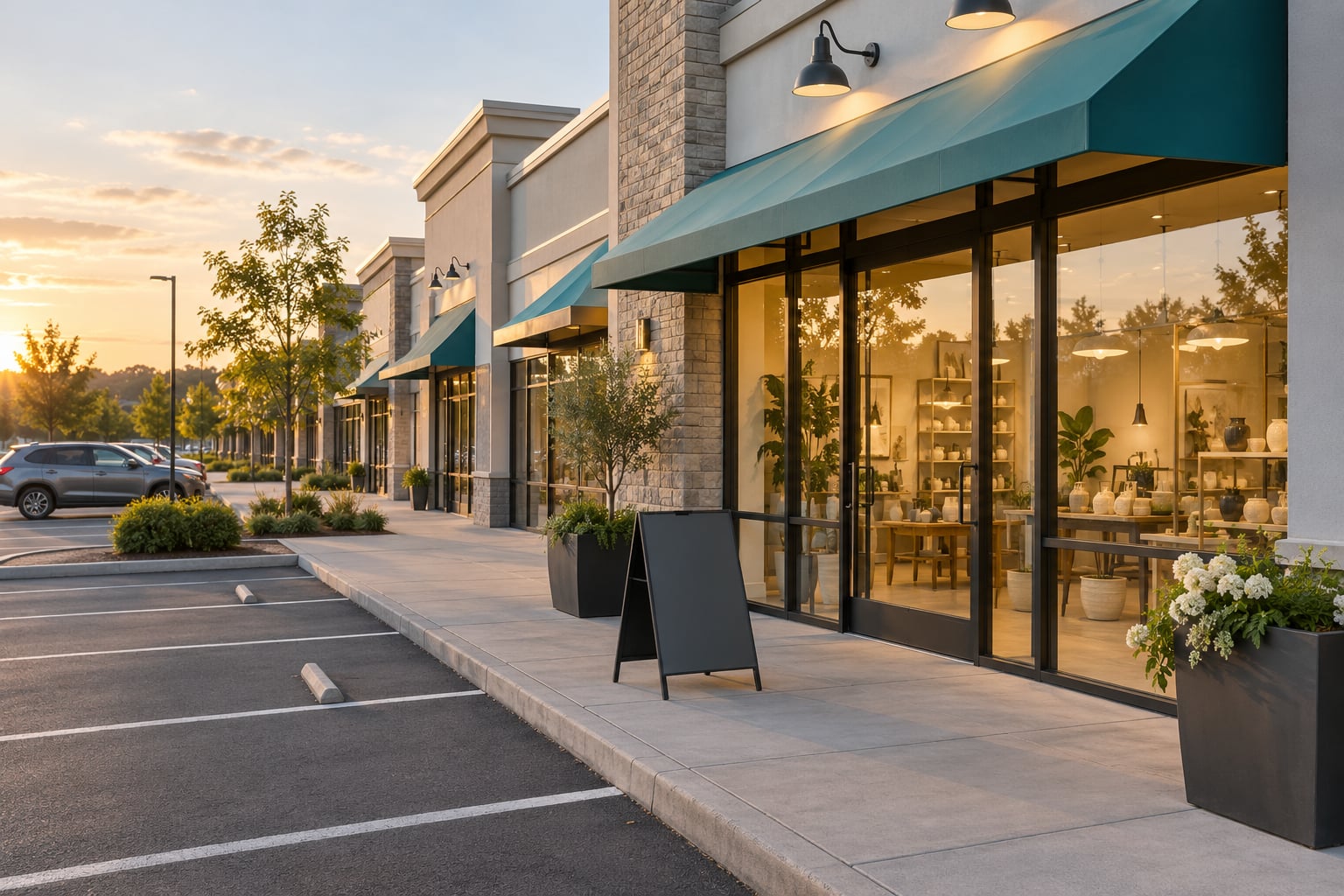
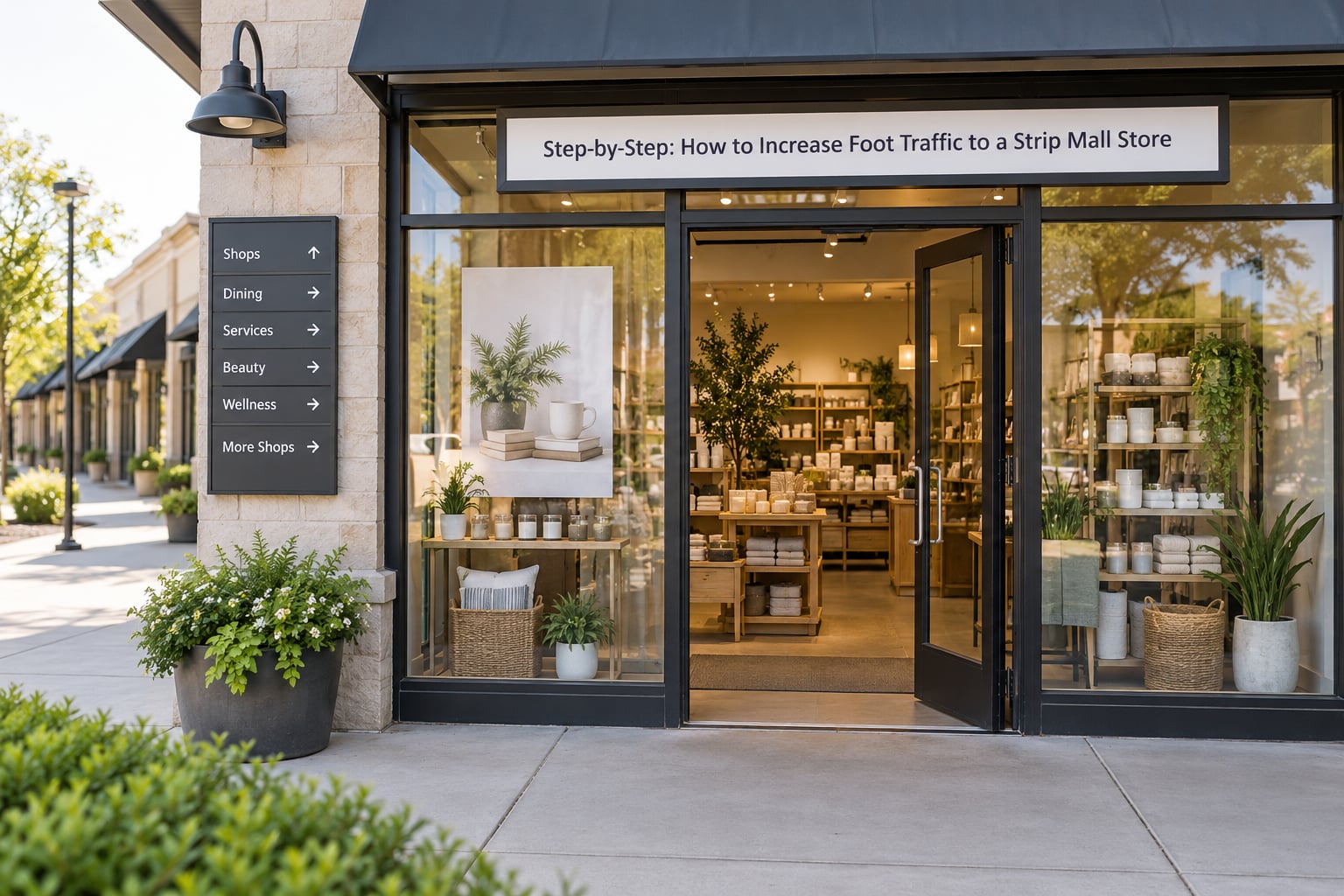
Start with a visibility audit. Park in the lot at the same three times of day a customer would, and write down what you can read from the main road: the business name, what you sell, and the current offer. If the name takes longer than two seconds to parse, you have your first project.
Then fix the basics in this order: exterior lighting that works after dark, a window free of dusty surplus, a door that opens without a hard yank, and a sign panel at eye level from a car, not up at roofline height. Add a distinctive marker near the entrance, a branded mat, a flag or a planter row, so people who park can find the right door again on the way back.
Timing: signs and lighting in a weekend. Success signal: a stranger can name your store and what it sells from the far lane of the parking lot.
Step 2: Give Shoppers a Reason to Enter Today
Choose one weekly offer tied to a problem your customer already has, not a vague 10 percent off everything. A coffee shop offers a free refill upgrade, a salon offers a fringe refresh before a weekend, a repair shop offers a free diagnostic. Specific beats bigger.
Repeat the same message in the window, on the sidewalk sign, on the Google Business Profile post, and in the staff’s first sentence. A consistent message gets remembered; three different offers in one week gets none of them remembered.
Timing: one standing offer, refreshed weekly. Success signal: people who show up can tell you what the deal was.
Step 3: Use Window and Sidewalk Displays
A window display has one job: make someone look up from their phone. Feature a single best-seller or a seasonal need at eye level, keep the composition simple, and put the same words on the sidewalk sign. Displays set six inches off the glass get read by drivers; tall shelves of product get read by nobody.
Refresh every two to three weeks. The owner rotating one display more often than anyone else on the block becomes the recognizable tenant.
Timing: two hours per refresh. Success signal: door counts rise in the week after each change.
Step 4: Promote the Store Locally
Local search is the highest-return channel for a single-location store, because the people who want what you sell are already driving past you. The most consistent advice from operators is to submit accurate location data to the major aggregators and then complete every profile properly, not just Google: Google Business Profile, Yelp, Apple Maps, and the directories that matter for your category.
Keep the name, address, phone and hours identical everywhere. Ask customers for a review, keep the business category accurate, and post the weekly offer on your profile. Add a short post describing the storefront and the entrance so someone who has never been there can find you the second time.
Timing: two hours to fix profiles, then weekly posts. Success signal: direction requests and calls rise, and your profile shows more discovery searches than before.
Step 5: Build Partnerships With Nearby Businesses
This is the part nobody in this industry writes about. You share a parking lot and a directory with tenants who have the same problem you do, and most of them have never talked about it. Walk next door and propose something small: a shared coupon, a referral card, or one evening where both of you hand out cards and refresh the window displays.
Ask management for directory placement, better wayfinding, permission for approved sidewalk signage, and inclusion in center-wide promotions. Tenants organizing a single shopping night usually bring more new faces than any single store can produce alone, because people arrive for the event and stay for the second stop.
Timing: one walk-around per month. Success signal: you can name three co-tenants you actively trade with.
Step 6: Host a Reason to Visit
Run something low-cost and recurring rather than a single big launch. A product demonstration, a fifteen-minute mini consultation, a seasonal display opening, a workshop for a local club, or a community session all work, because the calendar entry is what people put in their phone.
Pick a day and time, keep it under an hour, give it a specific offer, and follow up afterward by asking attendees to sign up for your list or text alerts. Recurring dates beat one-offs because the second one is easier to promote than the first.
Timing: monthly. Success signal: attendance plus a measurable jump in the following week’s door count.
Step 7: Make the In-store Experience Worth Sharing
Greet within about thirty seconds. Keep your best sellers and your highest-margin items at the front rather than buried, answer the two or three questions every visitor asks, and remove friction at checkout. Service recovery matters as much here as the first impression: a wrong order fixed on the spot is what people repeat to friends.
At the end of the visit, ask permission to collect contact details for a specific reason: text alerts, a seasonal reminder, a restock notice. Customers who opted in give you the cheapest traffic you will ever buy.
Step 8: Know Whether the Plan Brought People In
Count the door twice a day at the same hours for two weeks, and separate new visitors from returning ones using loyalty sign-ins or offer codes. Then watch four numbers: door count, transactions, conversion rate (transactions divided by door count), and repeat visits. Foot traffic without conversion is worthless, and an owner with high traffic and low sales has a pricing or merchandising problem, not a traffic problem.
Change one thing at a time and give each change two weeks. Most tactics here pay off on a timeline you can plan around: signage and window work shows up in days, local search in weeks, loyalty and direct outreach in a month or two.
Step-by-Step Summary
- Fix visibility first (days, minimal cost): lighting, readable signage, clear directory presence.
- Run one weekly offer (days, low cost): one specific message repeated everywhere.
- Refresh the window every two to three weeks (days, low cost).
- Complete and post to your local listings (weeks, low cost).
- Trade with three co-tenants (weeks, minimal cost).
- Host one recurring event a month (weeks, low to moderate cost).
- Ask for contact details at checkout (weeks, minimal cost).
- Count the door and change one thing at a time (ongoing, minimal cost).
Common Mistakes
Running five promotions at once. Shoppers cannot remember five things, and neither can your staff. Fix: one offer, one message, one window.
A cluttered window. When everything is featured, nothing is. Fix: one hero item at eye level, everything else supporting it.
Changing tactics weekly. If you swap the offer every three days, no week can prove anything. Fix: hold each test for a full two weeks.
Ignoring repeat customers. New faces cost money; the people who already know you are the cheapest traffic available. Fix: a text or email list you actually use.
Blanketing the trade area with mail nobody reads. Broad drops waste paper and look like junk. Fix: a tighter radius with a message tied to a real local need.
Decorating without using the sidewalk. If your allowed sidewalk sign sits folded in the window, you have given up the cheapest visibility you own. Fix: put it out every open hour.
Judging success by how busy it feels. A packed Saturday can hide an empty Tuesday. Fix: compare same-weekday, same-hour numbers against your baseline.
Frequently Asked Questions
What is the fastest way to increase foot traffic to a strip mall store?
Fix your storefront visibility first. Clean lighting, a readable sign panel at car height, a clear entrance marker, and one sidewalk sign out during every open hour usually produce a change within a week at almost no cost. Pair that with a single specific weekly offer and repeat the same message in the window, on your listing, and at checkout. Traffic follows visibility plus a reason to enter, in that order.
How often should a strip mall store change its window display?
Every two to three weeks is a workable rhythm. Long enough that people who pass twice in a month see it more than once, short enough that regulars notice the change. Display a single best-seller or a seasonal need at eye level, since drivers read windows set about six inches off the glass and skip tall shelves. Put the same offer on the sidewalk sign and refresh both together.
Do community events actually bring more customers to small stores?
They do when they are recurring and tied to a clear offer. A fifteen-minute demo or a small workshop with a specific incentive can bring in people who had no other reason to stop that week, and it gives you something to post about for weeks afterward. The follow-up matters more than the event itself: collect contact details on the day and contact them within a few days. A one-off launch event with no follow-up rarely pays for itself twice.
What kind of signage is most visible to people driving through a strip mall?
Large, high-contrast lettering at eye level from a car, read from the far lane of the parking lot. Roofline and tall pole signs work for identifying the center, not for telling a driver what your store sells. Keep one message on the sign, light it properly for evening drivers, and check it from the road at the same three times of day. Check your lease for rules on window graphics and sidewalk signage before ordering anything.
How can a strip mall business measure whether local marketing works?
Count the door manually twice a day at fixed hours for two weeks to set a baseline, and track transactions alongside it. Ask customers how they heard about you at checkout, using a short list, and give each campaign a unique code so redemptions are traceable. Watch conversion rate rather than foot traffic alone. Check the same weekday and same hour each month so a busy Saturday does not convince you that a change worked.
How do I encourage customers to come back after their first visit?
Ask permission to collect contact details at checkout for a specific purpose, such as text alerts about restocks or seasonal items. Owners running small businesses report that a direct text or phone follow-up to a past customer produces a return visit faster than any new advertising. Give people a reason to return: a second-visit offer, a loyalty program, or a heads-up when the item they asked about comes back. Skip the discount on the first visit and reward the return instead.
Conclusion
Start this week with three things only: walk the parking lot and fix whatever a driver cannot read in two seconds, choose one weekly offer tied to a real customer problem, and start counting the door at two fixed times each day. Nothing else goes on the list until those three produce a measurable change.
Once the baseline is moving, add the pieces that compound: complete local listings, a monthly event, and co-tenants you trade with. Learning how to increase foot traffic to a strip mall store is not one clever tactic. It is a storefront that is easy to notice, an offer worth walking in for, and a record of what actually happened.