A real estate rider sign is the small secondary panel that clips onto the post or cross-arm of a yard sign to add status, pricing, directional or agent details without reprinting the main panel. Real estate rider sign basics come down to three things: a standard size, a weatherproof material, and copy a driver can read in about three seconds. Get those right and the rider is the cheapest tool in your listing kit.
Table of Contents
- What Is a Real Estate Rider Sign?
- Real Estate Rider Sign Basics: Types and Uses
- What Should a Real Estate Rider Sign Say?
- How Do You Choose the Right Size and Material?
- Standard rider sizes, and why 6×24 is the default
- Rider sign materials explained
- Where Should You Place a Real Estate Rider Sign?
- Real Estate Rider Sign Design and Visibility Tips
- Do Real Estate Rider Signs Need to Follow Local Rules?
- How to Install and Maintain a Real Estate Rider Sign
- Frequently Asked Questions
- What is the difference between a real estate sign and a rider sign?
- Can a real estate rider sign be attached to any yard sign?
- What information should a real estate rider sign include?
- Are real estate rider signs allowed on every property?
- How should a rider sign be installed so it does not move?
- When should a real estate rider sign be removed?
What Is a Real Estate Rider Sign?
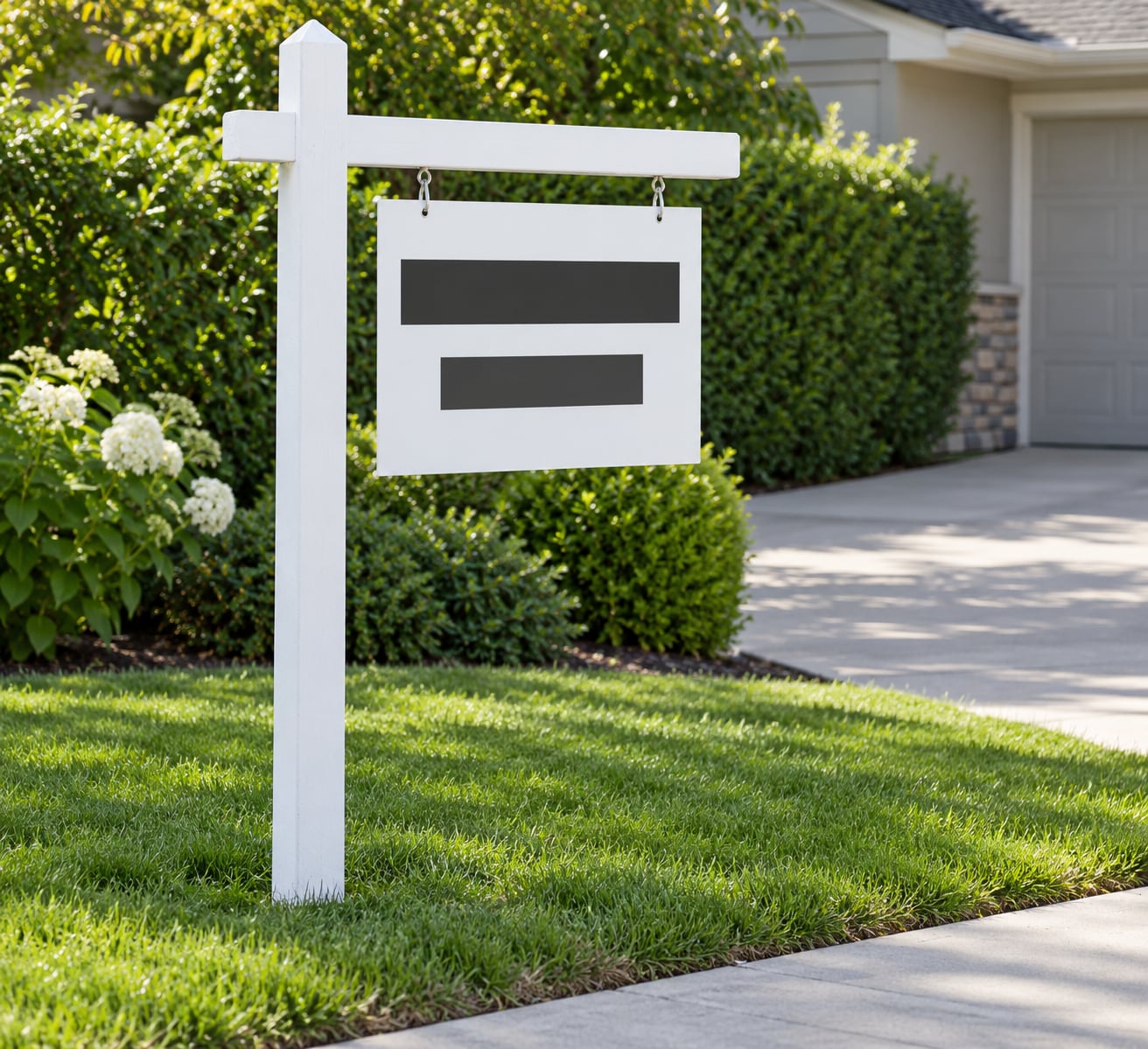
A real estate rider sign, usually called a sign rider, is a narrow rectangular panel that attaches to the post or cross-arm of a for-sale or for-rent yard sign. It carries the extra message the main panel has no room for: open house times, a price, an arrow, a status change, or the listing agent’s contact details.
The main panel identifies the property. The rider updates it. That is the whole idea, and it is why riders exist rather than bigger signs: swapping a rider takes seconds and costs a fraction of reprinting the main sign. Retail sets typically ship as two riders plus two rider pins, printed double-sided on corrugated plastic.
Real Estate Rider Sign Basics: Types and Uses
Agents shop for riders by the message they need, and the vocabulary matters because it is how these get named at every sign supplier. These are the categories you will actually order.
- Status riders. For Sale, Sale Pending or Under Contract, Sold, Price Reduced, Priced to Sell. These replace or overlay each other as the listing moves.
- Open house riders. Open House with a day and time, often with a directional arrow rider for large subdivisions where the driveway is not visible from the street.
- Feature riders. Blank lines for bedrooms, bathrooms, square footage, acreage or lot size that the listing agent fills in by hand or with a marker.
- Contact riders. Listing agent name, phone number and brokerage logo, sometimes with a QR code for the listing page.
- Appointment riders. Shown By Appointment, which suits occupied homes where the owner is still living there.
- Commercial and vacant land riders. Wider lettering and more acreage detail, because drivers are moving slower past an empty lot.
One practical note from agents on signage forums: they treat riders as a consumable, not an asset. Coroplast is a campaign-length material. Order enough for a listing plus its status changes, and reuse the hardware, not the panel.
What Should a Real Estate Rider Sign Say?
Read your rider from ten feet away. If you cannot, cut it. Riders fail most often because agents put five lines on a panel meant for two, and drivers slow down for a message they can parse instantly.
A workable line-by-line template, top to bottom:
- Line 1, the hook: the single most useful fact. Open House Sat 1–3, or 3 Bed, 2 Bath, 0.4 Acre.
- Line 2, the qualifier: a price, a status word, or the property size.
- Line 3, the call to action: the agent name and a phone number big enough to read at speed, or a QR code.
- Line 4, optional: the brokerage mark, kept small so it never competes with the hook.
Skip the full address, the legal fine print, and the paragraph about the kitchen renovation. If the message needs more than four lines, it belongs on a flyer in the box or the listing page the QR code points to.
How Do You Choose the Right Size and Material?
Standard rider sizes, and why 6×24 is the default
The industry default is 6 by 24 inches. That is not arbitrary: it matches the narrow cross-arm of standard post-and-panel yard sign posts, so a 6×24 rider sits flush on the arm without overhanging. Go bigger only when you have a reason.
| Size | Best for | Watch out for |
|---|---|---|
| 6 x 24 inch | Everything: status, contact, open house, features | Cramped for long phone numbers plus a logo |
| 6 x 18 inch | Compact sets, sold and pending status, apartment and condo posts | Too little room for beds, baths and acreage together |
| 6 x 30 inch | Commercial, acreage and vacant lots | Will overhang a standard arm if the arm is short |
A rough viewing-distance rule helps here: about one inch of letter height per ten feet of reading distance. At thirty feet, the numbers in your rider need to be at least three inches tall, which on a 6×24 panel leaves room for very little else.
Rider sign materials explained
Corrugated plastic, usually 4mm fluted board sold as coroplast, is the default for a reason. It is light, cheap, prints sharply on both sides, and holds up for a full listing cycle in most climates. Aluminum costs more and earns it in sun and wind.
| Material | Weight | Outdoor life | Use it when |
|---|---|---|---|
| 4mm coroplast | Feather-light | Campaign-length, roughly a listing cycle | Nearly every residential listing |
| 6mm coroplast | Light | Longer, stiffer in wind | Exposed lots, coastal or high-wind areas |
| Aluminum composite panel | Noticeably heavier | Multi-season, resists UV fade | Luxury listings, permanent or commercial signs |
One open question sign-industry forums keep circling is flute direction on a 6×24. The practical guidance: print double-sided, and check your supplier’s hole placement before you commit, because the holes decide whether the rider hangs straight or spins.
Where Should You Place a Real Estate Rider Sign?
Put the rider on the cross-arm of the post, not on the lawn, and not taped to the main panel. On a post-and-panel sign, the arm sits at roughly chest height on a standard yard post, which puts the rider close to the sightline of a passing car.
Three placement mistakes cause most of the complaints agents post about:
- Hanging it too low. A rider below the arm ends up at knee level and disappears behind shrubbery.
- Skewing it. If the rider looks crooked from the street, it will look crooked after a week of wind.
- Pointing the wrong way. Arrow riders need to point at the open house, and on a corner lot that often means the opposite direction from the one you guessed.
Check it once from where a driver would sit. If the hook line is not the first thing you read, swap it to the top.
Real Estate Rider Sign Design and Visibility Tips
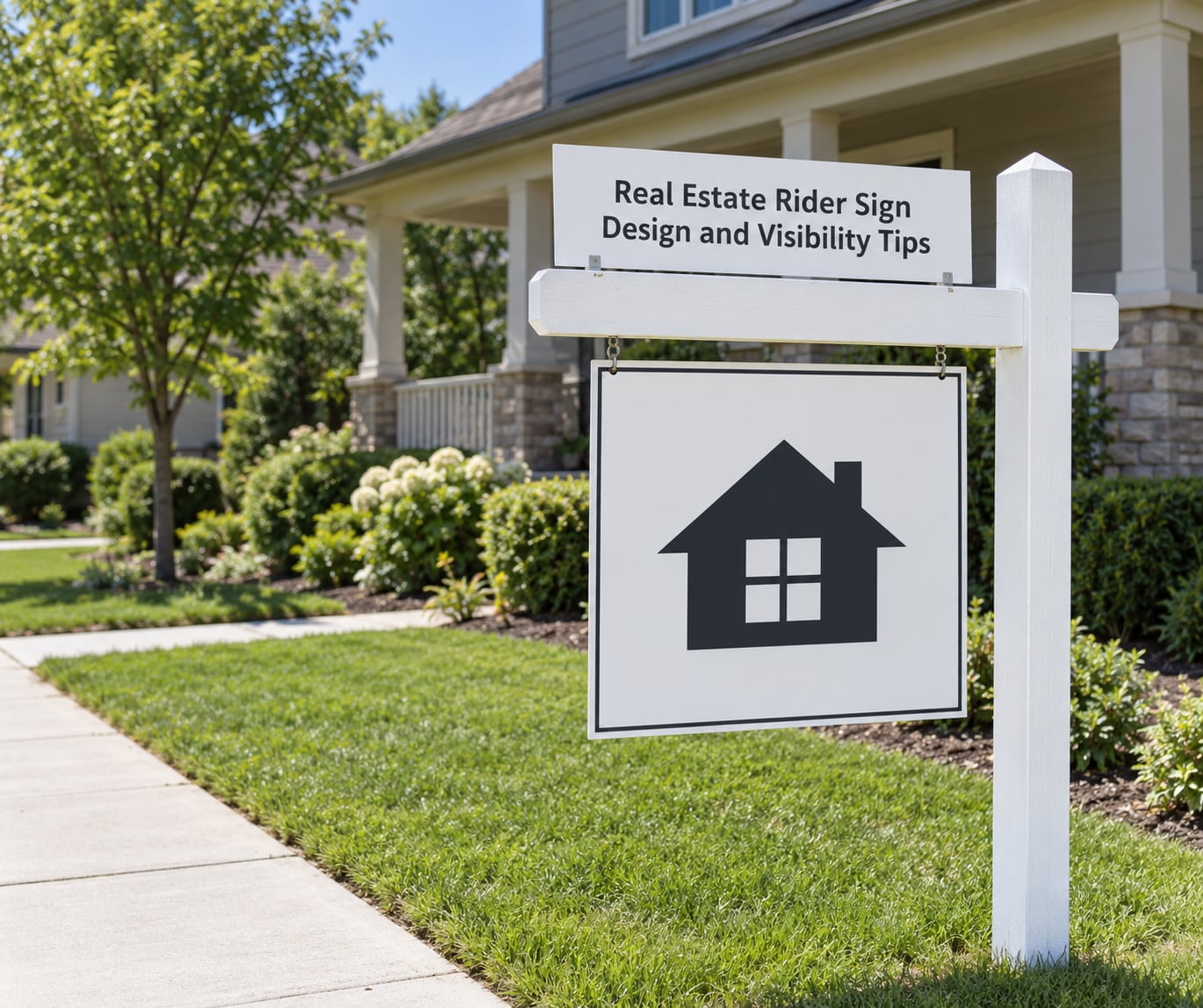
Contrast does more work than any design choice. Dark type on white or white type on a solid dark panel reads at distance; mid-grey on white disappears in afternoon sun.
Use a bold sans-serif face, two colours at most, and let the type fill the panel. Print both sides, because the rider will be viewed from both approach directions on a two-way street. Leave a clear margin around any QR code rather than letting it touch the edge.
On fade: white coroplast facing direct sun will yellow and the ink will soften within a few weeks. Rotate the rider if you can, or switch to a darker panel colour where the sun hits the same side all listing.
Do Real Estate Rider Signs Need to Follow Local Rules?
Yes, and the rules are not uniform. Sign ordinances differ by city, county and state, and they often treat real estate signs as a category with its own rules on size, number of signs per property, how long they may stay up, and whether a permit applies.
Before you install, check four things: the local sign ordinance for size and duration limits, your HOA covenants, whether the sign sits on private property or in a street right-of-way, and whether your state or MLS requires an accuracy update when the status changes.
That last one catches people out. Agents report uncertainty about whether a pending or sold rider is required in their state, and most MLS systems expect the sign status to match the listing status. Treat the rider as an advertising claim: if the price or status on it is wrong, it is wrong in the same way a wrong listing price is wrong.
How to Install and Maintain a Real Estate Rider Sign
Mounting takes under a minute once you have the pins.
- Line up the rider holes with the holes in the cross-arm, near each end and level with each other.
- Push one rider pin through the front hole and the matching back hole until it seats with a click.
- Repeat on the other side, then step back and check the rider is level and square.
- Turn it so the main message faces the direction of approaching traffic.
For maintenance, glance at the sign whenever you drive past and do a proper check weekly: look for a loose pin, a bowed panel, or a sun-bleached face. Clean with water and a mild detergent, nothing abrasive.
When the status changes, you have three options and the cheapest usually wins. A die-cut sticker over the old message takes seconds and costs almost nothing. A magnetic or changeable-insert rider costs more upfront but swaps forever. A full reprint looks cleanest and should be reserved for a genuinely new campaign. Remove the sign entirely once the listing closes and the keys have moved, and store the hardware.
Frequently Asked Questions
What is the difference between a real estate sign and a rider sign?
The main yard sign panel identifies the property, carries the brokerage branding and stays put for the listing. A rider sign is a smaller narrow panel that clips onto the post or cross-arm to carry changing information: open house times, a price, an under contract or sold message, an arrow, or the agent contact line. Riders exist so you can update the message without reprinting the main panel.
Can a real estate rider sign be attached to any yard sign?
Almost any post-and-panel yard sign can take a rider, because 6 by 24 inches matches the narrow cross-arm on a standard yard sign post. H stake and A-frame signs usually do not, since they have no arm to hang from. Check the arm width and the hole spacing on your post before ordering, because the hole geometry is what decides whether the rider sits straight.
What information should a real estate rider sign include?
One hook line, one qualifier, and one call to action. For an open house rider that means the day and time, with the agent name and a readable phone number or QR code underneath. Feature riders carry bedrooms, bathrooms and size. Leave out the address, fine print and any paragraph you would have to read from a car window.
Are real estate rider signs allowed on every property?
Not automatically. Local sign ordinances vary by city, county and state and may limit size, the number of signs per property and how long a sign can stay up after a sale. HOA covenants can add their own restrictions, and signs placed in a street right-of-way may need different permission than signs on private land. Check the ordinance before you install.
How should a rider sign be installed so it does not move?
Match the rider holes to the cross-arm holes near each end, level with one another, and push a rider pin through the front and back at each side until it seats. Then check the rider from the driver’s approach and square it up. Most wobble comes from a single pin, uneven hole spacing or a rider that overhangs the arm.
When should a real estate rider sign be removed?
Remove it when the listing ends and the property has closed, and check your local ordinance for any deadline after a sale. On a pending sale, swap to a pending or under contract rider if your state or MLS expects the sign status to match the listing. Store the pins and post hardware so you can reuse them on the next listing.
Start with the hardware. Buy a pack of 6×24 riders in two colours plus a box of rider pins, keep the post in the garage between listings, and you have the core of a rider kit that will carry most of a year’s status changes. Decide the copy rule now too: one hook, one qualifier, one call to action, and no more.