To use job site signs to get leads, you need three things working together: one clear message a stranger can read in three seconds, one location where your service is top of mind, and one trackable way to respond. Get those right and a single sign can outwork a month of boosting a listing.
The hard part isn’t buying signs. It’s choosing what each sign says, where it goes, and how you’ll know next month whether it earned its keep. A sign that gets seen but can’t be measured is just decoration, and a sign with four lines of text is worse than nothing at all.
I’ve watched crews stack three messages on a lawn sign and wonder why nobody called. The fix took ten minutes and a new phone number. That’s the kind of thing this guide walks through: a plain six-step system you can run on a job this week.
Table of Contents
- What You Need to Use Job Site Signs to Get Leads
- Step-by-Step: Running a Job Site Sign Campaign
- Step 1: Define the service area and target customer
- Step 2: Choose high-intent sign locations
- Step 3: Write a message people understand quickly
- Step 4: Design for distance and weather
- Step 5: Add a response path and track inquiries
- Step 6: Review results and improve the message
- What to do in the first 48 hours after installing
- Common Job Site Sign Mistakes
- Frequently Asked Questions
- Do yard signs actually work for contractors?
- What are the most common yard sign mistakes?
- Where are you allowed to put business yard signs?
- How do I track leads from job site signs?
- How long should a job site sign stay up after a job?
- How much do yard signs cost for contractors?
- Conclusion: Install One Measurable Sign This Week
What You Need to Use Job Site Signs to Get Leads
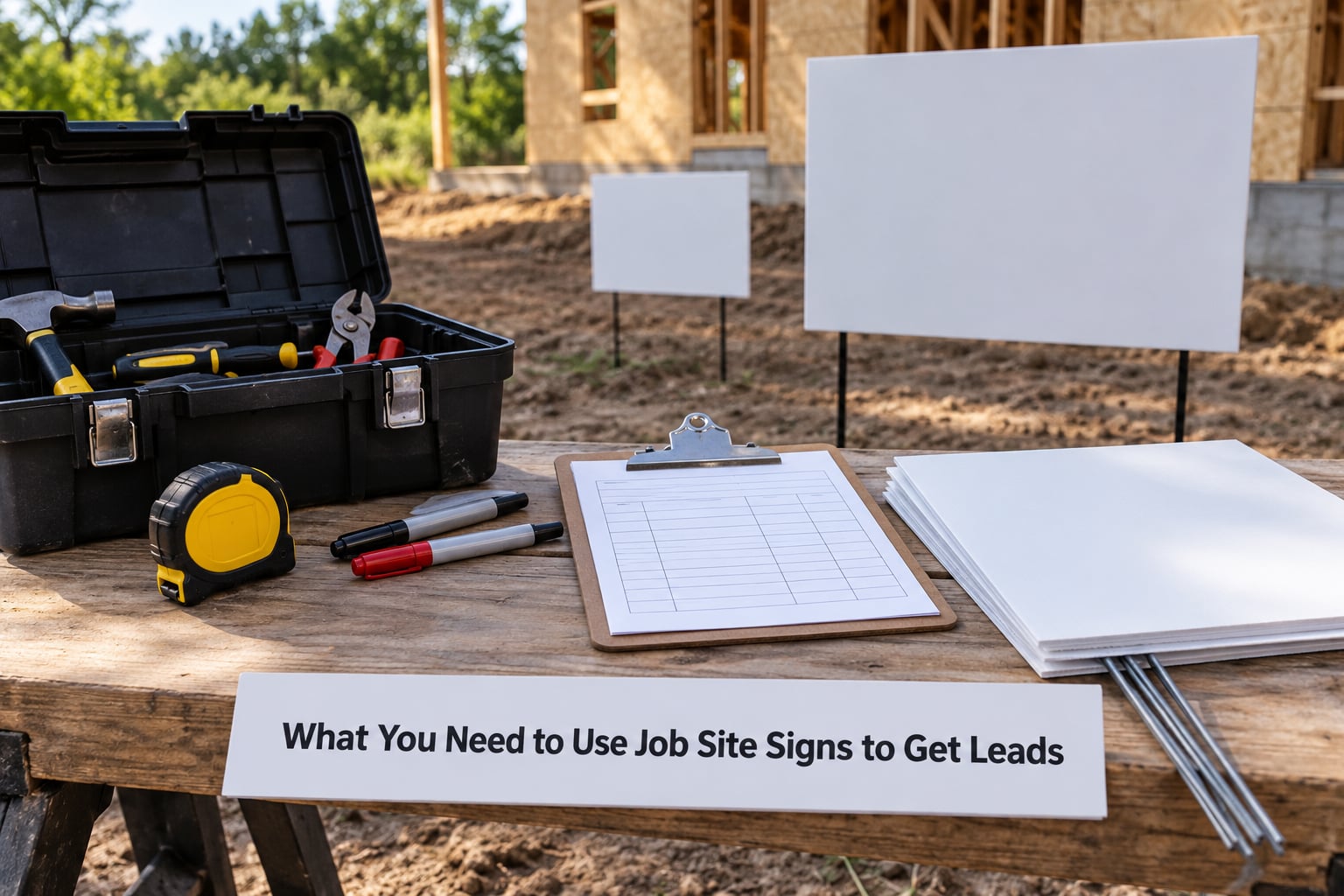
You need four groups of things, and most contractors already own three of them. Gathering these first keeps a campaign from stalling halfway through.
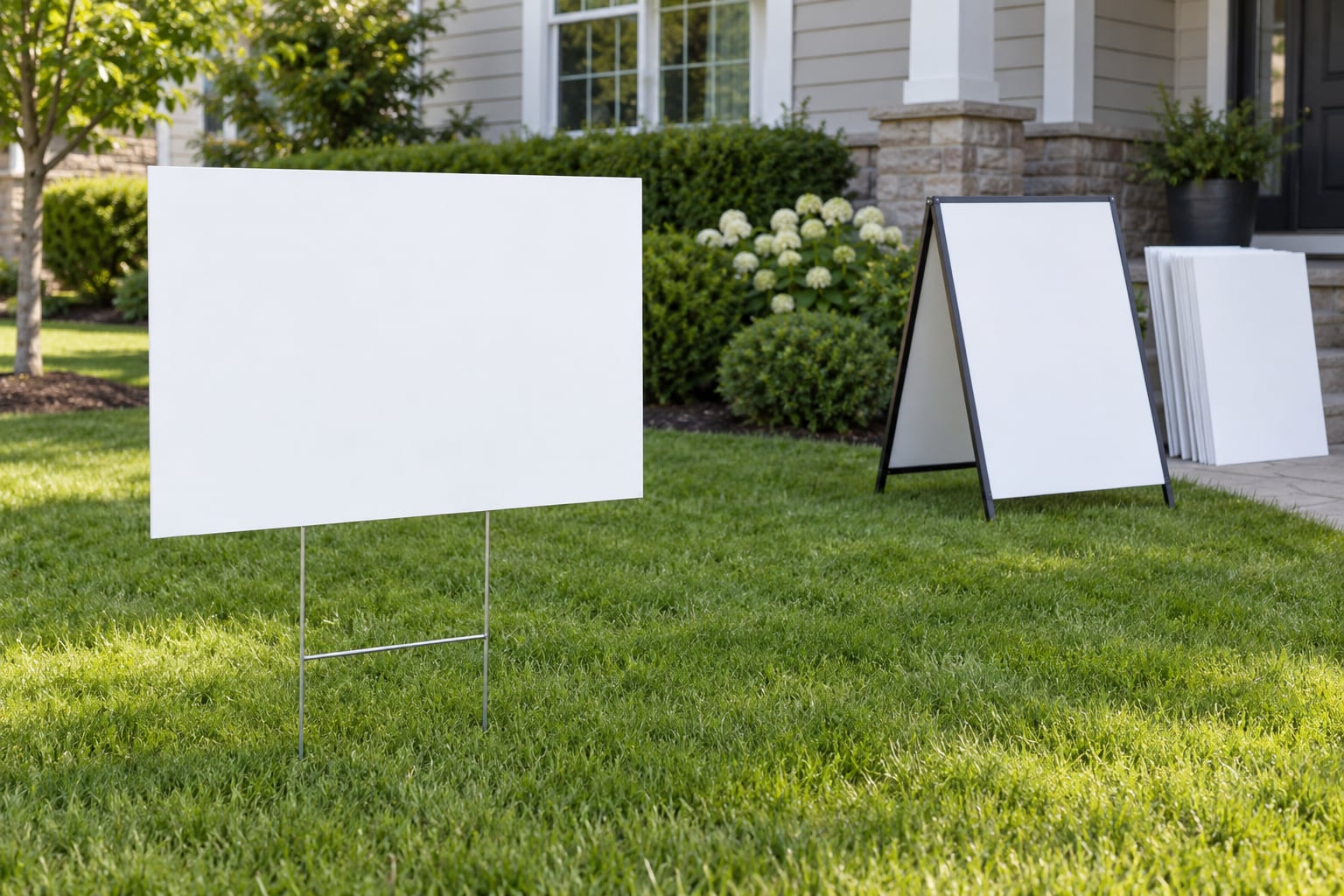
Sign formats. Corrugated plastic lawn signs in 18×24 or 24×36 inch sizes, printed double-sided, cover most work. An A-frame sign suits a sidewalk or a corner lot. Fence banners with grommets work on long residential fences. A metal post sign with a stake insert handles ground you can’t drive a wire stake into.
Wording materials. A layout you can reuse, a marker that survives rain, and a list of one offer plus one call to action. Write the copy once, then swap only the city name between neighborhoods.
Tracking tools. A dedicated phone number or text keyword for the sign, a short vanity URL or QR code with campaign tags, a simple spreadsheet, and a way to ask callers where they heard about you. One question at intake beats guessing later.
Permission and rule checks. Written permission from the homeowner before you put anything in their yard, plus a quick look at your township sign ordinance and, in some neighborhoods, the HOA rules. One contractor in a pressure-washing group described a township that only allowed signs on lawns of customers already served, which means you check before you print, not after you plant.
Step-by-Step: Running a Job Site Sign Campaign
Step 1: Define the service area and target customer
Pick one job type, one radius, and one customer before you design anything. A sign that tries to win roofing work, landscaping work, and emergency calls at the same time wins none of them, because the homeowner deciding in three seconds can’t tell which one is for them.
Write it down as one sentence: “Roof replacements on reroofs in the Oak Park and Elm Street pockets, for homeowners already noticing shingle damage.” That sentence is the filter for every sign from here on.
Radius beats volume. Three neighborhoods within about a five-minute drive will produce better calls than thirty signs scattered across a metro area, because the people who see the sign are the same people who might need you next season.
Step 2: Choose high-intent sign locations
The best location isn’t the busiest corner. It’s where someone is already wondering about the exact work you do. A roof replacement in a street of older homes beats a main arterial every time, because the neighbors have the same roof, the same budget cycle, and the same question.
Good candidates: streets where you just finished a visible job, subdivisions built in one era, houses with visible deferred maintenance, and areas hit by a recent storm. Signs go where people already walk or drive slowly past a property where work is happening.
Place the sign where a stopped car would see it. Curbside placement, angled slightly toward the street and clear of tall grass, beats a spot set back behind a mailbox. If a passerby would need to turn their head to find it, move it.
Step 3: Write a message people understand quickly
Use a four-part formula and nothing else: what you do, where you work, why you can be trusted, and exactly how to respond. One line for the headline, one line for proof, one line for contact.
Example copy: “Oak Park Roof Replacements — Licensed, Insured, Installed Since 2009. Free tear-off estimate. Call 555-0142, ask for the roof line.” The proof line does the work of a testimonial in two inches of space.
Skip the paragraph about your values, your founding story, and the five-star awards unless a customer actually gave you the words to put there. Homeowners in contractor groups say the first thing they look for is a clear, large phone number and a visible license or years-in-business marker.
Step 4: Design for distance and weather
A driver reads a lawn sign in about three seconds. That means one headline at large scale, high contrast, and the phone number big enough to read at arm’s length from a curb. Dark lettering on a light background beats reversed combos at speed.
Match the sign to your truck, van, and website colors. Signs that look consistent with the rest of your branding read as established operators; mismatched or faded signs read as whoever answered the phone last.
For weather, print UV-resistant ink on 4 mil corrugated plastic, double-sided so the reverse carries something useful rather than the bleed-through of a contractor name. In hail or high-wind country, a weighted stake insert beats a plain wire stake, and zip ties to a solid rail prevent the sign from swinging into a tipped position.
Step 5: Add a response path and track inquiries
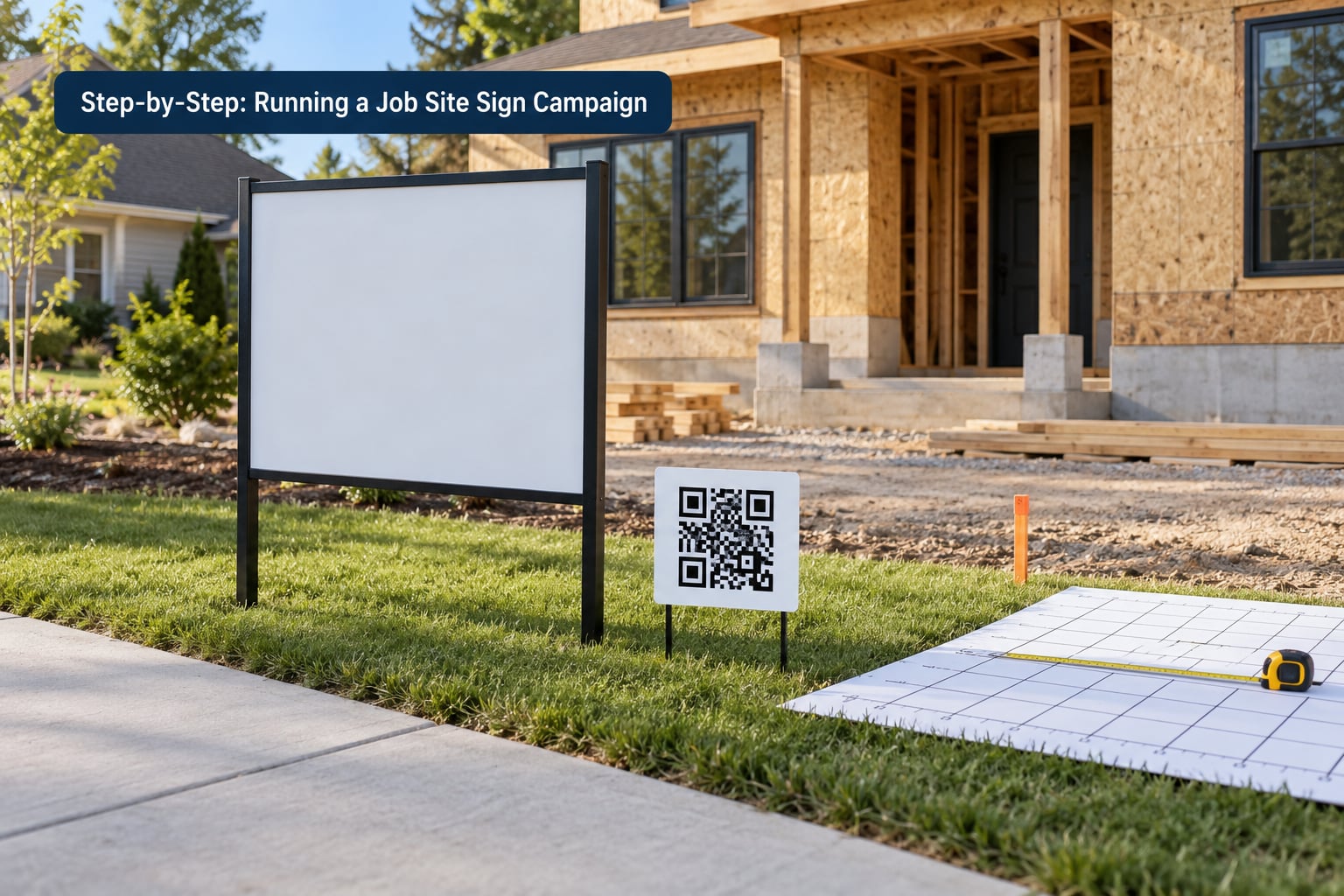
Every sign needs one response path that is different from your main line. A dedicated number, a text keyword, or a QR code pointing to a landing page tagged for that campaign. If the sign and your office line are identical, you have no idea whether the sign did anything.
Three tracking methods work well. A dedicated tracking number that rings your phone and logs the call source. A unique offer code printed only on the signs, which callers repeat when they book. A QR code on a short URL tagged for that neighborhood, landing on a page with your service, your reviews, and one button.
Keep a simple sheet: sign address, install date, message variant, calls received, jobs booked, remove date. Reviewers who run signs say the sheet is the whole trick. Without it, signs either look like a total success or a total waste, and both stories are usually wrong.
If you also run digital, connect the sign to the rest. A QR code that lands on a page showing recent work and a review link gives a stranger something to verify in five seconds. Pairing it with an up-to-date Google Business Profile and a review request after the job turns the same sign into a review engine.
Step 6: Review results and improve the message
Set a review date the day you install, not when you get bored. Thirty days is enough for most lawn signs to show whether calls came in and which message produced them.
Compare locations, not campaigns. If the Oak Park signs brought four calls and the Elm Street signs brought none, the difference is audience and placement rather than the words. If both streets brought nothing, test the headline and the offer before you blame the location.
Then act on it. Retire the message that produced no calls, keep the one that produced booked work, and add signs where your best-performing sign already sits. One operator who installed signs after door knocking across roughly a hundred homes reported the signs far outperformed expectations; the only negative was a single sign knocked over in a high-traffic spot, which is exactly why weighted stakes and a placement check matter.
What to do in the first 48 hours after installing
The sign starts working before anyone calls. Knock on the doors of the two or three nearest houses while the crew is on site, mention the job only if it makes sense, and hand over a simple door hanger or flyer with the same offer. Leave the material and ask the homeowner directly for permission to keep the sign up, with a removal date they approve.
Also ask two things on day one: a quick review once the job is done, and whether anyone next door has been putting off the same work. One contractor told me that sign-plus-knock sequence is what turns a viewer into a caller, because the sign supplies the proof that makes the door knock welcome.
Common Job Site Sign Mistakes
Writing for yourself instead of the passerby. If a stranger can’t tell in three seconds what you do, the sign fails. Fix: one headline line that names the job and the area.
Cramming the whole story on the board. Paragraphs kill readability. Fix: cut to four elements and save the detail for the flyer or landing page behind the QR code.
No specific call to action. “Call for information” does less work than “Free estimate, call 555-0142.” Fix: state the offer and the action, in that order.
Putting signs where nobody is. A beautiful sign on an empty arterial generates zero calls. Fix: choose locations tied to real demand, such as streets of same-age homes.
No way to tell where the call came from. If every caller uses the office line, you’ll never know. Fix: dedicated number, unique code, or tagged QR, plus one intake question.
Ignoring local rules. Township ordinances and HOA rules vary and can restrict placement or size. Fix: check before printing and get written homeowner permission.
Leaving signs up forever. A neglected sign damages the credibility it was built to create. Fix: agree a removal date with the homeowner, put it in your job checklist, and never make them ask.
Frequently Asked Questions
Do yard signs actually work for contractors?
They do, mostly where the same people pass the same street repeatedly. A sign on a neighbor’s lawn is proof that you work nearby and do quality work, which is why homeowners respond to it faster than a cold knock. Expect the strongest results from completed jobs in tight neighborhoods, and judge them by calls and booked work over 30 days rather than by how many people glanced at them.
What are the most common yard sign mistakes?
The big three are too much text, no clear call to action, and no way to track the response. Drivers give a sign about three seconds, so keep one headline, one proof line, one offer, and a large phone number. Other costly errors include placing signs far from the curb, ignoring township or HOA rules, and leaving signs up long after the homeowner expects them gone.
Where are you allowed to put business yard signs?
On private property, with the homeowner’s written permission, and inside whatever your local ordinance and HOA allow. Rules vary by township, and some restrict signs to lots where you have completed work or prohibit them on public rights-of-way. Check the municipal code before printing, since violations can mean fines and an unhappy customer, not just a sign pulled from a lawn.
How do I track leads from job site signs?
Give each campaign its own response path: a dedicated tracking number, a text keyword, or a QR code with a tagged short URL, plus a unique offer code printed only on those signs. Log sign address, install date, message variant, calls, and booked jobs in a sheet. Ask every caller how they heard about you so attribution gets cleaner each month.
How long should a job site sign stay up after a job?
Ask the homeowner at the start and write down the date they expect it removed. Most crews agree to two to four weeks after completion, which covers referral conversations and any neighbor who notices the work a month later. Set the date in your job checklist so removal happens on the scheduled day. A sign nobody pulls is the fastest way to lose a customer and a neighbor.
How much do yard signs cost for contractors?
Single signs typically cost a few dollars each, and the per-sign price drops sharply once you order dozens, so small-volume buying is where most contractors overpay. Add stakes, a short tracked URL or call tracking setup, and your own install time. Compare the total against one booked job rather than per sign, since the sign’s job is to create a handful of calls, not volume.
Conclusion: Install One Measurable Sign This Week
Start narrow. Choose one service, one pocket of homes that needs it, and one location where that need is visible right now. Write a message that names the job, proves you’re a real local operator, and asks for one specific action. Give it a number or code nobody else has, note the install date in your sheet, and set a review date 30 days out.
Then repeat. One sign with a trackable message teaches you more in a month than a hundred signs with a vague one ever will, and it’s the cheapest lead channel most trades can own outright.